
A complete HVAC system for a 1000 square foot home in Chicago typically costs between $4,500 and $12,500, depending on system type, efficiency rating, and installation complexity. This range covers everything from basic furnace replacements to high-efficiency heat pump installations.
Understanding these costs matters because Chicago’s extreme temperature swings demand reliable heating and cooling. The wrong system wastes energy. The wrong price wastes money. Both hurt your comfort and budget for years.
This guide breaks down exact pricing for every system type, explains what drives costs up or down, and shows you how to budget confidently for your HVAC investment.
Average HVAC Cost for 1000 Sq Ft Home in Chicago
For a 1000 square foot home in Chicago, HVAC costs vary significantly based on what you’re installing. Here’s what Chicago homeowners actually pay in 2025.
The total investment depends on whether you need cooling only, heating only, or a complete system. Labor rates in Chicago run higher than national averages due to licensing requirements and the cost of living. Equipment costs remain relatively consistent, but installation complexity in older Chicago homes often adds to the final bill.
Central Air Conditioning Installation Costs
Central AC installation for 1000 sq ft runs $3,200 to $7,500 in Chicago. A 2-ton unit handles this square footage efficiently. Basic 14-SEER systems cost less upfront. High-efficiency 18+ SEER units cost more but reduce monthly bills.
Equipment accounts for roughly 60% of the total. The remaining 40% covers labor, refrigerant, electrical connections, and any ductwork modifications. Homes without existing ductwork face significantly higher costs.
Furnace Installation Costs
Gas furnace installation costs $2,800 to $6,500 for a 1000 sq ft Chicago home. A 40,000-60,000 BTU furnace provides adequate heating capacity for this size. Chicago’s cold winters make furnace efficiency particularly important.
Standard 80% AFUE furnaces cost less initially. High-efficiency 96%+ AFUE models cost $1,500-$2,500 more but save $200-$400 annually on gas bills. Most Chicago homeowners recoup the efficiency upgrade cost within 5-7 years.
Complete HVAC System Replacement Costs
Full system replacement (furnace plus AC) ranges from $6,000 to $12,500. Bundling both units often saves $500-$1,000 compared to separate installations. Contractors offer package pricing because they’re already on-site with equipment and permits.
For a 1000 sq ft home, a matched 2-ton AC and 60,000 BTU furnace combination provides optimal performance. Mismatched systems reduce efficiency and shorten equipment lifespan.
Factors That Affect HVAC Pricing in Chicago
No two HVAC installations cost exactly the same. Understanding what drives pricing helps you evaluate quotes accurately and avoid overpaying.
System Type and Efficiency Ratings
Equipment efficiency directly impacts both purchase price and operating costs. The Department of Energy requires minimum efficiency standards, but higher ratings cost more.
Air conditioner efficiency (SEER):
- 14-15 SEER: Base cost, adequate efficiency
- 16-17 SEER: Mid-range, good balance of cost and savings
- 18+ SEER: Premium cost, lowest operating expenses
Furnace efficiency (AFUE):
- 80% AFUE: Standard efficiency, lower upfront cost
- 90-95% AFUE: High efficiency, moderate premium
- 96%+ AFUE: Ultra-high efficiency, highest upfront cost
For Chicago’s climate, investing in higher efficiency typically pays off. You run heating 5-6 months annually and cooling 3-4 months.
Labor Costs and Installation Complexity
Chicago HVAC labor rates average $75-$150 per hour, higher than the national average of $50-$100. Licensed contractors carry insurance, pull permits, and guarantee work to code.
Installation complexity increases costs when:
- Attic or crawl space access is difficult
- Electrical panel needs upgrading
- Gas line modifications are required
- Equipment must be craned to rooftops
- Older homes have non-standard configurations
A straightforward replacement in an accessible basement costs less than installing in a cramped Chicago bungalow attic.
Ductwork Condition and Modifications
Existing ductwork significantly impacts total project cost. Duct modifications add $500-$3,000 depending on scope.
Common ductwork issues in Chicago homes:
- Leaky connections wasting 20-30% of conditioned air
- Undersized ducts restricting airflow
- Damaged insulation reducing efficiency
- Improper design causing hot/cold spots
New ductwork installation for homes without existing systems costs $2,000-$5,000 for 1000 sq ft. This often makes ductless systems more economical for additions or older homes.
Seasonal Pricing Fluctuations
HVAC installation costs 10-20% less during off-peak seasons. Spring and fall offer the best pricing because contractors have more availability.
Peak seasons in Chicago:
- Summer (June-August): AC demand spikes, longer wait times, premium pricing
- Winter (December-February): Furnace emergencies drive up costs
Scheduling replacement before your system fails gives you negotiating power and contractor options. Emergency replacements cost more and limit choices.
HVAC System Types and Their Costs
Different system types suit different homes and budgets. Here’s what each option costs for a 1000 sq ft Chicago home.
Central Air Conditioning Systems
Cost range: $3,200-$7,500 installed
Central AC remains the most common cooling choice for Chicago homes with existing ductwork. A 2-ton system (24,000 BTU) adequately cools 1000 sq ft.
Pros:
- Efficient whole-home cooling
- Uses existing ductwork
- Quiet operation (compressor outside)
- Proven technology with long lifespan
Cons:
- Requires ductwork
- Higher installation cost than window units
- Doesn’t provide heating
Popular brands at different price points include Carrier, Trane, Lennox (premium), Rheem, Ruud (mid-range), and Goodman, Amana (budget-friendly).
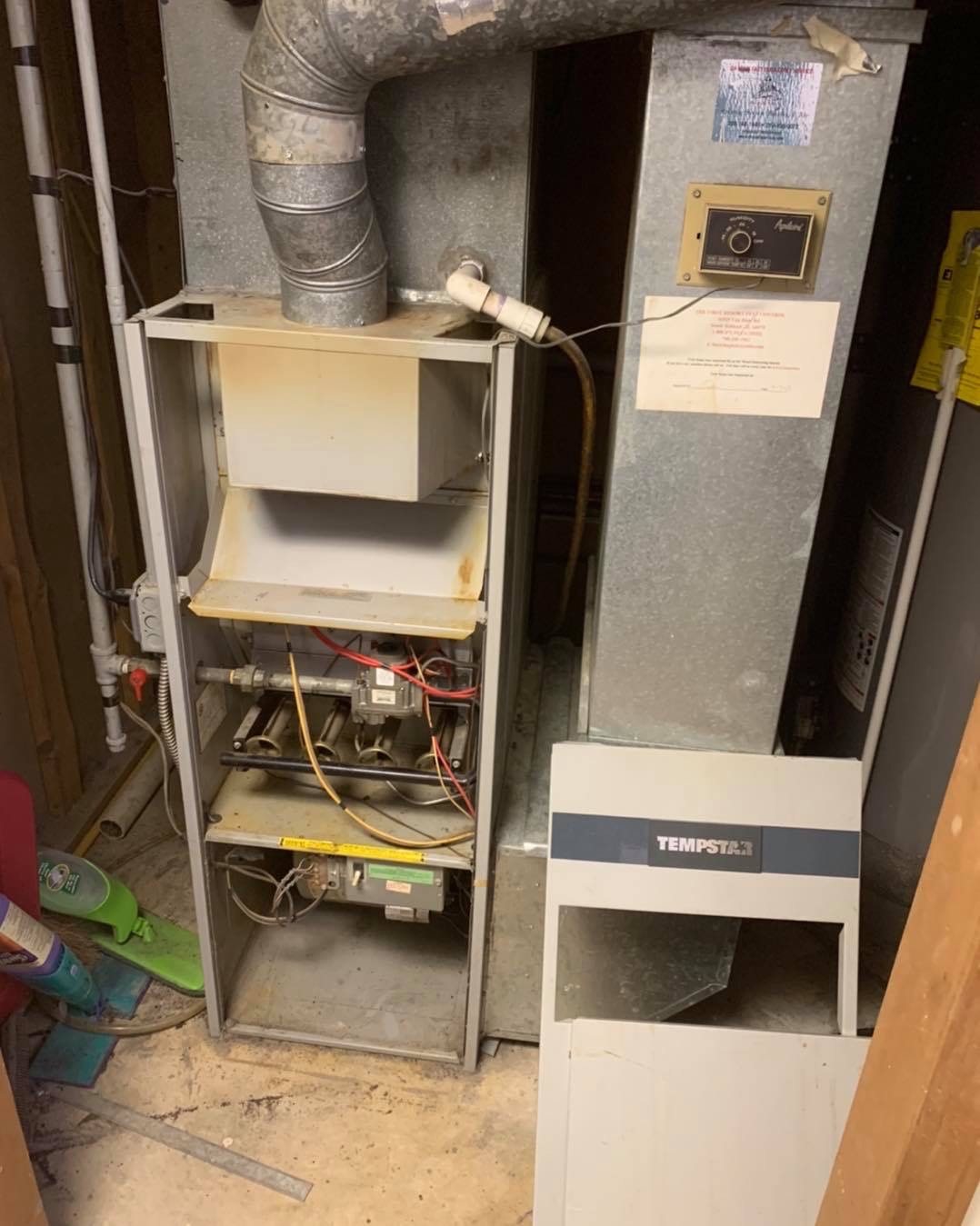
Gas Furnaces
Cost range: $2,800-$6,500 installed
Gas furnaces dominate Chicago heating because natural gas costs less than electricity for heating. A 40,000-60,000 BTU furnace handles 1000 sq ft efficiently.
Pros:
- Lower operating costs than electric heat
- Reliable in extreme cold
- Fast heating response
- 15-20 year lifespan with maintenance
Cons:
- Requires gas line connection
- Annual maintenance recommended
- Combustion safety considerations
Two-stage and modulating furnaces cost more but provide more consistent temperatures and quieter operation than single-stage units.
Heat Pumps
Cost range: $4,500-$10,000 installed
Heat pumps provide both heating and cooling from one unit. Modern cold-climate heat pumps work effectively in Chicago winters down to -15°F.
Pros:
- Heating and cooling in one system
- Higher efficiency than furnaces in mild weather
- Lower carbon footprint
- Eligible for federal tax credits
Cons:
- Higher upfront cost
- May need backup heat for extreme cold
- Shorter lifespan than furnaces (12-15 years)
The Inflation Reduction Act provides up to $2,000 in tax credits for qualifying heat pump installations, significantly offsetting the higher purchase price.
Ductless Mini-Split Systems
Cost range: $3,000-$8,000 installed (single zone)
Ductless systems excel in homes without existing ductwork or for room additions. Each indoor unit cools/heats a specific zone.
Pros:
- No ductwork required
- Zone control reduces energy waste
- Quiet operation
- Easy installation (1 day typical)
Cons:
- Visible indoor units on walls
- Multiple units needed for whole-home coverage
- Higher cost per square foot than central systems
For 1000 sq ft, a single-zone mini-split handles open floor plans. Multi-zone systems (2-3 indoor units) cost $5,000-$12,000 but provide room-by-room control.
Energy Efficiency and Long-Term Savings
Upfront cost tells only part of the story. Operating costs over 15-20 years often exceed the purchase price.
Understanding SEER and AFUE Ratings
SEER (Seasonal Energy Efficiency Ratio) measures cooling efficiency. Higher numbers mean lower electricity bills. The minimum standard is 14 SEER, but 16-18 SEER units save significantly more.
AFUE (Annual Fuel Utilization Efficiency) measures heating efficiency as a percentage. A 96% AFUE furnace converts 96 cents of every gas dollar into heat. An 80% AFUE furnace wastes 20 cents.
For Chicago’s climate with roughly 6,500 heating degree days annually, furnace efficiency matters more than AC efficiency for total energy costs.
High-Efficiency vs Standard Systems Cost Comparison
System Type
Standard Cost
High-Efficiency Cost
Annual Savings
Payback Period
Central AC (14 vs 18 SEER)
$3,500
$5,500
$150-$200
10-13 years
Gas Furnace (80% vs 96% AFUE)
$3,000
$5,000
$250-$400
5-8 years
Heat Pump (standard vs cold-climate)
$5,000
$8,000
$300-$500
6-10 years
High-efficiency furnaces offer the fastest payback in Chicago due to long heating seasons. AC efficiency upgrades take longer to recoup but still provide lifetime savings.
Chicago Utility Rebates and Incentives
ComEd and Peoples Gas offer rebates that reduce HVAC upgrade costs:
Current rebates (2025):
- High-efficiency furnace: Up to $300
- Central AC (16+ SEER): Up to $200
- Heat pump: Up to $800
- Smart thermostat: $75-$100
Federal tax credits:
- Heat pumps: 30% of cost, up to $2,000
- High-efficiency furnaces/AC: Up to $600
Combining utility rebates with federal credits can reduce a $10,000 heat pump installation to under $7,000 effective cost.
Installation vs Replacement: What Chicago Homeowners Need to Know
New installations and replacements involve different considerations and costs.
Signs You Need HVAC Replacement
Replace rather than repair when:
- System age exceeds 15 years (furnace) or 12 years (AC)
- Repair costs exceed 50% of replacement value
- Frequent breakdowns (more than 2 per year)
- Rising energy bills despite maintenance
- Uneven temperatures throughout the home
- R-22 refrigerant system (phased out, expensive to recharge)
A 1000 sq ft home with a 20-year-old furnace and 15-year-old AC benefits more from replacement than continued repairs.
New Installation Requirements
Homes without existing HVAC need additional work:
Ductwork installation: $2,000-$5,000 for 1000 sq ft Electrical upgrades: $500-$2,000 if panel capacity is insufficient Gas line installation: $500-$1,500 if not present Concrete pad for outdoor unit: $100-$300
New construction or major renovations offer the most cost-effective time to install central HVAC because walls are open and access is easy.
Permit and Inspection Costs in Chicago
Chicago requires permits for HVAC installation. Permit fees range from $75-$250 depending on project scope.
The permit process ensures:
- Proper equipment sizing
- Code-compliant installation
- Safe gas and electrical connections
- Adequate ventilation
Licensed contractors pull permits as part of their service. Unpermitted work creates liability issues and complications when selling your home.
How to Budget for Your HVAC Project
Smart budgeting prevents surprises and ensures you get the right system.
Getting Accurate Estimates
Get at least three written estimates from licensed Chicago contractors. Each estimate should include:
- Equipment brand, model, and specifications
- Efficiency ratings (SEER, AFUE)
- Labor costs itemized
- Permit fees
- Warranty terms (equipment and labor)
- Timeline for completion
Avoid estimates given over the phone without a home visit. Proper sizing requires measuring your space, inspecting ductwork, and assessing installation conditions.
Financing Options Available
Most Chicago HVAC contractors offer financing:
Manufacturer financing: 0% interest for 12-60 months on qualifying equipment Contractor financing: Varies by company, typically 6-15% APR Home equity loans: Lower rates, tax-deductible interest Personal loans: Quick approval, fixed payments
For a $8,000 system, 0% financing over 36 months equals $222/month with no interest cost. Compare total cost of financing versus paying cash.
Hidden Costs to Anticipate
Budget an additional 10-15% for potential extras:
- Ductwork repairs or modifications
- Electrical panel upgrades
- Thermostat replacement
- Permit fees
- Disposal of old equipment
- Concrete pad or platform
- Code-required upgrades (CO detectors, disconnects)
Quality contractors identify these needs during the estimate. Lowball quotes often exclude necessary work that appears as change orders later.
Choosing the Right HVAC Contractor in Chicago
Your contractor choice affects installation quality, system performance, and long-term reliability.
What to Look for in an HVAC Company
Essential qualifications:
- Illinois HVAC license (verify at IDFPR)
- Liability insurance and workers’ compensation
- Manufacturer certifications (Carrier, Trane, Lennox, etc.)
- Established local presence (5+ years in Chicago)
- Positive reviews on Google, BBB, Angi
Value-added services:
- Free in-home estimates
- Written warranties on labor
- Maintenance plan options
- Emergency service availability
- Financing programs
Questions to Ask Before Hiring
Ask every contractor:
- “Are you licensed and insured in Illinois?”
- “Who will perform the installation?” (employees vs. subcontractors)
- “What warranty do you provide on labor?”
- “Will you pull the permit and schedule inspection?”
- “How do you size equipment for my home?”
- “What brands do you install and why?”
- “Can you provide references from recent Chicago installations?”
Reputable contractors answer these questions confidently and provide documentation.
Red Flags to Avoid
Walk away from contractors who:
- Demand large deposits (more than 10-20% upfront)
- Pressure immediate decisions (“price only good today”)
- Quote without visiting your home
- Can’t show license or insurance documentation
- Offer prices far below other estimates (corners will be cut)
- Won’t provide written contracts with detailed specifications
- Have numerous complaints on BBB or review sites
The cheapest quote rarely delivers the best value. Quality installation affects system efficiency, lifespan, and warranty validity.
Conclusion
HVAC costs for a 1000 sq ft home in Chicago range from $4,500 to $12,500 depending on system type, efficiency level, and installation requirements. Gas furnaces, central AC, heat pumps, and ductless systems each offer distinct advantages for different situations and budgets.
Understanding what drives these costs—equipment efficiency, labor complexity, ductwork condition, and seasonal timing—helps you evaluate quotes accurately and invest wisely. High-efficiency systems cost more upfront but deliver meaningful savings over their 15-20 year lifespan, especially in Chicago’s demanding climate.
We’re here to help you navigate these decisions with confidence. At Chicago Comfort HVAC, we provide honest assessments, transparent pricing, and expert installation backed by comprehensive warranties. Contact us today for a free in-home estimate and discover the right HVAC solution for your home.
Frequently Asked Questions
How much does a new HVAC system cost for a 1000 sq ft house?
A complete HVAC system (furnace plus central AC) for a 1000 sq ft home costs $6,000-$12,500 in Chicago. This includes equipment, installation labor, permits, and basic ductwork connections. High-efficiency systems and complex installations fall at the higher end.
Is a 2-ton or 2.5-ton AC unit right for 1000 square feet?
A 2-ton (24,000 BTU) AC unit properly cools most 1000 sq ft homes. Oversizing wastes money and causes humidity problems. However, factors like ceiling height, insulation quality, and sun exposure may require professional load calculation for accurate sizing.
How long does HVAC installation take?
Standard replacement installation takes 1-2 days for most 1000 sq ft homes. New installations requiring ductwork take 3-5 days. Complex projects involving electrical upgrades or structural modifications may extend the timeline.
Should I repair or replace my HVAC system?
Replace when repair costs exceed 50% of replacement value, the system is over 15 years old, or you’re facing frequent breakdowns. A 1000 sq ft home with an aging system often benefits more from replacement efficiency gains than continued repair investments.
What SEER rating should I choose for Chicago?
16-18 SEER offers the best balance of upfront cost and long-term savings for Chicago’s climate. While 14 SEER meets minimum requirements, the 3-4 month cooling season justifies moderate efficiency upgrades. Premium 20+ SEER units take longer to recoup in this market.
Are there rebates for high-efficiency HVAC in Illinois?
Yes. ComEd offers up to $200 for high-efficiency AC, Peoples Gas provides up to $300 for furnaces, and federal tax credits cover up to $2,000 for heat pumps. Combined incentives can reduce project costs by $500-$3,000 depending on equipment choices.
How often should I replace my HVAC system?
Gas furnaces last 15-20 years with proper maintenance. Central AC units last 12-15 years. Heat pumps typically last 12-15 years. For a 1000 sq ft home, plan for replacement when equipment approaches these ages or efficiency noticeably declines.