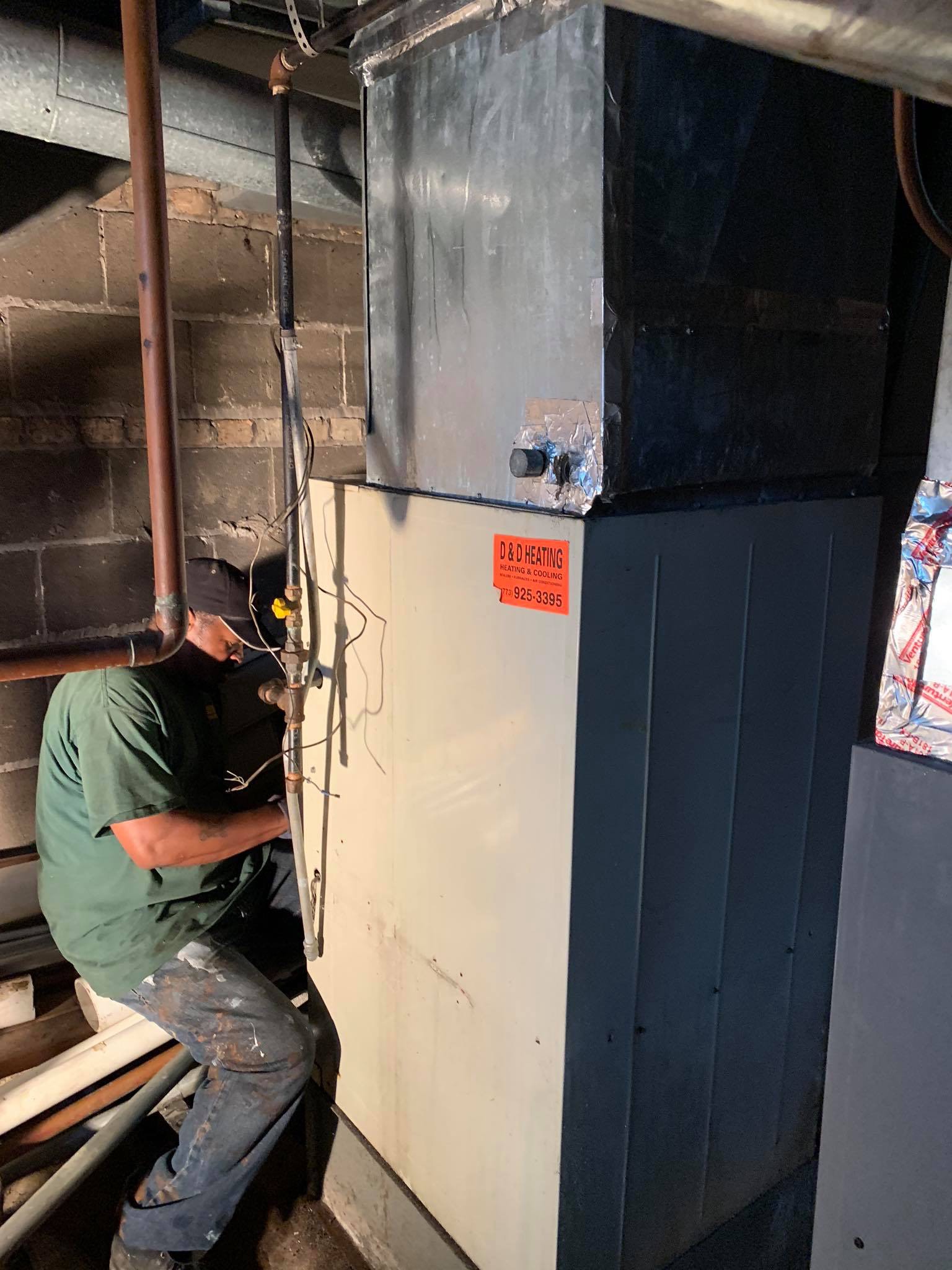
How Much Does a New Furnace Cost?
New Furnace Cost in Chicago | 2026 Pricing Guide | Chicago Comfort HVAC
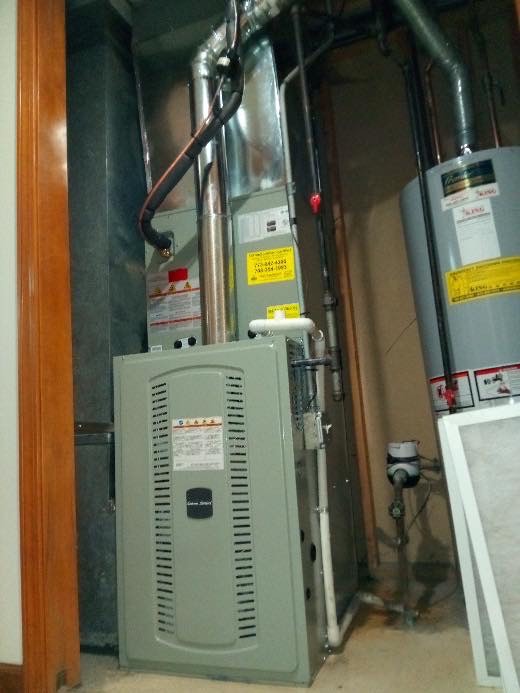
A new furnace in Chicago typically costs between $3,500 and $9,500 installed, with most homeowners paying around $5,500 to $7,000 for a mid-efficiency gas furnace. Your final price depends on furnace type, efficiency rating, home size, and installation complexity.
Chicago's brutal winters make your furnace the most critical system in your home. Understanding true costs helps you budget accurately and avoid surprises. The wrong estimate can leave you scrambling during a January cold snap.
This guide breaks down every cost factor for Chicago furnace installation. You'll learn price ranges by furnace type, what drives installation costs up or down, and how to maximize value on your investment.
Average Furnace Costs in Chicago
Chicago furnace prices vary significantly based on equipment tier and efficiency level. Local labor rates, permit requirements, and the age of your home's infrastructure all influence final costs. Here's what Chicago homeowners actually pay in 2026.
Entry-Level Furnace Pricing ($2,500-$4,500)
Entry-level furnaces offer basic heating at the lowest upfront cost. These units typically feature 80% AFUE efficiency ratings and single-stage operation. They work well for smaller homes, rental properties, or budget-conscious buyers.
Expect equipment costs between $800 and $1,500 for the furnace itself. Installation adds $1,500 to $3,000 depending on your existing setup. These systems lack advanced features but deliver reliable heat for 15-20 years with proper maintenance.
Mid-Range Furnace Pricing ($4,500-$7,500)
Mid-range furnaces represent the sweet spot for most Chicago homeowners. These units offer 90-95% AFUE ratings, two-stage heating, and improved comfort features. You'll notice quieter operation and more consistent temperatures throughout your home.
Equipment costs run $1,500 to $3,000 for quality mid-tier brands. Installation typically adds $2,500 to $4,500. The efficiency gains often pay back the higher upfront cost within 5-7 years through lower gas bills.
High-Efficiency Furnace Pricing ($7,500-$12,000+)
High-efficiency furnaces deliver maximum performance and long-term savings. These premium units feature 96-98% AFUE ratings, variable-speed blowers, and modulating gas valves. They provide the most precise temperature control and lowest operating costs.
Equipment alone costs $3,000 to $6,000 for top-tier models. Installation runs $4,000 to $6,000 or more due to specialized venting requirements. Chicago homeowners with high heating bills often recover the premium within 4-6 years.
Furnace Types and Their Price Ranges
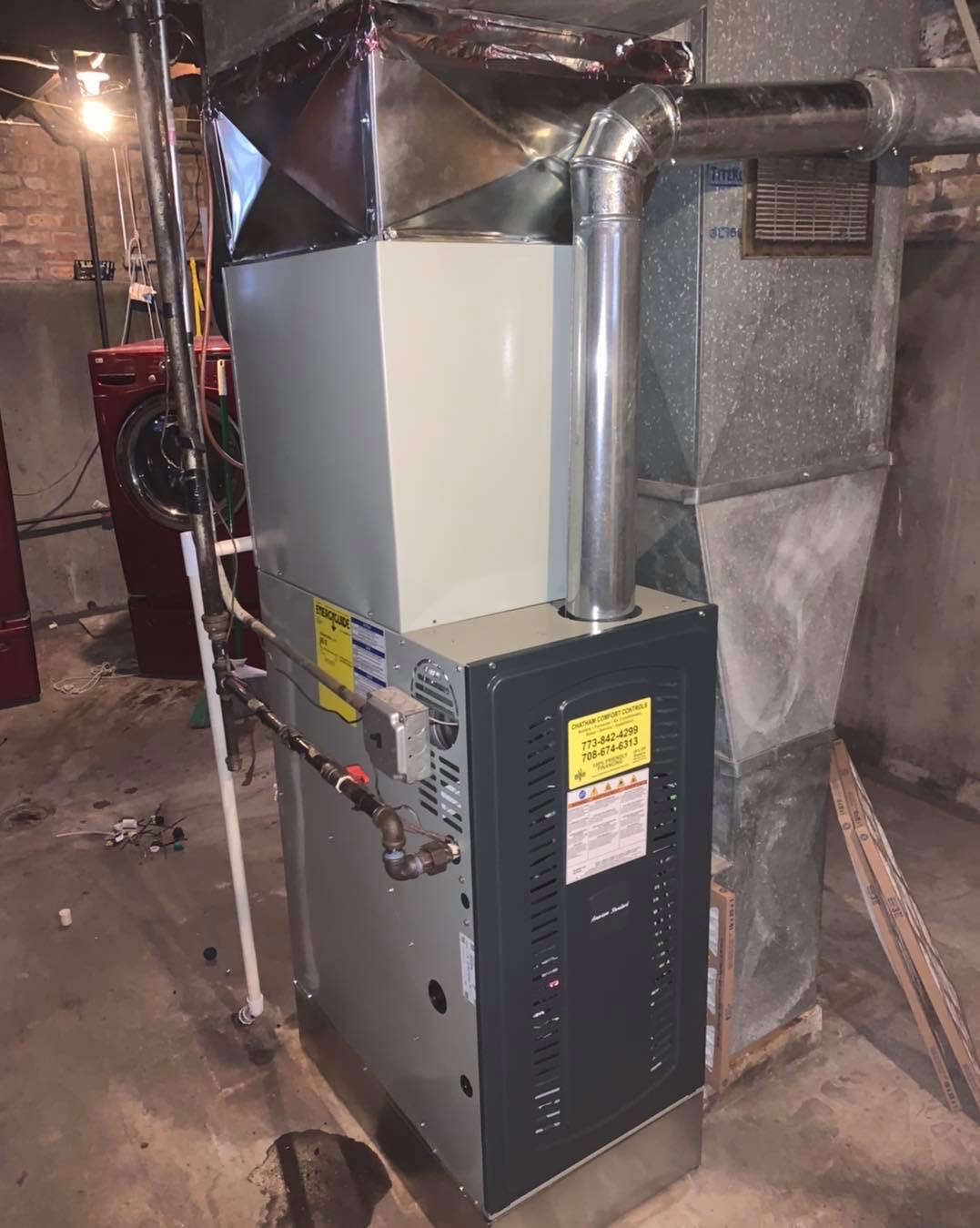
Your fuel source significantly impacts both upfront and operating costs. Chicago homes primarily use natural gas, but electric, oil, and hybrid options exist. Each type carries distinct pricing considerations.
Gas Furnace Costs
Gas furnaces dominate Chicago's heating market for good reason. Natural gas remains the most cost-effective fuel for our climate. Installation costs range from $3,500 to $10,000 depending on efficiency and features.
Operating costs average $600 to $1,200 annually for a typical Chicago home. Gas furnaces require proper venting and gas line connections. Most Chicago homes already have gas infrastructure, keeping installation straightforward.
Electric Furnace Costs
Electric furnaces cost less upfront but more to operate. Installation runs $2,000 to $5,000 since no gas lines or complex venting is needed. However, Chicago's electricity rates make operating costs 2-3 times higher than gas.
Electric furnaces make sense for homes without gas access or as supplemental heating. They're also common in condos and apartments where gas installation isn't feasible. Expect annual operating costs of $1,500 to $2,500 or more.
Oil Furnace Costs
Oil furnaces are rare in Chicago but still exist in some older homes. Installation costs range from $4,000 to $9,000 including the oil tank. Operating costs fluctuate with oil prices but typically exceed natural gas.
Converting from oil to gas often makes financial sense for Chicago homeowners. The conversion costs $3,000 to $7,000 but delivers long-term savings and eliminates oil delivery hassles.
Dual-Fuel and Hybrid System Costs
Dual-fuel systems pair a gas furnace with an electric heat pump. These setups optimize efficiency by using the heat pump in mild weather and switching to gas during extreme cold. Installation costs range from $8,000 to $15,000 for the complete system.
Chicago's climate makes dual-fuel systems increasingly attractive. You'll use the efficient heat pump during fall and spring while relying on gas backup during January's deep freeze. Operating costs often drop 20-30% compared to gas-only systems.
Factors That Affect Furnace Installation Costs
Understanding cost drivers helps you anticipate your actual investment. Several factors can push your project above or below average prices. Here's what impacts your bottom line.
Furnace Size and BTU Output
Furnace size directly correlates with cost. Units are measured in BTUs (British Thermal Units) of heating output. Chicago homes typically need 60,000 to 120,000 BTU furnaces depending on square footage and insulation.
Undersized furnaces run constantly and fail prematurely. Oversized units cycle frequently, wasting energy and creating temperature swings. A proper load calculation ensures you buy the right size—not the cheapest or most expensive option.
AFUE Efficiency Ratings
AFUE (Annual Fuel Utilization Efficiency) measures how much fuel converts to heat. An 80% AFUE furnace wastes 20 cents of every dollar on exhaust gases. A 96% AFUE unit captures nearly all fuel energy.
Higher efficiency costs more upfront but reduces monthly bills. The Department of Energy recommends 90% AFUE minimum for cold climates like Chicago. The efficiency premium typically adds $1,000 to $3,000 to equipment costs.
Brand and Equipment Quality
Brand reputation affects both price and reliability. Premium brands like Carrier, Lennox, and Trane cost 15-30% more than budget options. However, they often include better warranties and more durable components.
Mid-tier brands like Goodman, Rheem, and Bryant offer solid value. They provide reliable performance without premium pricing. Your contractor's installation quality matters more than brand name for long-term performance.
Labor and Installation Complexity
Labor represents 40-60% of total installation cost in Chicago. Local rates, job complexity, and contractor expertise all factor in. Straightforward replacements cost less than installations requiring significant modifications.
Difficult access points increase labor time. Basement installations typically cost less than attic units. Homes with tight mechanical rooms or unusual configurations require more labor hours.
Ductwork Modifications
Existing ductwork condition significantly impacts costs. Damaged, undersized, or poorly designed ducts may need repair or replacement. Ductwork modifications add $500 to $3,000 or more to your project.
Upgrading to a higher-capacity furnace sometimes requires larger ducts. Sealing leaky ductwork improves efficiency and comfort. Your contractor should inspect ducts during the initial assessment.
Permits and Chicago Building Codes
Chicago requires permits for furnace installations. Permit costs typically run $100 to $300 depending on your specific municipality. Licensed contractors handle permit applications as part of their service.
Code compliance may require additional work. Older homes sometimes need electrical upgrades, gas line modifications, or venting changes to meet current standards. These requirements protect your safety but add to project costs.
Installation Costs vs. Replacement Costs
Your starting point affects total investment. New construction, replacement, and fuel conversion projects each carry different cost profiles. Understanding these distinctions helps you budget accurately.
New Installation in New Construction
New construction offers the cleanest installation scenario. No demolition or removal costs exist. Ductwork is designed specifically for your new furnace. Installation costs typically run $1,500 to $3,500 for labor alone.
However, you're also paying for complete ductwork installation. Total HVAC system costs in new Chicago homes range from $10,000 to $20,000 including furnace, air conditioning, and ductwork.
Replacing an Existing Furnace
Replacement projects include removal and disposal of your old unit. Most contractors include this in their quotes, adding $200 to $500 to the project. Replacement installations typically take 4-8 hours for straightforward jobs.
Complications arise when the new furnace differs significantly from the old one. Different sizes, efficiency levels, or brands may require modifications. Budget 10-20% extra for potential surprises in older homes.
Converting Fuel Types
Fuel conversion projects carry the highest costs. Converting from oil to gas requires new gas lines, furnace equipment, and often electrical work. Total conversion costs range from $5,000 to $12,000 depending on complexity.
Converting from electric to gas requires gas line installation if none exists. This alone costs $1,500 to $4,000 depending on distance from the main. However, the long-term operating savings often justify the investment.
Additional Costs to Budget For
Your furnace doesn't operate in isolation. Related upgrades and add-ons improve performance and comfort. Consider these common additions when planning your budget.
Thermostat Upgrades
A new furnace deserves a capable thermostat. Basic programmable thermostats cost $50 to $150 installed. Smart thermostats like Nest or Ecobee run $200 to $400 installed but offer energy savings and convenience.
Many high-efficiency furnaces require communicating thermostats to access all features. Your contractor should recommend compatible options. Some utility rebates require specific thermostat types.
Air Quality Add-Ons
Furnace replacement presents an opportunity for air quality improvements. Upgraded air filters, UV germicidal lights, and whole-home humidifiers integrate with your new system. Costs range from $200 to $2,000 depending on options selected.
Chicago's dry winter air makes humidifiers particularly valuable. Proper humidity levels improve comfort and protect wood floors and furniture. Whole-home humidifiers cost $400 to $800 installed.
Extended Warranties
Manufacturer warranties typically cover parts for 5-10 years. Extended warranties add labor coverage and longer protection periods. Costs range from $150 to $500 for comprehensive coverage.
Consider your risk tolerance and budget. Extended warranties provide peace of mind but may not pay off statistically. Quality installation and regular maintenance matter more than warranty length.
Maintenance Plans
Annual maintenance keeps your furnace running efficiently. Most contractors offer maintenance plans for $150 to $300 annually. Plans typically include annual tune-ups, priority service, and repair discounts.
Regular maintenance extends equipment life and maintains efficiency. Skipping maintenance voids some warranties and leads to higher repair costs. Budget for ongoing maintenance regardless of whether you buy a plan.
How to Save Money on a New Furnace
Smart timing and research reduce your total investment. Several strategies help Chicago homeowners get better value without sacrificing quality.
Seasonal Pricing and Off-Peak Installation
HVAC contractors stay busiest during extreme weather. Scheduling installation during spring or fall often yields better pricing. Contractors have more availability and sometimes offer seasonal discounts.
Avoid emergency replacement if possible. A failing furnace in January limits your options and negotiating power. Plan replacement before your current system dies completely.
Rebates and Tax Credits
Federal tax credits reward high-efficiency equipment purchases. The Inflation Reduction Act offers credits up to $600 for qualifying furnaces. Credits apply to equipment meeting specific efficiency thresholds.
Local utility rebates add additional savings. ComEd and Peoples Gas offer rebates for high-efficiency installations. Combined savings can reach $500 to $1,500 on qualifying equipment.
Financing Options
Most HVAC contractors offer financing for qualified buyers. Options include same-as-cash promotions, low-interest loans, and extended payment plans. Financing allows you to afford higher-efficiency equipment that saves money long-term.
Compare financing terms carefully. Some promotional rates increase dramatically after the promotional period. Calculate total cost including interest before choosing a payment plan.
Getting Multiple Quotes
Always obtain at least three quotes from licensed contractors. Pricing varies significantly between companies for identical equipment. Multiple quotes reveal the fair market price and help identify outliers.
Compare quotes carefully—the cheapest isn't always best. Ensure quotes include identical equipment, warranty terms, and scope of work. Ask about contractor licensing, insurance, and installation guarantees.
Signs You Need a New Furnace
Recognizing replacement signals helps you plan proactively. Several indicators suggest your furnace is approaching end-of-life. Watch for these warning signs.
Age of Your Current System
Most furnaces last 15-20 years with proper maintenance. Systems older than 15 years operate less efficiently and face increasing repair risks. Replacement becomes cost-effective when repair costs exceed 50% of new equipment value.
Check your furnace's age on the manufacturer's label. If you can't find it, your HVAC technician can determine approximate age during a service call.
Rising Energy Bills
Increasing gas bills despite similar usage patterns indicate declining efficiency. Furnaces lose efficiency as components wear. A 20-year-old furnace may operate at 60-70% efficiency regardless of its original rating.
Compare your bills year-over-year, adjusting for weather differences. Significant increases without explanation warrant professional evaluation.
Frequent Repairs
Repair frequency increases as furnaces age. One major repair doesn't justify replacement, but multiple repairs within a few years signal declining reliability. Track your repair history and costs.
The $5,000 rule helps guide decisions: if repair cost multiplied by furnace age exceeds $5,000, replacement often makes more sense. A $500 repair on a 12-year-old furnace ($6,000) suggests considering replacement.
Uneven Heating and Comfort Issues
Rooms that won't stay warm indicate furnace or distribution problems. While ductwork issues cause some comfort problems, an aging furnace may lack capacity to heat your home adequately.
Strange noises, frequent cycling, and inconsistent temperatures all suggest declining performance. Professional diagnosis determines whether repair or replacement makes sense.
Choosing the Right Furnace for Chicago's Climate
Chicago's climate demands specific furnace characteristics. Our cold winters and variable weather require equipment designed for demanding conditions. Make choices that match our local reality.
Why High-Efficiency Matters in Cold Climates
Chicago averages over 6,000 heating degree days annually—among the highest in the nation. Your furnace runs thousands of hours each winter. Small efficiency differences compound into significant savings.
A 96% AFUE furnace saves roughly $200 to $400 annually compared to an 80% unit in Chicago. Over 15-20 years, that's $3,000 to $8,000 in savings—often exceeding the efficiency premium.
Sizing Your Furnace Correctly
Proper sizing requires professional load calculations. Contractors consider square footage, insulation levels, window quality, and home orientation. Rules of thumb like "one ton per 500 square feet" oversimplify the calculation.
Chicago's older housing stock varies dramatically in efficiency. A well-insulated 2,000 square foot home may need less heating capacity than a drafty 1,500 square foot bungalow. Insist on Manual J load calculations for accurate sizing.
Variable-Speed vs. Single-Stage Furnaces
Single-stage furnaces operate at full capacity or off. They're simple and affordable but create temperature swings. Variable-speed units modulate output to match heating demand precisely.
Variable-speed furnaces cost $1,000 to $2,000 more but deliver superior comfort. They run longer at lower capacity, maintaining consistent temperatures and better humidity control. For Chicago's long heating season, the comfort improvement often justifies the premium.
What to Expect During Furnace Installation
Understanding the installation process reduces stress and helps you prepare. Professional installation follows a predictable sequence. Here's what happens before, during, and after your new furnace arrives.
Pre-Installation Assessment
Quality contractors begin with thorough home evaluation. They inspect your current system, ductwork, gas lines, and electrical connections. This assessment identifies potential complications before installation day.
Expect the assessment to take 30-60 minutes. The contractor should explain their findings and recommendations clearly. Get all details in writing before signing a contract.
Installation Day Timeline
Most furnace replacements take 4-8 hours for experienced crews. Complex installations or significant modifications may extend to a full day. Your contractor should provide a realistic timeline upfront.
Installation involves removing the old unit, preparing the installation area, setting the new furnace, connecting utilities, and testing operation. Expect some noise and workers moving through your home.
Post-Installation Inspection
After installation, your contractor should demonstrate proper operation. They'll walk you through thermostat programming, filter location, and maintenance requirements. Ask questions—this is your opportunity to learn your new system.
Chicago requires inspection for permitted work. Your contractor handles scheduling. The inspector verifies code compliance and safe installation. Keep all documentation for warranty purposes and future reference.
Conclusion
A new furnace in Chicago represents a significant investment ranging from $3,500 to $12,000 depending on efficiency, features, and installation complexity. Understanding the factors that drive costs—furnace type, AFUE rating, home size, and installation requirements—helps you budget accurately and make informed decisions.
Chicago's demanding climate makes furnace selection particularly important. High-efficiency equipment, proper sizing, and professional installation deliver comfort, reliability, and long-term savings. The right furnace keeps your family warm through our coldest winters while minimizing energy costs.
We're here to help you navigate your furnace investment with confidence. At Chicago Comfort HVAC, we provide transparent pricing, expert recommendations, and professional installation backed by our workmanship guarantee. Contact us today for a free in-home assessment and detailed quote tailored to your Chicago home.
Frequently Asked Questions
How long does a new furnace last?
A properly installed and maintained furnace typically lasts 15-20 years. High-quality equipment with annual maintenance often reaches the upper end of this range. Factors like usage intensity and maintenance consistency affect actual lifespan.
Is a high-efficiency furnace worth the extra cost?
For Chicago homeowners, high-efficiency furnaces usually pay for themselves within 5-7 years through lower gas bills. The longer your heating season and higher your usage, the faster you'll recover the efficiency premium. Most Chicago homes benefit from 90%+ AFUE ratings.
How long does furnace installation take?
Standard furnace replacement takes 4-8 hours for experienced installers. Complex jobs involving ductwork modifications, fuel conversion, or difficult access may require a full day. Your contractor should provide a realistic timeline during the estimate process.
Can I install a furnace myself to save money?
DIY furnace installation is not recommended and often illegal. Chicago requires licensed contractors for gas appliance installation. Improper installation creates serious safety hazards including carbon monoxide poisoning and fire risk. Professional installation also maintains manufacturer warranty coverage.
What size furnace do I need for my Chicago home?
Furnace size depends on your home's square footage, insulation quality, window efficiency, and other factors. Most Chicago homes need 60,000 to 120,000 BTU capacity. A professional load calculation (Manual J) determines the correct size for your specific home.
Are there financing options for furnace replacement?
Most HVAC contractors offer financing options including same-as-cash promotions, low-interest loans, and extended payment plans. Financing allows you to choose higher-efficiency equipment that saves money over time. Compare terms carefully and calculate total costs including interest.
When is the best time to buy a new furnace?
Spring and fall typically offer the best pricing and availability. Contractors are less busy during mild weather and may offer seasonal discounts. Avoid emergency replacement during extreme cold when options are limited and scheduling is difficult.
Follow a maintenance program
Ante gravida id aenean quis egestas risus nam amet nullam leo diam diam aliquam eu eu malesuada arcu rhoncus suspendisse nulla mattis ut amet sagittis in justo egestas.

search for a trusted mechanic
Lorem ipsum dolor sit amet, consectetur adipiscing elit lobortis arcu enim urna adipiscing praesent velit viverra sit semper lorem eu cursus vel hendrerit elementum morbi curabitur etiam nibh justo, lorem aliquet donec sed sit mi dignissim at ante massa mattis.
- Neque sodales ut etiam sit amet nisl purus non tellus orci ac auctor
- Adipiscing elit ut aliquam purus sit amet viverra suspendisse potent
- Mauris commodo quis imperdiet massa tincidunt nunc pulvinar
- Excepteur sint occaecat cupidatat non proident sunt in culpa qui officia
Check the air pressure in your tires
Vitae congue eu consequat ac felis placerat vestibulum lectus mauris ultrices cursus sit amet dictum sit amet justo donec enim diam porttitor lacus luctus accumsan tortor posuere praesent tristique magna sit amet purus gravida quis blandit turpis.
Review your suspension frequently
At risus viverra adipiscing at in tellus integer feugiat nisl pretium fusce id velit ut tortor sagittis orci a scelerisque purus semper eget at lectus urna duis convallis. porta nibh venenatis cras sed felis eget neque laoreet suspendisse interdum consectetur libero id faucibus nisl donec pretium vulputate sapien nec sagittis aliquam nunc lobortis mattis aliquam faucibus purus in.
- Neque sodales ut etiam sit amet nisl purus non tellus orci ac auctor
- Adipiscing elit ut aliquam purus sit amet viverra suspendisse potent
- Mauris commodo quis imperdiet massa tincidunt nunc pulvinar
- Excepteur sint occaecat cupidatat non proident sunt in culpa qui officia
Service your vehicle as regularly as posible
At risus viverra adipiscing at in tellus integer feugiat nisl pretium fusce id velit ut tortor sagittis orci a scelerisque purus semper eget at lectus urna duis convallis. porta nibh venenatis cras sed felis eget neque laoreet suspendisse interdum consectetur libero id faucibus nisl donec pretium vulputate sapien nec sagittis aliquam nunc lobortis mattis aliquam faucibus purus in.
“Nisi quis eleifend quam adipiscing vitae aliquet bibendum enim facilisis gravida neque velit euismod in pellentesque”
Conclusion
Eget lorem dolor sed viverra ipsum nunc aliquet bibendum felis donec et odio pellentesque diam volutpat commodo sed egestas aliquam sem fringilla ut morbi tincidunt augue interdum velit euismod eu tincidunt tortor aliquam nulla facilisi aenean sed adipiscing diam donec adipiscing ut lectus arcu bibendum at varius vel pharetra nibh venenatis cras sed felis eget.