
Professional HVAC cleaning in Chicago typically costs between $100 and $500 for residential systems, depending on system type, condition, and whether duct cleaning is included. Commercial properties can expect higher costs based on system complexity and square footage.
Dirty coils, clogged drain lines, and dust-packed ductwork silently drive up your energy bills and shorten equipment life. Understanding exactly what you’re paying for helps you budget smarter and avoid overpaying.
This guide breaks down real Chicago pricing, every service included in a professional cleaning, the factors that shift your cost up or down, and how to pick a qualified contractor.
What Is Professional HVAC Cleaning?
Professional HVAC cleaning is a comprehensive service where a trained technician inspects, cleans, and tunes every major component of your heating and cooling system. It goes far beyond what any homeowner can accomplish with a vacuum and a fresh filter.
The goal is to remove accumulated dust, debris, mold, and buildup from internal components that directly affect airflow, heat transfer, and system efficiency. A clean system runs less, lasts longer, and heats or cools your Chicago home more evenly.
How It Differs from Changing a Filter
Swapping out a filter takes two minutes and catches surface-level particulates. That’s maintenance, not cleaning. A professional cleaning addresses the components behind the filter: the evaporator coil, blower assembly, condensate drain, and the ductwork that distributes conditioned air throughout your property.
Think of it this way. Changing a filter is like wiping down your kitchen counter. Professional HVAC cleaning is a deep clean of the entire kitchen, including behind the appliances.
Key Components Cleaned During a Professional Visit
A thorough professional HVAC cleaning covers these core components:
- Evaporator and condenser coils where heat exchange happens
- Blower motor and fan assembly that circulates air
- Condensate drain line and pan that removes moisture
- Supply and return ductwork that delivers air to every room
- Registers, grilles, and vents at every access point
- Electrical connections and contacts checked and cleaned
- Thermostat calibrated for accurate readings
Each component plays a direct role in system performance. Neglecting any one of them creates a bottleneck that forces the entire system to work harder.
What’s Included in a Professional HVAC Cleaning
Not every HVAC cleaning service includes the same scope of work. Knowing what a complete cleaning looks like protects you from paying full price for a partial job.
Here’s what a thorough professional HVAC cleaning should include, step by step.
Inspection and System Assessment
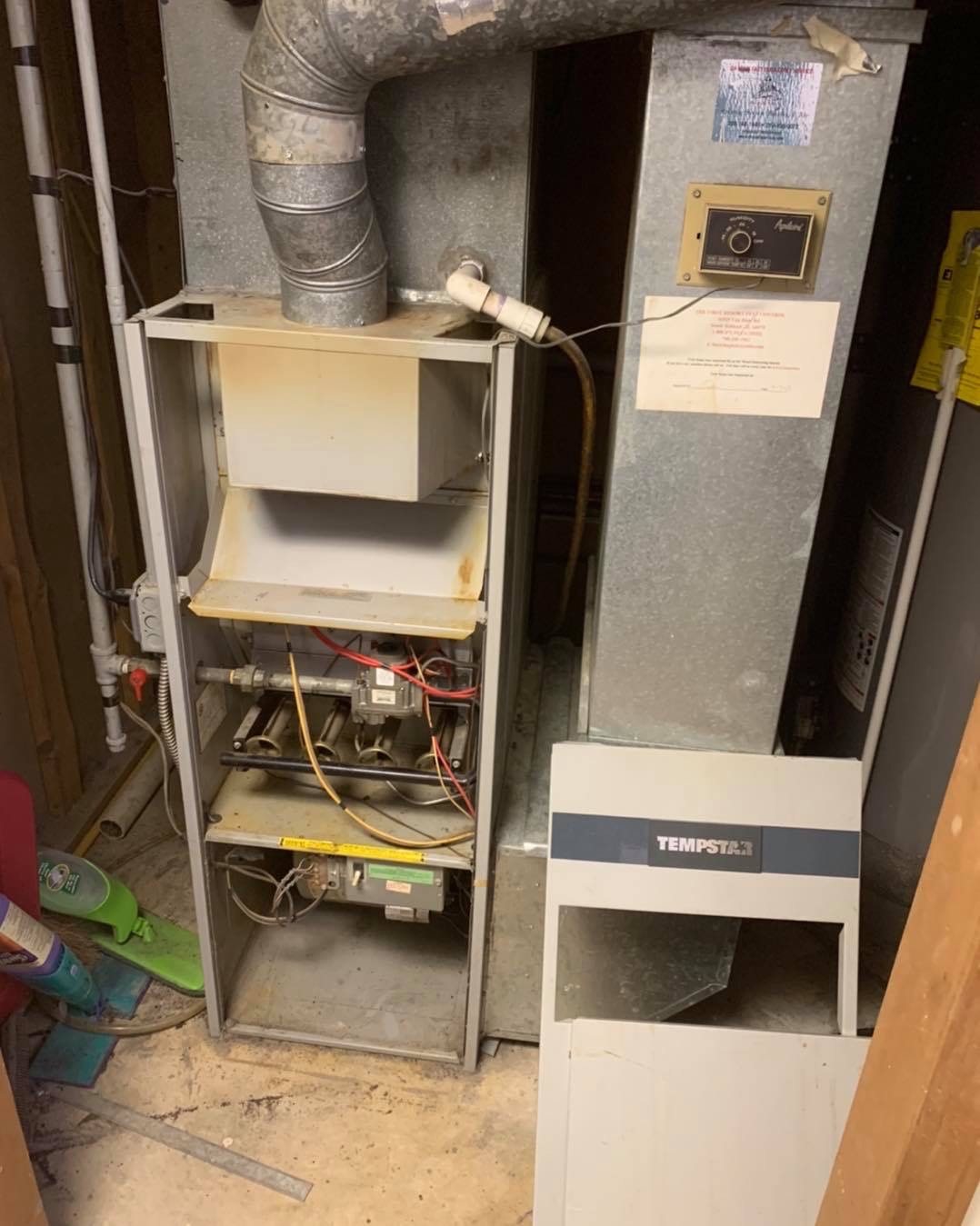
Every professional cleaning starts with a full system inspection. The technician evaluates the age, condition, and current performance of your HVAC equipment before touching anything.
This assessment identifies problems that cleaning alone won’t fix, like cracked heat exchangers, refrigerant leaks, or failing capacitors. It also establishes a baseline so the technician can measure improvement after the cleaning is complete.
In Chicago, where systems endure extreme temperature swings from subzero winters to humid summers, this inspection often reveals wear patterns specific to our climate.
Ductwork and Vent Cleaning
Duct cleaning removes dust, pet dander, pollen, mold spores, and debris that accumulate inside your supply and return air ducts over time. Technicians use specialized brushes, compressed air tools, and high-powered vacuums to dislodge and extract buildup.
Every register and grille gets removed, cleaned, and reinstalled. The technician inspects duct connections for leaks or separations that waste conditioned air and drive up energy costs.
For Chicago homes with older ductwork, especially in bungalows and two-flats built before 1970, duct cleaning often reveals decades of accumulated debris that significantly restricts airflow.
Coil and Blower Cleaning
The evaporator coil (indoor) and condenser coil (outdoor) are where your system actually transfers heat. Even a thin layer of grime on these coils reduces heat transfer efficiency dramatically.
Technicians apply coil-specific cleaning solutions, rinse the coils, and verify that fins are straight and unobstructed. Bent fins get straightened with a fin comb to restore proper airflow.
The blower motor and fan blades collect a surprising amount of dust. A dirty blower moves less air, which means your system runs longer cycles to reach the thermostat setting. Cleaning the blower assembly alone can noticeably improve airflow throughout your home.
Drain Line and Condensate Pan Service
Your HVAC system produces moisture as a byproduct of cooling. That moisture collects in a condensate pan and drains through a dedicated line. When that line clogs, water backs up and can cause water damage, mold growth, or trigger a system shutdown.
Professional cleaning includes flushing the drain line, treating it with an antimicrobial solution, and inspecting the condensate pan for cracks or corrosion. In Chicago’s humid summers, this step prevents one of the most common and preventable AC failures.
Thermostat Calibration and Final Testing
After cleaning, the technician calibrates your thermostat to ensure it reads and responds to temperature accurately. Even a two-degree discrepancy causes your system to cycle incorrectly, wasting energy.
The final step is a complete system test. The technician runs your HVAC through heating and cooling cycles, checks airflow at multiple vents, verifies refrigerant pressure (for AC systems), and confirms that all electrical connections are secure.
You should receive a written summary of everything that was done, any issues found, and recommendations for future maintenance.
How Much Does Professional HVAC Cleaning Cost in Chicago?
Cost is the question that brings most homeowners to this page. Here are realistic price ranges based on the Chicago market.
Average Price Ranges for Residential Systems
Service
Typical Chicago Price Range
Basic HVAC tune-up and cleaning (furnace or AC)
$100 to $200
Full system cleaning (furnace + AC)
$150 to $300
Duct cleaning (whole house, average-sized home)
$300 to $500
Complete cleaning: system + ducts
$400 to $700
Dryer vent cleaning (add-on)
$75 to $150
These ranges reflect standard residential systems in Chicago. Homes with multiple HVAC zones, oversized systems, or extensive ductwork will fall toward the higher end.
A basic tune-up that includes a visual inspection, filter replacement, and surface cleaning sits at the low end. A comprehensive cleaning that includes coil treatment, blower disassembly, drain line flush, and full duct cleaning sits at the high end.
Commercial HVAC Cleaning Costs
Commercial HVAC cleaning costs vary more widely because commercial systems are larger, more complex, and often include rooftop units, multiple zones, and extensive ductwork.
Small commercial spaces like retail shops or small offices typically pay between $300 and $800 for a full system cleaning. Larger commercial buildings with multiple rooftop units or complex VAV systems can expect costs from $1,000 to $3,000+ depending on scope.
Chicago commercial property owners and landlords should budget for semi-annual cleanings to maintain tenant comfort and comply with local building codes.
Duct Cleaning vs. Full System Cleaning Cost Comparison
Many homeowners confuse duct cleaning with full HVAC cleaning. They overlap but are not the same service.
Service
What It Covers
Typical Cost
Duct cleaning only
Supply ducts, return ducts, registers, grilles
$300 to $500
System cleaning only
Coils, blower, drain, electrical, thermostat
$150 to $300
Full cleaning (ducts + system)
Everything above combined
$400 to $700
Bundling both services with the same contractor usually saves 10% to 20% compared to booking them separately. Ask your contractor about package pricing before scheduling.
Factors That Affect HVAC Cleaning Costs in Chicago
No two cleaning jobs cost exactly the same. These are the variables that move your price up or down.
System Type and Size
A single-zone residential furnace and AC combo is the simplest and cheapest to clean. Heat pumps, ductless mini-splits, and dual-fuel systems require specialized knowledge and additional labor time.
System size matters too. A 2-ton AC unit serving a small condo takes less time to clean than a 5-ton system in a large single-family home. More tonnage means larger coils, bigger blowers, and more ductwork.
Condition and Age of the System
A system that receives annual maintenance stays relatively clean and costs less to service. A system that hasn’t been cleaned in five or ten years requires significantly more labor, stronger cleaning agents, and potentially replacement parts.
Older systems, especially furnaces and AC units over 15 years old, often have corroded components, outdated refrigerants, or hard-to-source parts that add time and cost to the cleaning process.
Accessibility and Ductwork Complexity
If your furnace is tucked into a tight crawl space or your ductwork runs through finished walls with limited access points, the job takes longer. Longer jobs cost more.
Chicago’s housing stock includes everything from Victorian-era homes with retrofitted ductwork to modern condos with compact mechanical closets. Accessibility varies dramatically, and contractors factor this into their pricing.
Homes with flexible ductwork (flex duct) are generally faster to clean than homes with rigid sheet metal ductwork, which requires more manual brushing.
Seasonal Demand and Scheduling
HVAC contractors in Chicago are busiest during the transition seasons: late spring (before cooling season) and early fall (before heating season). Booking during peak demand can mean higher prices and longer wait times.
Scheduling your cleaning during the off-peak months of late winter or mid-summer often gets you faster service and sometimes a lower rate. Some contractors offer early-bird discounts for customers who book spring or fall cleanings months in advance.
Add-On Services and Upgrades
Common add-ons that increase your total cost include:
- UV light installation for mold prevention in ductwork: $200 to $600
- Antimicrobial duct treatment after cleaning: $75 to $200
- Dryer vent cleaning bundled with HVAC service: $75 to $150
- Filter upgrade to a higher-MERV or HEPA-rated filter: $30 to $100+
- Duct sealing to fix leaks found during cleaning: $200 to $600
These add-ons are optional but can deliver meaningful improvements in air quality and efficiency. Ask your contractor which ones make sense for your specific system and situation.
How Often Should You Schedule Professional HVAC Cleaning?
Cleaning frequency depends on your property type, system usage, and environmental factors. There’s no single answer, but there are clear guidelines.
Recommended Frequency for Chicago Homes
Most HVAC professionals recommend a full system cleaning once per year for residential properties. In Chicago, the ideal timing is either early spring (before you switch to cooling) or early fall (before heating season begins).
Duct cleaning is needed less frequently. For most Chicago homes, every 3 to 5 years is sufficient unless you have specific air quality concerns, pets, smokers, or recent renovation dust.
Properties with higher demands should clean more often:
- Homes with pets: Annual duct cleaning recommended
- Homes with allergy or asthma sufferers: Annual duct cleaning recommended
- Rental properties between tenants: Clean before each new occupant
- Commercial spaces with high foot traffic: Semi-annual system cleaning
- Post-renovation: Immediate duct cleaning to remove construction dust
Signs Your HVAC System Needs Cleaning Now
Don’t wait for the calendar if your system is showing these symptoms:
- Visible dust blowing from vents when the system runs
- Musty or stale odors when heating or cooling kicks on
- Uneven temperatures between rooms
- Higher-than-normal energy bills with no change in usage
- System running longer cycles than usual
- Increased allergy symptoms indoors
- Visible mold around vents or on duct surfaces
Any of these signs means your system is working harder than it should. A professional cleaning addresses the root cause rather than masking the symptom.
Benefits of Professional HVAC Cleaning for Chicago Properties
The cost of professional cleaning pays for itself through measurable improvements in efficiency, comfort, and equipment longevity.
Improved Energy Efficiency and Lower Utility Bills
Dirty coils, clogged filters, and restricted ductwork force your system to consume more energy to deliver the same output. Cleaning restores your system to its designed efficiency level.
Most homeowners notice a reduction in monthly energy costs after a thorough cleaning, particularly if the system hasn’t been serviced in several years. The savings compound over time, especially through Chicago’s long heating season when your furnace runs daily for months.
Better Indoor Air Quality
Everything your HVAC system circulates passes through the same ducts, coils, and blower. If those components are coated in dust, mold, or debris, your indoor air carries those contaminants into every room.
Professional cleaning removes the source of indoor air pollution at the system level. For Chicago homes that stay sealed tight during winter, this makes a significant difference in day-to-day air quality.
Extended Equipment Lifespan
HVAC systems that run clean last longer. Dirt buildup causes components to overheat, corrode, and fail prematurely. A furnace rated for 20 years might only last 12 to 15 without regular cleaning.
Regular professional cleaning protects your investment and delays the significant expense of full system replacement.
Fewer Breakdowns and Emergency Repairs
Most emergency HVAC calls stem from preventable issues: frozen coils, clogged drains, overheated motors, and tripped safety switches. All of these trace back to dirt and neglect.
A clean system is a reliable system. Scheduling professional cleaning reduces the likelihood of a mid-January furnace failure or an August AC breakdown, both of which are expensive and uncomfortable in Chicago’s extreme climate.
How to Choose an HVAC Cleaning Contractor in Chicago
Not all HVAC cleaning services deliver the same quality. Choosing the right contractor protects your investment and ensures the job is done thoroughly.
What to Look for in a Qualified Contractor
Prioritize these qualifications when evaluating Chicago HVAC cleaning contractors:
- Licensed and insured in the state of Illinois
- NATE-certified technicians (North American Technician Excellence)
- NADCA membership for duct cleaning (National Air Duct Cleaners Association)
- Transparent pricing with written estimates before work begins
- Positive reviews on Google, Yelp, and the Better Business Bureau
- Clear scope of work that details exactly what’s included
A contractor who can’t tell you exactly what they’ll clean, how long it will take, and what it will cost before starting is not worth your time.
Questions to Ask Before Booking
Ask these questions before committing to any HVAC cleaning contractor:
- What specific components are included in your cleaning service?
- Do you provide a written estimate before starting work?
- Are your technicians NATE-certified?
- Do you carry liability insurance and workers’ compensation?
- How long will the cleaning take for my system size?
- Do you offer any guarantees or warranties on your work?
- Can you provide references from Chicago customers?
The answers reveal whether you’re dealing with a professional operation or a fly-by-night outfit.
Red Flags and Common Scams to Avoid
The HVAC cleaning industry has its share of bad actors. Watch for these warning signs:
- “Whole house duct cleaning for $99” ads. Legitimate whole-house duct cleaning cannot be done profitably at that price. These offers typically lead to aggressive upselling or incomplete work.
- No written estimate. Any reputable contractor provides a written scope and price before starting.
- Pressure to replace equipment immediately. A cleaning visit should not turn into a high-pressure sales pitch for a new system unless there’s a genuine safety concern.
- No credentials or licensing. Ask for proof. If they can’t provide it, walk away.
- Bait-and-switch pricing. The quoted price should match the final invoice. If “unexpected” charges appear after the work is done, that’s a red flag.
DIY vs. Professional HVAC Cleaning
Some maintenance tasks are safe and effective for homeowners. Others require professional tools, training, and access.
What You Can Safely Do Yourself
Homeowners can and should handle these tasks between professional cleanings:
- Replace or clean air filters every 1 to 3 months
- Clear debris from around the outdoor condenser unit
- Vacuum visible dust from supply and return registers
- Keep vents open and unobstructed by furniture or curtains
- Pour a cup of vinegar down the condensate drain line monthly during cooling season
- Check thermostat batteries and settings seasonally
These tasks take minutes and cost almost nothing. They keep your system running between professional visits and prevent the most basic airflow problems.
Why Professional Cleaning Delivers Better Results
Professional technicians have access to tools and training that homeowners don’t:
- Commercial-grade vacuum systems that create negative pressure in ductwork to extract deep debris
- Specialized coil cleaning solutions formulated to dissolve buildup without damaging fins
- Combustion analyzers and refrigerant gauges that verify system performance after cleaning
- Rotary brush systems that reach deep into ductwork beyond what any household vacuum can access
- Training to identify worn parts, gas leaks, electrical hazards, and refrigerant issues during the cleaning process
DIY maintenance is valuable. But it supplements professional cleaning. It doesn’t replace it.
Conclusion
Professional HVAC cleaning in Chicago costs between $100 and $700 depending on scope, system type, and condition. Knowing what’s included, from coil and blower cleaning to full duct service, helps you compare quotes accurately and avoid overpaying.
Clean systems run more efficiently, break down less often, and last years longer. For Chicago properties dealing with extreme seasonal demands, regular professional cleaning is one of the highest-return maintenance investments you can make.
We’re Chicago Comfort HVAC, and we provide transparent pricing, thorough cleaning, and honest recommendations for every system we service. Call us today for a free estimate on professional HVAC cleaning for your home or business.
Frequently Asked Questions
Is professional HVAC cleaning worth the cost?
Yes. Professional cleaning improves energy efficiency, extends equipment lifespan, and prevents costly breakdowns. Most Chicago homeowners recover the cost through lower utility bills within the first year.
How long does a professional HVAC cleaning take?
A standard residential system cleaning takes 2 to 4 hours. Full duct cleaning adds another 2 to 3 hours depending on home size and ductwork complexity.
Can HVAC cleaning improve my allergies?
Professional cleaning removes dust, mold spores, pet dander, and pollen from your system and ductwork. Many homeowners with allergies or asthma report noticeable improvement in indoor air quality after a thorough cleaning.
What’s the difference between HVAC cleaning and HVAC maintenance?
HVAC maintenance includes cleaning but also covers performance testing, refrigerant checks, electrical inspections, and safety evaluations. Cleaning focuses specifically on removing dirt and debris from system components.
Should I clean my ducts every year?
Most Chicago homes only need duct cleaning every 3 to 5 years. Annual duct cleaning is recommended if you have pets, smokers, allergy sufferers, or have recently completed a renovation.
Does HVAC cleaning reduce energy bills?
A clean system operates closer to its rated efficiency, which reduces the energy needed to heat and cool your home. The dirtier the system was before cleaning, the more noticeable the savings.
How do I know if my HVAC cleaning contractor did a thorough job?
Ask for before-and-after photos of coils and ductwork. Check airflow at multiple vents after the service. A reputable contractor provides a written summary of work completed and any issues found during the cleaning.