
Four Types of HVAC Maintenance Explained
Learn the four types of HVAC maintenance: preventive, predictive, corrective, and emergency. Chicago costs, schedules, and tips to protect your system year-round.
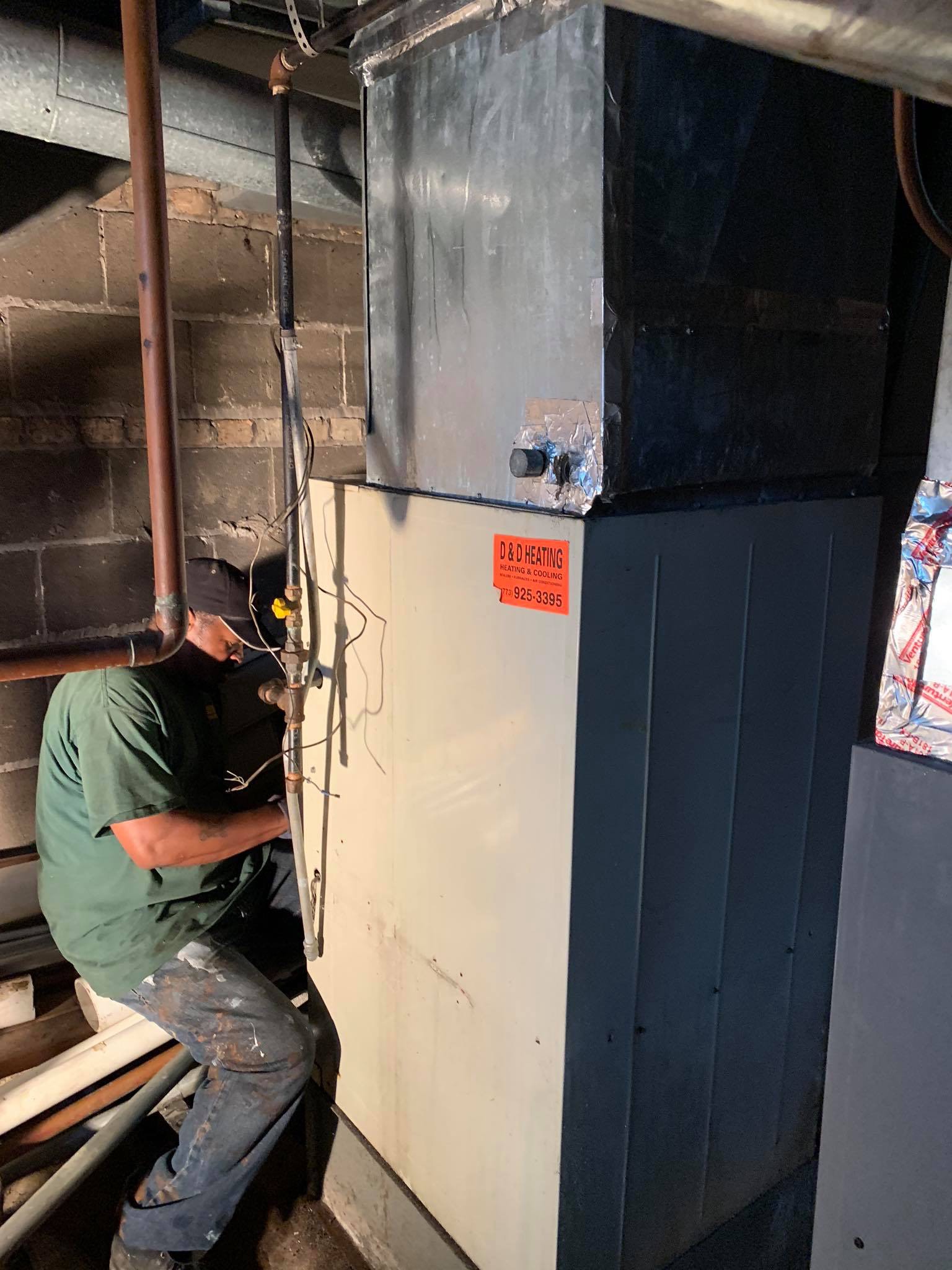
Every HVAC system in Chicago needs four distinct types of maintenance to run safely and efficiently: preventive, predictive, corrective, and emergency. Each one serves a different purpose, carries different costs, and applies at different stages of your system's life.
Understanding these four categories helps you budget smarter, avoid surprise breakdowns during a polar vortex or August heat wave, and get more years out of equipment that represents a significant investment.
This guide breaks down each maintenance type in detail, including what's involved, what it costs in the Chicago market, and how to decide which approach fits your property.
What Is HVAC Maintenance and Why Does It Matter in Chicago?
HVAC maintenance is the process of inspecting, cleaning, adjusting, and repairing heating, ventilation, and air conditioning equipment to keep it running at peak performance. It covers everything from routine filter changes to complex diagnostic work on compressors, heat exchangers, and ductwork.
For Chicago property owners, maintenance is not optional. It is the single most effective way to protect a system that your household or business depends on roughly 10 to 11 months out of the year. A well-maintained furnace or air conditioner uses less energy, breaks down less often, and lasts years longer than a neglected one.
How Chicago's Climate Puts Extra Stress on HVAC Systems
Chicago's climate is uniquely demanding on heating and cooling equipment. Winter temperatures regularly drop below zero, and summer humidity pushes cooling systems hard for weeks at a time. The city sits in IECC Climate Zone 5A, which means buildings need robust insulation and HVAC systems rated for extreme temperature swings.
That kind of range, from subzero wind chills in January to 90-degree heat indices in July, means your furnace and air conditioner both log heavy run hours every year. More run hours means more wear on motors, compressors, blower assemblies, and electrical components. Chicago's lake-effect weather patterns can also cause rapid temperature shifts that force systems to cycle on and off more frequently, accelerating mechanical fatigue.
Older housing stock across neighborhoods like Lincoln Park, Bridgeport, and Oak Park adds another layer. Many Chicago homes have aging ductwork, outdated insulation, and boiler systems that require specialized attention. Without consistent maintenance, these systems lose efficiency fast and become expensive to operate.
What Happens When You Skip Regular HVAC Maintenance
Skipping maintenance does not save money. It shifts costs from small, predictable service visits to large, unpredictable repair bills or premature system replacement.
A dirty air filter alone can increase energy consumption by 5% to 15%, according to the U.S. Department of Energy. Over a full Chicago heating season, that adds up quickly. Neglected coils reduce heat transfer efficiency. Worn belts snap. Refrigerant leaks go undetected until the compressor fails.
The consequences compound. A system running with restricted airflow overheats. An overheating system trips safety switches. Repeated tripping damages control boards. What started as a $150 tune-up becomes a $1,200 repair or a $6,000 replacement conversation.
Beyond cost, there are safety risks. A cracked heat exchanger in a gas furnace can leak carbon monoxide into your home. Annual inspection catches that. Skipping it does not.
The Four Types of HVAC Maintenance
HVAC maintenance falls into four categories. Each one addresses a different stage of equipment care, from routine upkeep to crisis response.
Preventive maintenance is scheduled service performed before problems develop. It keeps systems clean, calibrated, and running efficiently.
Predictive maintenance uses data and diagnostic tools to identify developing issues before they cause failure. It targets specific components showing early signs of wear.
Corrective maintenance is repair work performed after a problem has been identified but before the system fails completely. It fixes known issues to restore normal operation.
Emergency maintenance is unplanned, urgent service required when a system fails unexpectedly, typically during extreme weather when the stakes are highest.
These four types are not interchangeable. They work together as layers of protection. The more you invest in the first two, the less you spend on the last two.
Preventive HVAC Maintenance Explained
Preventive maintenance is the foundation of every sound HVAC care strategy. It is planned, scheduled service designed to keep equipment in good working order and catch small issues before they become expensive problems.
Think of it like an oil change for your car. You do not wait for the engine to seize. You service it on a schedule because the cost of prevention is a fraction of the cost of failure.
For Chicago homeowners and business owners, preventive maintenance is especially critical because systems run under heavy load for most of the year. A furnace that has not been tuned up before winter is far more likely to fail on the coldest night of the year.
What Does Preventive Maintenance Include?
A standard preventive maintenance visit covers a thorough inspection and tune-up of your heating or cooling system. The specific tasks depend on the season and equipment type, but a comprehensive visit typically includes:
- Replacing or cleaning air filters
- Inspecting and cleaning evaporator and condenser coils
- Checking refrigerant levels and testing for leaks
- Lubricating moving parts including blower motors and fan bearings
- Testing thermostat calibration and operation
- Inspecting electrical connections and tightening terminals
- Measuring voltage and amperage on motors
- Checking the condensate drain for clogs
- Inspecting the heat exchanger for cracks (furnaces)
- Testing safety controls and limit switches
- Verifying ignition system operation (gas furnaces)
- Checking belt tension and condition
- Measuring airflow across the system
- Documenting system performance for baseline comparison
Each of these tasks addresses a specific failure point. Together, they form a complete picture of system health.
How Often Should Chicago Homeowners Schedule Preventive Maintenance?
The standard recommendation is twice per year: once in spring before cooling season and once in fall before heating season. This schedule aligns with how Chicago's climate works. You want your air conditioner inspected and tuned before it runs nonstop through July and August, and your furnace checked before it carries you through five months of cold.
For commercial properties or systems that run continuously, quarterly service is more appropriate. Landlords managing multiple units should also consider more frequent visits, especially in buildings with older equipment.
The best time to schedule spring maintenance in Chicago is March or April, before HVAC companies enter their busy season. Fall visits are best booked in September or early October. Scheduling during off-peak periods often means faster service, more flexible appointment times, and sometimes lower rates.
Average Cost of Preventive HVAC Maintenance in Chicago
A single preventive maintenance visit in the Chicago market typically costs between $80 and $200, depending on the type of system, the scope of the inspection, and the contractor. Most reputable HVAC companies offer annual maintenance plans or service agreements that bundle two visits per year for $150 to $350, which brings the per-visit cost down and often includes priority scheduling and repair discounts.
For commercial systems, costs are higher and depend on the size and complexity of the equipment. Light commercial maintenance might run $200 to $500 per visit, while larger rooftop units or multi-zone systems can cost more.
The return on this investment is significant. The U.S. Department of Energy notes that routine maintenance helps HVAC systems maintain up to 95% of their original efficiency. In a city where heating and cooling can account for nearly half of total energy costs, that efficiency translates directly to lower utility bills.
Predictive HVAC Maintenance Explained
Predictive maintenance goes a step beyond preventive care. Instead of servicing equipment on a fixed schedule regardless of condition, predictive maintenance uses real-time data and diagnostic technology to identify exactly which components are degrading and when they are likely to fail.
This approach is more targeted and more efficient. It allows you to replace a part that is actually wearing out rather than replacing parts on a calendar basis whether they need it or not.
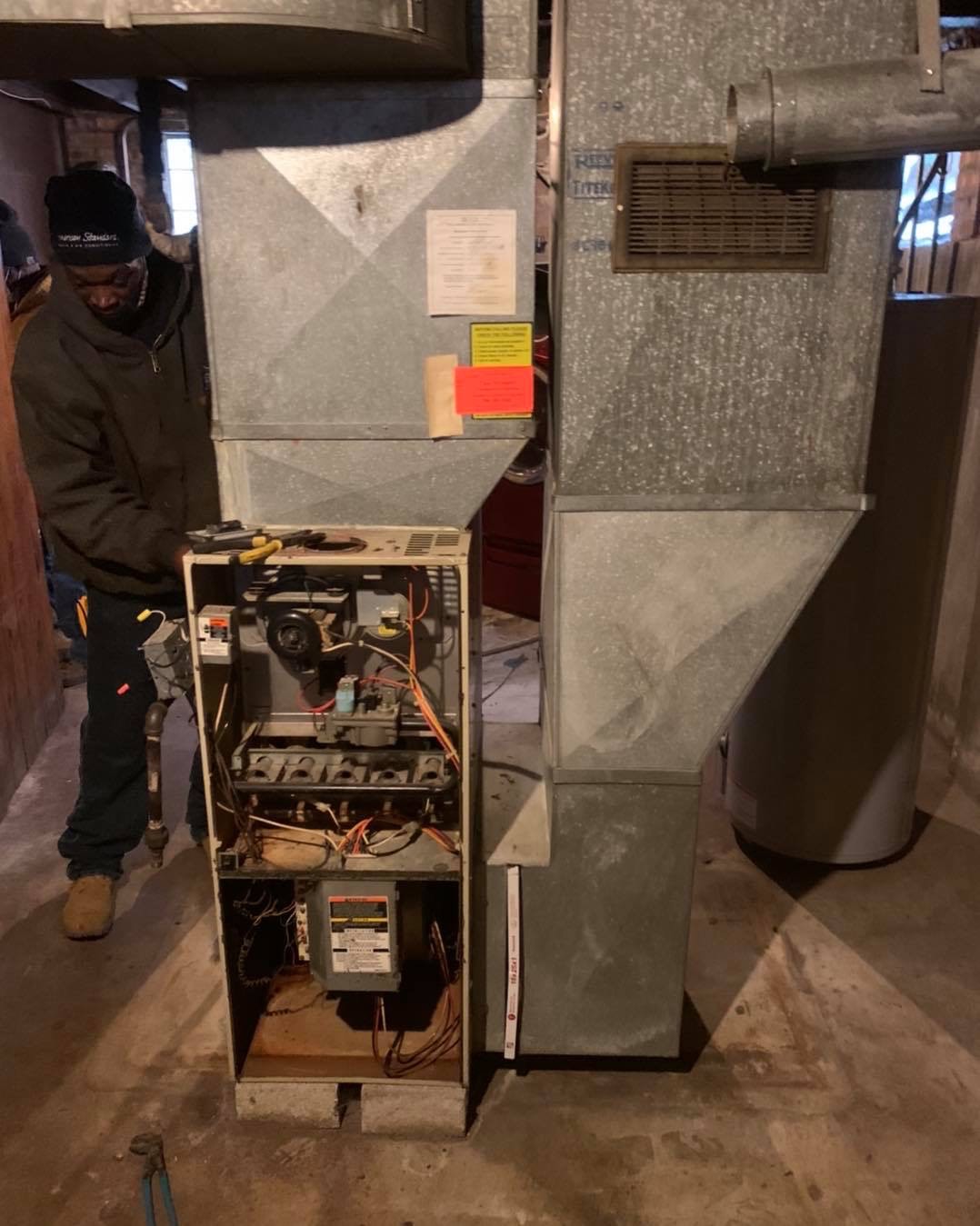
How Predictive Maintenance Works
Predictive maintenance relies on monitoring equipment performance over time and comparing current readings against established baselines. When a measurement drifts outside the normal range, it signals that a component is deteriorating.
For example, if a blower motor normally draws 8 amps and a technician measures 11 amps during a visit, that increase indicates the motor is working harder than it should. The cause might be a failing bearing, a dirty wheel, or an electrical issue. Either way, the data points to a specific problem before the motor burns out.
The process follows a clear sequence. First, baseline performance data is collected during initial service visits. Then, subsequent visits compare new readings against those baselines. Trends are tracked. When a trend indicates approaching failure, the technician recommends targeted repair or replacement.
This is fundamentally different from preventive maintenance, which performs the same checklist regardless of what the data shows.
Tools and Technology Behind Predictive Maintenance
Several diagnostic tools make predictive maintenance possible:
Infrared thermography uses thermal imaging cameras to detect hot spots in electrical panels, connections, and motors. Abnormal heat patterns reveal loose connections, overloaded circuits, or failing components that are invisible to the naked eye.
Vibration analysis measures the vibration signature of rotating equipment like compressors and blower motors. Changes in vibration frequency or amplitude indicate bearing wear, imbalance, or misalignment.
Refrigerant circuit analysis tracks superheat, subcooling, and pressure readings over time to detect slow leaks, restriction, or compressor valve degradation.
Smart thermostats and connected HVAC systems can also contribute data. Many modern systems log run times, cycle counts, and temperature differentials that a trained technician can use to spot developing problems.
For larger commercial installations, building automation systems (BAS) continuously monitor HVAC performance and can flag anomalies automatically.
Is Predictive Maintenance Worth It for Residential Systems?
For most single-family homes in Chicago, a full predictive maintenance program with dedicated sensors and continuous monitoring is more investment than necessary. The cost of the technology and the data analysis typically makes sense only for commercial buildings, multi-unit properties, or high-value systems.
However, elements of predictive maintenance are already built into quality preventive service. A good HVAC technician does not just clean and inspect. They measure. They compare this year's readings to last year's. They note that your compressor amp draw has increased or that your furnace temperature rise has changed. That is predictive thinking applied within a preventive framework.
If you own a commercial property or manage a portfolio of rental units in Chicago, investing in a more formal predictive maintenance approach can pay for itself by reducing downtime and avoiding costly emergency calls during peak heating and cooling seasons.
Corrective HVAC Maintenance Explained
Corrective maintenance is repair work performed after a problem has been identified. The system is still running, but something is wrong. A component has failed or is failing, performance has dropped, or a safety issue has been flagged during an inspection.
This is the type of maintenance most people think of when they hear "HVAC repair." Something breaks or malfunctions, and a technician fixes it. The key distinction is that corrective maintenance addresses known problems. The issue has been diagnosed. The repair is planned, even if it was not anticipated.
Common HVAC Repairs That Fall Under Corrective Maintenance
Corrective maintenance covers a wide range of repairs. In the Chicago market, the most common include:
Furnace repairs: Failed ignitors, malfunctioning flame sensors, cracked heat exchangers, faulty gas valves, blower motor replacements, and control board failures. Chicago's long heating season means furnace components log heavy use and wear out faster than in milder climates.
Air conditioner repairs: Refrigerant leaks, compressor failures, capacitor replacements, contactor failures, frozen evaporator coils, and condenser fan motor replacements.
Heat pump repairs: Reversing valve issues, defrost cycle malfunctions, and refrigerant charge problems. Heat pumps are gaining popularity in Chicago as supplemental systems, but they require technicians familiar with their specific failure modes.
Ductwork repairs: Leaking joints, disconnected sections, crushed flex duct, and inadequate insulation. Duct problems are common in older Chicago homes where original ductwork was never sealed properly.
Thermostat and control issues: Wiring faults, miscalibration, communication errors between the thermostat and equipment, and failed zone damper actuators.
Corrective Maintenance Costs in the Chicago Market
Repair costs vary widely depending on the component, the system type, and the urgency. Here are typical ranges for common corrective repairs in Chicago:
Repair
Typical Cost Range
Ignitor replacement
$150 to $300
Capacitor replacement
$150 to $400
Blower motor replacement
$400 to $900
Refrigerant recharge (with leak repair)
$250 to $1,500
Compressor replacement
$1,500 to $3,000
Heat exchanger replacement
$1,500 to $3,500
Control board replacement
$300 to $700
Condensate pump replacement
$150 to $350
These ranges reflect parts and labor for residential systems. Commercial repairs typically cost more due to larger equipment and more complex configurations.
One important note: corrective maintenance costs are almost always lower when the problem is caught early. A refrigerant leak detected during a preventive maintenance visit might cost $250 to repair. The same leak left undetected until the compressor fails could cost $3,000 or more.
How to Tell If You Need Corrective vs. Emergency Service
The line between corrective and emergency maintenance comes down to immediacy and safety.
Corrective maintenance applies when your system is still operational but not performing correctly. The house is still warm, but the furnace is making an unusual noise. The air conditioner is cooling, but not as well as it should. You have time to schedule a service call during normal business hours.
Emergency maintenance applies when the system has failed completely or poses an immediate safety risk. The furnace will not ignite during a subzero night. You smell gas. The air conditioner has stopped entirely during a heat wave with vulnerable people in the home.
If you are unsure, ask yourself two questions: Is anyone in the home at risk from the temperature? Is there a potential safety hazard like a gas leak or electrical burning smell? If the answer to either is yes, treat it as an emergency.
Emergency HVAC Maintenance Explained
Emergency maintenance is the most expensive and most stressful type of HVAC service. It happens when a system fails without warning, typically at the worst possible time, and requires immediate response to restore heating or cooling.
No one plans for emergency maintenance. That is precisely the point. It is the category that exists because the other three were either skipped or insufficient.
When Does an HVAC Issue Become an Emergency in Chicago?
In Chicago, an HVAC emergency is defined by risk. The city's climate creates situations where a failed system is not just an inconvenience but a genuine danger.
A furnace failure when outdoor temperatures are below zero is an emergency. Pipes can freeze and burst within hours. Vulnerable residents, including elderly family members, young children, and people with medical conditions, face real health risks from prolonged cold exposure.
An air conditioning failure during an extreme heat event is also an emergency. Chicago has experienced deadly heat waves, most notably in 1995 when over 700 people died during a five-day heat crisis. Cooling is not a luxury in those conditions.
Other emergency scenarios include gas leaks detected near the furnace, carbon monoxide alarm activation, electrical burning smells from HVAC equipment, and flooding caused by a failed condensate system or burst hydronic heating pipe.
What to Expect During an Emergency HVAC Service Call
Emergency service calls operate differently from scheduled maintenance. Response times are faster, but costs are higher. Most Chicago HVAC contractors charge a premium for after-hours, weekend, and holiday emergency calls.
A typical emergency service call includes a diagnostic fee ranging from $100 to $250, plus the cost of any repairs. After-hours labor rates are often 1.5 to 2 times the standard hourly rate. If parts need to be sourced urgently, markup may be higher than on a planned repair.
When you call for emergency service, have the following information ready: your system type and brand, the symptoms you are experiencing, when the problem started, and whether there are any safety concerns like gas smell or carbon monoxide alarm activation. This helps the dispatcher prioritize your call and ensures the technician arrives with the right tools and common parts.
Expect the technician to focus on restoring safe operation first. In some cases, a temporary fix may be applied to get the system running while a permanent repair is scheduled for a follow-up visit. This is standard practice and is often the fastest way to restore comfort and safety.
How to Reduce Emergency HVAC Calls With Proactive Planning
The most effective way to reduce emergency maintenance is to invest in preventive and predictive maintenance consistently. Most emergency failures are the end result of problems that developed over weeks or months and could have been caught during a routine inspection.
Beyond regular maintenance, there are several practical steps Chicago property owners can take:
Keep a maintenance log. Track every service visit, every repair, and every part replaced. Patterns in the log reveal systems that are approaching end of life or components that fail repeatedly.
Know your system's age. Most furnaces last 15 to 20 years. Most central air conditioners last 12 to 17 years. If your equipment is in the upper range, budget for replacement rather than waiting for a catastrophic failure in January.
Install a carbon monoxide detector near your furnace. This is required by Illinois law in residences with fuel-burning appliances, but compliance is not universal. A working detector provides critical early warning of heat exchanger failure.
Have a relationship with a trusted HVAC contractor before you need one. Customers with existing maintenance agreements typically receive priority scheduling during emergencies. Calling a company for the first time during a polar vortex means you are at the back of a very long line.
How the Four Types of HVAC Maintenance Compare
Factor
Preventive
Predictive
Corrective
Emergency
Timing
Scheduled in advance
Based on data and diagnostics
After problem is identified
After system failure
Goal
Prevent problems
Predict and prevent specific failures
Fix known issues
Restore operation immediately
Typical Cost
$80 to $200 per visit
$150 to $500+ (varies by technology)
$150 to $3,500 per repair
$250 to $5,000+
Urgency
Low, planned
Low to moderate
Moderate
High, immediate
Downtime
Minimal, system stays running
Minimal
Some, during repair
Significant, system is down
Best For
All property owners
Commercial and multi-unit properties
Systems showing symptoms
System failures and safety risks
Chicago Priority
Essential, twice yearly
Valuable for large properties
Common, budget accordingly
Minimize through prevention
The pattern is clear. Moving from left to right across this table, costs increase, stress increases, and control decreases. Every dollar spent on preventive and predictive maintenance reduces the likelihood and severity of corrective and emergency expenses.
How to Choose the Right HVAC Maintenance Plan for Your Property
Not every property needs the same maintenance approach. The right plan depends on your property type, system age, budget, and risk tolerance.
Maintenance Considerations for Homeowners
If you own a single-family home in Chicago, a preventive maintenance plan with two visits per year is the baseline. Spring and fall tune-ups cover your air conditioner and furnace respectively and cost between $150 and $350 annually through a service agreement.
For homes with newer systems (under 5 years old), preventive maintenance alone is usually sufficient. The equipment is under warranty, parts are reliable, and the risk of major failure is low.
For homes with systems between 10 and 15 years old, add a budget line for corrective maintenance. Components start wearing out in this range, and having $500 to $1,000 set aside for repairs prevents financial stress when a blower motor or capacitor fails.
For systems over 15 years old, shift your thinking from maintenance to replacement planning. Continue preventive maintenance to extend the system's life, but start getting estimates for new equipment so you can replace on your terms rather than in an emergency.
Maintenance Considerations for Landlords and Property Managers
Landlords face a different calculus. A failed HVAC system in a rental property is not just a repair bill. It is a habitability issue that can trigger lease violations, tenant complaints, and potential legal liability under Chicago's Residential Landlord and Tenant Ordinance.
Preventive maintenance is non-negotiable for rental properties. It protects your investment, keeps tenants comfortable, and creates a documented maintenance history that demonstrates responsible property management.
For landlords managing multiple units, consider a maintenance agreement that covers all systems under one contract. Volume pricing reduces per-unit costs, and a single point of contact simplifies scheduling and record-keeping.
Predictive maintenance elements become more valuable at scale. If you manage 10 or more units, tracking system performance data across your portfolio helps you plan capital expenditures and avoid clusters of emergency failures.
Maintenance Considerations for Commercial Properties
Commercial HVAC systems are larger, more complex, and more expensive to repair or replace than residential equipment. They also have a direct impact on business operations. A restaurant that loses air conditioning on a 95-degree Saturday loses revenue. An office building with a failed heating system sends employees home.
For commercial properties, a comprehensive maintenance plan that includes preventive and predictive elements is standard practice. Many commercial HVAC contracts include quarterly or monthly service visits, 24/7 emergency response, and performance guarantees.
The cost of commercial maintenance plans varies widely based on system size and complexity, but the investment is justified by the cost of downtime. A single day of lost business due to HVAC failure can exceed an entire year's maintenance budget.
How HVAC Maintenance Affects Long-Term Costs and Energy Efficiency
Maintenance is not just about preventing breakdowns. It has a direct, measurable impact on how much you pay to heat and cool your property every month and how long your equipment lasts before it needs to be replaced.
The Connection Between Maintenance and Energy Bills
Heating and cooling account for a significant share of energy costs in Chicago buildings. The Energy Information Administration reports that space heating and air conditioning represent roughly 50% of total energy use in Midwest homes.
When HVAC systems are properly maintained, they operate at or near their rated efficiency. When they are neglected, efficiency drops steadily. Dirty coils reduce heat transfer. Clogged filters restrict airflow. Low refrigerant charge forces compressors to work harder. Each of these conditions increases energy consumption without increasing comfort.
The cumulative effect is substantial. A system that has lost even 10% of its efficiency due to deferred maintenance costs you 10% more on the heating and cooling portion of every utility bill. Over a full year in Chicago, that can mean hundreds of dollars in unnecessary energy expense.
Maintaining your system is one of the highest-return energy efficiency investments available. Unlike insulation upgrades or window replacements, which require significant capital, maintenance delivers efficiency gains for a modest annual cost.
How Maintenance Extends Equipment Lifespan and Delays Replacement
HVAC replacement is one of the largest home improvement expenses a Chicago property owner faces. A new furnace and air conditioner combination typically costs between $7,000 and $15,000 installed, depending on system type, efficiency rating, and home requirements.
Proper maintenance extends equipment lifespan by reducing mechanical stress, catching small problems before they cause cascading damage, and keeping systems running within their designed operating parameters.
The ASHRAE (American Society of Heating, Refrigerating and Air-Conditioning Engineers) publishes expected equipment life data that shows well-maintained systems consistently outlast neglected ones. A furnace rated for 20 years of service may last 25 with diligent care, or fail at 12 without it.
That difference represents thousands of dollars in avoided replacement costs and years of additional service from equipment you have already paid for.
Conclusion
The four types of HVAC maintenance, preventive, predictive, corrective, and emergency, each play a distinct role in protecting your comfort and your budget. Understanding how they work together helps you make smarter decisions about where to invest your maintenance dollars and how to avoid the costly surprises that come with neglected equipment.
For Chicago homeowners, landlords, and business owners, the math is straightforward. Consistent preventive maintenance is the most cost-effective way to keep systems efficient, extend equipment life, and minimize the risk of emergency failures during the city's most extreme weather.
We help Chicago property owners build maintenance plans that fit their systems, their properties, and their budgets. Contact Chicago Comfort HVAC to schedule your next maintenance visit or to set up a service agreement that keeps your heating and cooling running right, all year long.
Frequently Asked Questions
What are the four types of HVAC maintenance?
The four types are preventive, predictive, corrective, and emergency maintenance. Preventive maintenance is scheduled service to keep systems running smoothly. Predictive maintenance uses diagnostic data to catch problems early. Corrective maintenance repairs known issues. Emergency maintenance restores failed systems immediately.
How much does HVAC maintenance cost in Chicago?
Preventive maintenance visits typically cost $80 to $200 each, with annual service plans running $150 to $350 for two visits. Corrective repairs range from $150 to $3,500 depending on the component. Emergency calls carry premium rates and can exceed $1,000 with after-hours labor and urgent parts.
How often should I schedule HVAC maintenance in Chicago?
Schedule maintenance twice per year: once in spring for your cooling system and once in fall for your heating system. Commercial properties and multi-unit buildings may benefit from quarterly service. Booking in March/April and September/October avoids peak-season scheduling delays.
Can regular maintenance really lower my energy bills?
Yes. A properly maintained HVAC system operates at or near its rated efficiency, while a neglected system loses efficiency steadily. Dirty filters, clogged coils, and low refrigerant all increase energy consumption. Maintaining your system can prevent 5% to 15% increases in energy use caused by deferred service.
What is the difference between preventive and predictive HVAC maintenance?
Preventive maintenance follows a fixed schedule and performs the same checklist each visit regardless of system condition. Predictive maintenance uses performance data, diagnostic tools, and trend analysis to identify specific components that are degrading and target repairs before failure occurs.
How do I know if my HVAC system needs emergency service?
An HVAC issue becomes an emergency when the system has failed completely during extreme temperatures, when there is a gas leak or carbon monoxide alarm, or when there is an electrical burning smell from the equipment. If anyone in the home is at risk from the temperature or a safety hazard exists, call for emergency service immediately.
Does HVAC maintenance extend the life of my system?
Properly maintained HVAC systems consistently outlast neglected ones. A furnace rated for 20 years may last 25 with regular care or fail at 12 without it. Maintenance reduces mechanical stress, catches small problems early, and keeps equipment running within designed parameters, delaying the need for costly replacement.
Follow a maintenance program
Ante gravida id aenean quis egestas risus nam amet nullam leo diam diam aliquam eu eu malesuada arcu rhoncus suspendisse nulla mattis ut amet sagittis in justo egestas.

search for a trusted mechanic
Lorem ipsum dolor sit amet, consectetur adipiscing elit lobortis arcu enim urna adipiscing praesent velit viverra sit semper lorem eu cursus vel hendrerit elementum morbi curabitur etiam nibh justo, lorem aliquet donec sed sit mi dignissim at ante massa mattis.
- Neque sodales ut etiam sit amet nisl purus non tellus orci ac auctor
- Adipiscing elit ut aliquam purus sit amet viverra suspendisse potent
- Mauris commodo quis imperdiet massa tincidunt nunc pulvinar
- Excepteur sint occaecat cupidatat non proident sunt in culpa qui officia
Check the air pressure in your tires
Vitae congue eu consequat ac felis placerat vestibulum lectus mauris ultrices cursus sit amet dictum sit amet justo donec enim diam porttitor lacus luctus accumsan tortor posuere praesent tristique magna sit amet purus gravida quis blandit turpis.
Review your suspension frequently
At risus viverra adipiscing at in tellus integer feugiat nisl pretium fusce id velit ut tortor sagittis orci a scelerisque purus semper eget at lectus urna duis convallis. porta nibh venenatis cras sed felis eget neque laoreet suspendisse interdum consectetur libero id faucibus nisl donec pretium vulputate sapien nec sagittis aliquam nunc lobortis mattis aliquam faucibus purus in.
- Neque sodales ut etiam sit amet nisl purus non tellus orci ac auctor
- Adipiscing elit ut aliquam purus sit amet viverra suspendisse potent
- Mauris commodo quis imperdiet massa tincidunt nunc pulvinar
- Excepteur sint occaecat cupidatat non proident sunt in culpa qui officia
Service your vehicle as regularly as posible
At risus viverra adipiscing at in tellus integer feugiat nisl pretium fusce id velit ut tortor sagittis orci a scelerisque purus semper eget at lectus urna duis convallis. porta nibh venenatis cras sed felis eget neque laoreet suspendisse interdum consectetur libero id faucibus nisl donec pretium vulputate sapien nec sagittis aliquam nunc lobortis mattis aliquam faucibus purus in.
“Nisi quis eleifend quam adipiscing vitae aliquet bibendum enim facilisis gravida neque velit euismod in pellentesque”
Conclusion
Eget lorem dolor sed viverra ipsum nunc aliquet bibendum felis donec et odio pellentesque diam volutpat commodo sed egestas aliquam sem fringilla ut morbi tincidunt augue interdum velit euismod eu tincidunt tortor aliquam nulla facilisi aenean sed adipiscing diam donec adipiscing ut lectus arcu bibendum at varius vel pharetra nibh venenatis cras sed felis eget.
