How Many HVAC Quotes Should You Get?
Find out how many HVAC quotes you need in Chicago. Learn to compare estimates, spot red flags, and choose the right contractor for your budget.

You should get at least three to five HVAC quotes before committing to any installation, replacement, or major repair in Chicago. That range gives you enough data to identify fair pricing, compare contractor quality, and avoid overpaying or underpaying for the work.
Chicago's HVAC market carries wide price swings driven by system type, seasonal demand, home age, and contractor overhead. Without multiple estimates in hand, you have no baseline for what a project should actually cost.
This guide breaks down exactly how many quotes to collect, what each estimate should include, how to compare them side by side, and which Chicago-specific factors shift pricing. You will also learn the red flags that signal a bad deal and the questions that separate reliable contractors from the rest.
Why Getting Multiple HVAC Quotes Matters
A single HVAC quote tells you almost nothing. It gives you one contractor's price, one equipment recommendation, and one opinion on what your home or building needs. Without a second or third point of reference, you cannot tell whether that price is competitive, inflated, or suspiciously low.
Multiple quotes create a pricing map. They show you where the market sits for your specific project, and they expose differences in how contractors approach the same job. One company might recommend a 16-SEER two-stage furnace while another pushes a single-stage 80% AFUE unit at a lower price. Those are fundamentally different proposals, and you need more than one to see the full picture.
Price Variation Between Chicago HVAC Contractors
HVAC pricing in Chicago varies more than most homeowners expect. For a standard residential furnace and air conditioner replacement, quotes can range from roughly $6,000 to $15,000 or more depending on the equipment brand, efficiency rating, ductwork condition, and the contractor's labor rates.
Part of this spread comes from legitimate differences in scope. A higher quote might include a Manual J load calculation, upgraded ductwork, a high-efficiency system, and a 10-year labor warranty. A lower quote might cover only the equipment swap with a basic manufacturer warranty.
Part of it comes from overhead. A licensed, insured Chicago contractor with trained technicians, city permits, and proper disposal costs will price differently than an unlicensed operator cutting corners. Collecting multiple quotes lets you see where these differences lie.
How Quotes Reveal Contractor Quality and Transparency
The quoting process itself is a test. A contractor who shows up on time, inspects your existing system thoroughly, measures your space, asks about your comfort priorities, and delivers a detailed written estimate is showing you how they run their business.
A contractor who gives you a number over the phone without seeing the property, or who hands you a one-line estimate with no breakdown, is telling you something too.
When you collect three to five quotes, patterns emerge. You start to see which contractors explain their recommendations, which ones itemize costs, and which ones rush through the process. That information is just as valuable as the dollar amount on the page.
How Many HVAC Quotes Should You Get? (The Ideal Number)
Three to five quotes is the standard recommendation for any HVAC project in Chicago. This range balances thoroughness with practicality. Fewer than three leaves you without enough data. More than five often produces diminishing returns and decision fatigue.
The goal is not to find the absolute cheapest price. The goal is to establish a reliable range, identify the contractors who communicate clearly and propose appropriate solutions, and make a confident decision backed by real market data.
The 3-to-5 Quote Rule for Residential Projects
For a typical Chicago home needing a furnace replacement, central air installation, or full HVAC system upgrade, three quotes is the minimum. Five is ideal if the project is complex or the budget is significant.
Three quotes give you a low, middle, and high reference point. You can quickly see if one estimate is an outlier. Five quotes sharpen that picture further and give you more contractor interactions to evaluate.
Most homeowners find that after three to four in-home assessments, they have a clear sense of what the job should cost and which contractor they trust. The fifth quote either confirms that conclusion or introduces a new option worth considering.
When You Might Need More (or Fewer) Estimates
Some situations call for adjustments to the three-to-five rule.
Get more quotes (5-7) when:
- The project involves a full system conversion (e.g., switching from a boiler to forced air)
- Your home is older with potential ductwork, electrical, or structural complications
- You are considering high-efficiency or specialty systems like heat pumps, geothermal, or ductless mini-splits
- The first few quotes vary wildly in price or scope
Fewer quotes (2-3) may be sufficient when:
- You have a trusted contractor you have worked with before and want one or two comparison points
- The job is straightforward, like a like-for-like furnace swap in a newer home
- You are working under a time constraint, such as a mid-winter furnace failure
Even in urgent situations, getting at least two quotes protects you from overpaying during peak demand.
What to Include When Requesting an HVAC Quote
Not all quotes are created equal. A useful HVAC estimate is detailed, itemized, and specific to your property. Before you can compare quotes accurately, you need to make sure each contractor is quoting the same scope of work.
When you request estimates, provide every contractor with the same information: your home's square footage, the age and condition of your current system, any known issues (uneven heating, humidity problems, high energy bills), and your priorities (efficiency, budget, comfort, noise level).
System Type, Size, and Efficiency Ratings
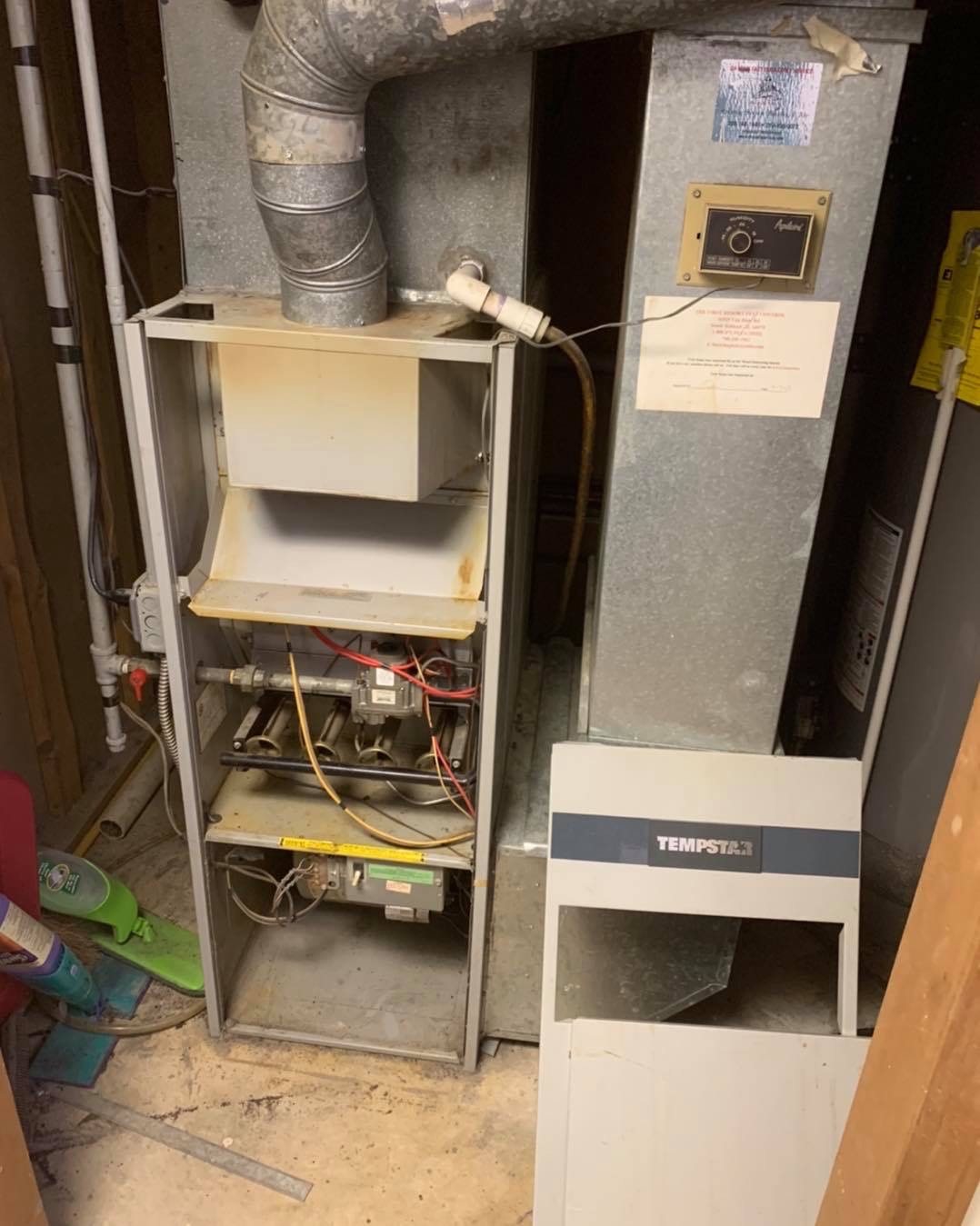
Every quote should specify the exact equipment being proposed. That means the brand, model number, system type (furnace, air conditioner, heat pump, boiler), BTU capacity, and efficiency rating.
For furnaces, look for the AFUE (Annual Fuel Utilization Efficiency) percentage. In Chicago's climate, high-efficiency furnaces rated at 95% AFUE or above are common recommendations because they extract more heat from every therm of natural gas.
For air conditioners and heat pumps, the SEER2 (Seasonal Energy Efficiency Ratio) rating matters. The current federal minimum is 14 SEER2 for northern regions, but many Chicago homeowners opt for 16 SEER2 or higher to reduce summer cooling costs.
If one contractor quotes a 14-SEER system and another quotes an 18-SEER system, those are not comparable proposals. The equipment cost, energy savings, and long-term operating costs are fundamentally different.
Labor, Permits, and Installation Scope
Labor is a significant portion of any HVAC quote, often accounting for 40% to 60% of the total project cost. Each estimate should clearly separate labor charges from equipment costs.
In Chicago, HVAC installations require permits from the City of Chicago Department of Buildings. A legitimate contractor includes permit fees in the quote and handles the application process. If a quote does not mention permits, ask directly. Unpermitted work can create problems with insurance claims, home sales, and code compliance.
The scope of installation matters too. Does the quote include removing and disposing of the old equipment? Does it cover any necessary ductwork modifications? What about the thermostat, refrigerant line set, condensate drain, or electrical upgrades? These details separate a complete quote from one that will generate surprise charges later.
Warranties, Maintenance Plans, and Hidden Costs
A thorough HVAC quote addresses warranties on two levels: the manufacturer's equipment warranty and the contractor's labor warranty.
Most major HVAC brands (Carrier, Lennox, Trane, Goodman, Rheem, Daikin) offer 5- to 10-year parts warranties when the equipment is registered. Some contractors extend coverage with their own labor warranty, covering the cost of service calls and repairs for a set period after installation.
Ask each contractor whether the quote includes equipment registration, what the labor warranty covers, and whether they offer a maintenance plan. Some companies bundle the first year of maintenance into the installation price. Others charge separately.
Hidden costs to ask about include:
- Ductwork repair or modification
- Electrical panel upgrades
- Thermostat replacement or smart thermostat installation
- Zoning system additions
- Refrigerant line replacement
- Concrete pad for outdoor condenser units
- Asbestos or lead paint abatement in older Chicago homes
How to Compare HVAC Quotes Accurately
Once you have three to five quotes in hand, the comparison process begins. Resist the urge to sort by price alone. The cheapest quote is not automatically the best value, and the most expensive quote is not automatically the best quality.
Accurate comparison requires looking at what each contractor is actually proposing, not just what they are charging.
Line-by-Line Cost Breakdown Comparison
Create a simple spreadsheet or table to compare quotes side by side. List every major cost category and fill in each contractor's numbers.
Cost Category
Contractor A
Contractor B
Contractor C
Equipment (brand/model)
Equipment cost
Labor cost
Permits
Ductwork modifications
Thermostat
Disposal of old system
Manufacturer warranty
Labor warranty
Maintenance plan
Total
This format makes it immediately clear where quotes differ. If Contractor A's equipment cost is $2,000 less but they are proposing a lower-efficiency unit, that explains the gap. If Contractor B's labor cost is significantly higher but includes ductwork sealing and a 5-year labor warranty, that adds context.
Evaluating Equipment Brands and SEER Ratings
Not all HVAC equipment performs equally, and brand reputation matters for long-term reliability and warranty support.
In the Chicago market, commonly quoted brands include Carrier, Lennox, Trane, Bryant, Rheem, Goodman, Amana, and Daikin. Premium brands like Carrier and Lennox typically cost more upfront but often come with longer warranties, quieter operation, and better efficiency options.
When comparing SEER ratings across quotes, consider the long-term energy cost difference. Upgrading from a 14-SEER to an 18-SEER air conditioner can reduce cooling energy consumption by roughly 22% to 28%. In a Chicago summer, that translates to meaningful savings on your ComEd electricity bill over the system's 15- to 20-year lifespan.
Ask each contractor to explain why they recommended a specific brand and efficiency level for your home. Their reasoning tells you whether they are matching the system to your needs or simply quoting what they have in stock.
Checking Contractor Credentials and Reviews
Every contractor you get a quote from should meet baseline requirements:
- Licensed: Valid Illinois HVAC contractor license
- Insured: General liability and workers' compensation insurance
- Bonded: Protection against incomplete or faulty work
- Permitted: Willingness to pull City of Chicago permits for the job
- Reviewed: Verifiable reviews on Google, Yelp, BBB, or Angi
Check the Illinois Department of Financial and Professional Regulation (IDFPR) database to verify licenses. Ask for proof of insurance. Read recent reviews, paying attention to how the company handles complaints and callbacks.
A contractor with strong credentials and a slightly higher price is almost always a better investment than an unlicensed operator offering a bargain.
Red Flags to Watch for in HVAC Quotes
The quoting process is also a screening process. Certain patterns in how a contractor presents their estimate should raise immediate concerns.
Quotes That Are Significantly Lower Than Others
If you collect five quotes and four of them fall between $8,000 and $11,000 while the fifth comes in at $4,500, that low outlier deserves scrutiny.
Abnormally low quotes often indicate one or more of the following:
- Lower-quality or refurbished equipment
- Unlicensed or uninsured labor
- No permits being pulled
- Missing scope items (ductwork, disposal, thermostat)
- Bait-and-switch pricing that increases after work begins
- Subcontracted labor with no accountability
A low price feels good in the moment but can cost significantly more in repairs, code violations, and premature system failure over the next decade.
Vague Pricing, Pressure Tactics, and Missing Details
A professional HVAC quote is a written document with specific line items, equipment model numbers, warranty terms, and a clear scope of work. If a contractor gives you a verbal estimate, a single lump-sum number with no breakdown, or a handwritten note on a business card, that is not a quote. That is a guess.
Watch for pressure tactics like "this price is only good today" or "we have one unit left at this price." Legitimate contractors give you time to compare and decide. They understand that informed customers make better clients.
Also be cautious of quotes that do not mention permits, disposal, or warranty registration. These omissions are not oversights. They are cost-cutting measures that shift risk to you.
Chicago-Specific Factors That Affect HVAC Quotes
Chicago's climate, building stock, and regulatory environment create pricing factors that do not apply in milder or newer markets. Understanding these factors helps you evaluate whether a quote is appropriately priced for your specific situation.
Climate Demands and Heating Load Requirements
Chicago winters regularly push temperatures below zero, and summer heat indices can exceed 100 degrees Fahrenheit. That dual-season demand means most Chicago homes need both a high-capacity heating system and a reliable cooling system.
A properly sized HVAC system for a Chicago home requires a Manual J load calculation, which accounts for square footage, insulation levels, window types, air infiltration, and orientation. Contractors who skip this step and size equipment based on rules of thumb (e.g., "one ton per 500 square feet") risk installing a system that is too large or too small.
An oversized system short-cycles, wasting energy and wearing out components faster. An undersized system runs constantly and never reaches comfortable temperatures during extreme weather. Both scenarios cost you money. A quote that includes a load calculation reflects a contractor who is doing the job correctly.
Seasonal Pricing and Permit Costs in Chicago
HVAC pricing in Chicago follows seasonal patterns. Demand peaks in late fall (before heating season) and early summer (before cooling season). During these windows, contractors are busiest, lead times are longer, and pricing tends to be higher.
The best time to request quotes and schedule installation is during the shoulder seasons: early spring (March through April) and early fall (September through October). Many contractors offer off-season discounts or promotions during these periods because their schedules are lighter.
City of Chicago permit fees for HVAC work vary based on the scope of the project. Mechanical permits for residential HVAC installations typically cost between $75 and $250, though complex projects involving gas line modifications or structural changes may require additional permits. Your contractor should include these costs in the quote and handle the permit process.
Older Homes, Ductwork, and Building Code Considerations
Chicago has a large inventory of homes built before 1970, many with outdated ductwork, undersized electrical panels, and construction materials that complicate HVAC installation.
Common issues in older Chicago homes include:
- Undersized or deteriorating ductwork that cannot handle modern high-efficiency systems without modification
- Asbestos insulation on old duct runs or around boiler pipes, requiring professional abatement before removal
- Knob-and-tube or outdated electrical wiring that needs upgrading to support new HVAC equipment
- Limited mechanical room space in bungalows, two-flats, and greystones that restricts equipment options
- Radiator-to-forced-air conversions that require entirely new duct systems
These factors add cost and complexity. A quote for an older Chicago home should reflect these realities. If a contractor quotes the same price for a 1920s brick bungalow and a 2010 suburban build, they may not have assessed the property thoroughly.
How to Get the Best HVAC Quote in Chicago
Getting the best quote is not about finding the lowest number. It is about finding the right combination of fair pricing, quality equipment, professional installation, and reliable warranty support.
Timing Your HVAC Purchase for the Best Price
Plan ahead whenever possible. If your furnace is 15 years old and showing signs of decline, start collecting quotes in the spring or early fall rather than waiting for it to fail on the coldest night of the year.
Emergency replacements limit your options. You have less time to compare, less leverage to negotiate, and fewer contractors available. Planning ahead gives you the full benefit of the three-to-five quote process.
Some manufacturers and utility companies also offer seasonal rebates. ComEd and Nicor Gas periodically run energy efficiency rebate programs for qualifying high-efficiency HVAC equipment. Ask each contractor whether your project qualifies for any current rebates or tax credits, including the federal energy efficiency tax credits available under the Inflation Reduction Act.
Questions to Ask Every Contractor Before Hiring
Use these questions during every in-home estimate to standardize your comparison:
- Are you licensed, insured, and bonded in Illinois?
- Will you pull a City of Chicago permit for this installation?
- What brand and model are you recommending, and why?
- Did you perform a Manual J load calculation?
- What is included in the labor warranty, and for how long?
- Does the quote include ductwork inspection or modification?
- How do you handle unexpected issues discovered during installation?
- What is your estimated timeline for completing the work?
- Do you offer financing or payment plans?
- Can you provide references from recent Chicago installations?
The answers to these questions, combined with the written quote, give you everything you need to make an informed decision.
Why Transparent Pricing Beats the Lowest Bid
The contractor who takes the time to explain every line item, walk you through equipment options, and answer your questions honestly is providing value that goes beyond the installation itself.
Transparent pricing means no surprises. It means the number on the quote is the number you pay, barring genuinely unforeseen conditions. It means the contractor stands behind their work because they priced it to include quality materials, skilled labor, and proper follow-through.
The lowest bid often comes with the most asterisks. The transparent bid comes with confidence.
HVAC Installation vs. Replacement Costs in Chicago
Understanding the difference between a new installation and a replacement helps you interpret quotes more accurately and set realistic budget expectations.
Average Cost Ranges for New Installations
New HVAC installation costs in Chicago depend heavily on the system type and project complexity.
System Type
Typical Chicago Cost Range
Gas furnace (high-efficiency)
$3,500 to $7,500
Central air conditioner
$3,800 to $7,800
Furnace + AC combo
$6,500 to $14,000
Heat pump (air-source)
$4,500 to $10,000
Ductless mini-split (single zone)
$3,000 to $6,000
Ductless mini-split (multi-zone)
$6,000 to $15,000+
Boiler replacement
$4,000 to $10,000
These ranges reflect equipment, labor, permits, and standard installation scope for Chicago-area projects. Your actual cost depends on your home's size, existing infrastructure, chosen efficiency level, and contractor.
When Replacement Is More Cost-Effective Than Repair
The general rule is straightforward: if a repair costs more than 50% of the value of a new system, replacement is usually the better financial decision.
Other signals that point toward replacement include:
- The system is 15 years or older (approaching or past its expected lifespan)
- Repair frequency is increasing (multiple service calls per year)
- Energy bills are rising despite normal usage patterns
- The system uses R-22 refrigerant (phased out and increasingly expensive)
- Comfort issues persist despite repairs (uneven temperatures, humidity problems)
When you request quotes, ask each contractor for their honest assessment of whether repair or replacement makes more sense for your situation. A trustworthy contractor will recommend repair when it is genuinely the better option, even though replacement generates more revenue.
How to Budget for Your HVAC Project
An HVAC system is one of the largest mechanical investments in your home. Budgeting accurately prevents financial stress and helps you choose the right system rather than defaulting to the cheapest option.
Financing Options and Rebate Programs
Most reputable HVAC contractors in Chicago offer financing through third-party lenders. Common options include:
- 0% interest promotional financing for 12 to 18 months
- Low-interest loans with terms of 3 to 10 years
- Same-as-cash plans that waive interest if paid within the promotional period
Beyond financing, look into available rebates and incentives. The federal energy efficiency tax credit (under the Inflation Reduction Act) allows homeowners to claim up to $2,000 for qualifying heat pumps and up to $600 for qualifying furnaces and central air conditioners. Illinois utility rebate programs through ComEd and Nicor Gas may offer additional savings for high-efficiency equipment upgrades.
Ask every contractor about these programs during the quoting process. Some companies handle rebate paperwork on your behalf, which adds convenience and ensures you do not miss available savings.
Long-Term Energy Savings and ROI
The upfront cost of an HVAC system is only part of the equation. Operating costs over the system's 15- to 20-year lifespan often exceed the purchase price.
Upgrading from an old 80% AFUE furnace to a new 96% AFUE model means that for every dollar you spend on natural gas, you get 16 cents more in usable heat. Over a Chicago heating season, that efficiency gain can reduce your annual heating costs by $300 to $600 depending on your home's size and insulation.
Similarly, replacing a 10-SEER air conditioner with a 16-SEER2 unit can cut cooling costs by roughly 35% to 40%. These savings compound year after year, making the higher-efficiency system the better long-term investment even when its upfront cost is higher.
When comparing quotes, factor in the projected energy savings of each proposed system. A quote that costs $2,000 more upfront but saves $400 per year in energy costs pays for itself in five years and continues saving money for the remaining 10 to 15 years of the system's life.
Conclusion
Getting three to five HVAC quotes gives Chicago homeowners and business owners the pricing data, contractor comparisons, and confidence needed to make a smart investment. Each quote should be detailed, itemized, and specific to your property so you can compare scope, equipment quality, and total value rather than price alone.
Chicago's climate, older housing stock, and seasonal demand patterns make local expertise essential. The right contractor understands these factors, prices transparently, and recommends systems matched to your building's actual heating and cooling loads.
We provide free, detailed HVAC estimates with honest recommendations and no pressure at Chicago Comfort HVAC. Call us today to schedule your in-home assessment and see why transparent pricing and expert workmanship make the difference.
Frequently Asked Questions
Is it worth getting more than 3 HVAC quotes?
Yes. While three quotes establish a baseline, four or five give you a clearer picture of fair market pricing and more contractor interactions to evaluate. The additional time investment is small compared to the potential savings on a project that costs thousands of dollars.
How long does it take to get an HVAC quote in Chicago?
Most Chicago HVAC contractors can schedule an in-home estimate within 2 to 5 business days. The on-site assessment typically takes 30 to 60 minutes, and you should receive a written quote within 1 to 3 days after the visit. During peak seasons, lead times may be longer.
Should I always choose the cheapest HVAC quote?
No. The cheapest quote often omits important scope items like permits, ductwork modifications, or quality equipment. Compare quotes on total value, including equipment efficiency, warranty coverage, contractor credentials, and installation scope, not just the bottom-line number.
What is a fair price for HVAC installation in Chicago?
A full furnace and central air conditioner installation in Chicago typically ranges from $6,500 to $14,000 depending on system efficiency, brand, home size, and ductwork condition. High-efficiency systems and complex installations fall toward the higher end of that range.
Do HVAC companies charge for quotes?
Most reputable HVAC companies in Chicago provide free in-home estimates for installation and replacement projects. Some may charge a diagnostic fee for repair assessments, which is often credited toward the repair if you proceed. Always confirm before scheduling.
How do I know if an HVAC quote is too high?
Compare it against your other quotes. If one estimate is significantly higher than the others for similar equipment and scope, ask the contractor to explain the difference. Legitimate reasons include higher-efficiency equipment, extended warranties, or additional scope items. If they cannot justify the premium, it may be inflated.
What SEER rating should I look for in Chicago?
The federal minimum for northern regions is 14 SEER2. For Chicago's hot, humid summers, a 16 SEER2 or higher system offers meaningful energy savings. If you plan to stay in your home long-term, the higher upfront cost of an 18-SEER2 or 20-SEER2 unit can pay for itself through reduced electricity bills over the system's lifespan.
Follow a maintenance program
Ante gravida id aenean quis egestas risus nam amet nullam leo diam diam aliquam eu eu malesuada arcu rhoncus suspendisse nulla mattis ut amet sagittis in justo egestas.

search for a trusted mechanic
Lorem ipsum dolor sit amet, consectetur adipiscing elit lobortis arcu enim urna adipiscing praesent velit viverra sit semper lorem eu cursus vel hendrerit elementum morbi curabitur etiam nibh justo, lorem aliquet donec sed sit mi dignissim at ante massa mattis.
- Neque sodales ut etiam sit amet nisl purus non tellus orci ac auctor
- Adipiscing elit ut aliquam purus sit amet viverra suspendisse potent
- Mauris commodo quis imperdiet massa tincidunt nunc pulvinar
- Excepteur sint occaecat cupidatat non proident sunt in culpa qui officia
Check the air pressure in your tires
Vitae congue eu consequat ac felis placerat vestibulum lectus mauris ultrices cursus sit amet dictum sit amet justo donec enim diam porttitor lacus luctus accumsan tortor posuere praesent tristique magna sit amet purus gravida quis blandit turpis.
Review your suspension frequently
At risus viverra adipiscing at in tellus integer feugiat nisl pretium fusce id velit ut tortor sagittis orci a scelerisque purus semper eget at lectus urna duis convallis. porta nibh venenatis cras sed felis eget neque laoreet suspendisse interdum consectetur libero id faucibus nisl donec pretium vulputate sapien nec sagittis aliquam nunc lobortis mattis aliquam faucibus purus in.
- Neque sodales ut etiam sit amet nisl purus non tellus orci ac auctor
- Adipiscing elit ut aliquam purus sit amet viverra suspendisse potent
- Mauris commodo quis imperdiet massa tincidunt nunc pulvinar
- Excepteur sint occaecat cupidatat non proident sunt in culpa qui officia
Service your vehicle as regularly as posible
At risus viverra adipiscing at in tellus integer feugiat nisl pretium fusce id velit ut tortor sagittis orci a scelerisque purus semper eget at lectus urna duis convallis. porta nibh venenatis cras sed felis eget neque laoreet suspendisse interdum consectetur libero id faucibus nisl donec pretium vulputate sapien nec sagittis aliquam nunc lobortis mattis aliquam faucibus purus in.
“Nisi quis eleifend quam adipiscing vitae aliquet bibendum enim facilisis gravida neque velit euismod in pellentesque”
Conclusion
Eget lorem dolor sed viverra ipsum nunc aliquet bibendum felis donec et odio pellentesque diam volutpat commodo sed egestas aliquam sem fringilla ut morbi tincidunt augue interdum velit euismod eu tincidunt tortor aliquam nulla facilisi aenean sed adipiscing diam donec adipiscing ut lectus arcu bibendum at varius vel pharetra nibh venenatis cras sed felis eget.