
How to Get the Best Deal on a New HVAC System
Learn how to get the best deal on a new HVAC system in Chicago. Compare costs, timing, rebates, and contractor tips to save thousands on your installation.
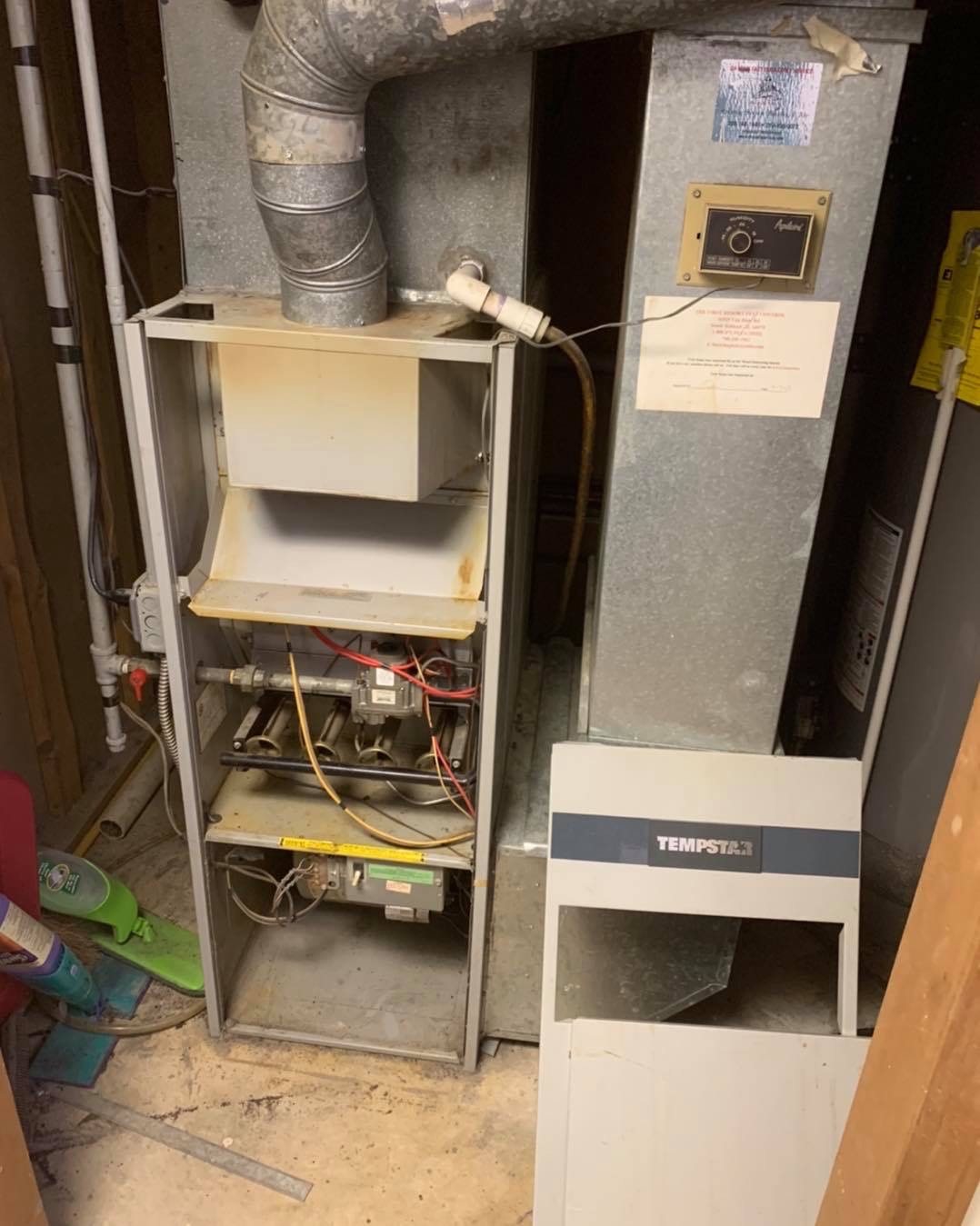
Getting the best deal on a new HVAC system in Chicago starts with understanding what drives the price. System type, efficiency rating, installation complexity, and even the time of year you buy can swing your total cost by thousands of dollars.
Most Chicago homeowners spend between $5,000 and $15,000 on a full HVAC replacement, but the "best deal" isn't always the lowest number on a quote. It's the system that fits your home, your climate, and your budget over the next 15 to 20 years.
This guide breaks down real Chicago HVAC pricing, shows you when and how to buy smart, walks you through rebates and tax credits available right now, and helps you pick a contractor you can trust.
What Does a New HVAC System Actually Cost in Chicago?
Before you can negotiate a deal, you need to know what "normal" looks like. HVAC pricing in Chicago varies widely depending on the type of system, the size of your home, and the scope of work involved. Here's what the local market looks like heading into 2025.
Average Price Ranges by System Type
Not every HVAC system carries the same price tag. The equipment you choose is the single biggest variable in your total project cost.
System Type
Average Cost (Installed)
Best For
Central Air Conditioner
$3,800 – $7,500
Homes with existing ductwork
Gas Furnace
$3,000 – $6,500
Primary heating in cold climates
AC + Furnace Bundle
$6,500 – $13,000
Full system replacement
Heat Pump (Air Source)
$4,500 – $9,000
Moderate climates, dual heating/cooling
Dual-Fuel System (Heat Pump + Furnace)
$8,000 – $15,000
Chicago's extreme temperature swings
Ductless Mini-Split
$3,000 – $8,000
Additions, older homes without ducts
Packaged Unit (Commercial)
$7,000 – $18,000+
Small commercial buildings
These ranges include equipment and standard installation labor. They don't include major ductwork modifications, electrical upgrades, or permit fees, which we'll cover below.
Why Chicago HVAC Costs Differ from National Averages
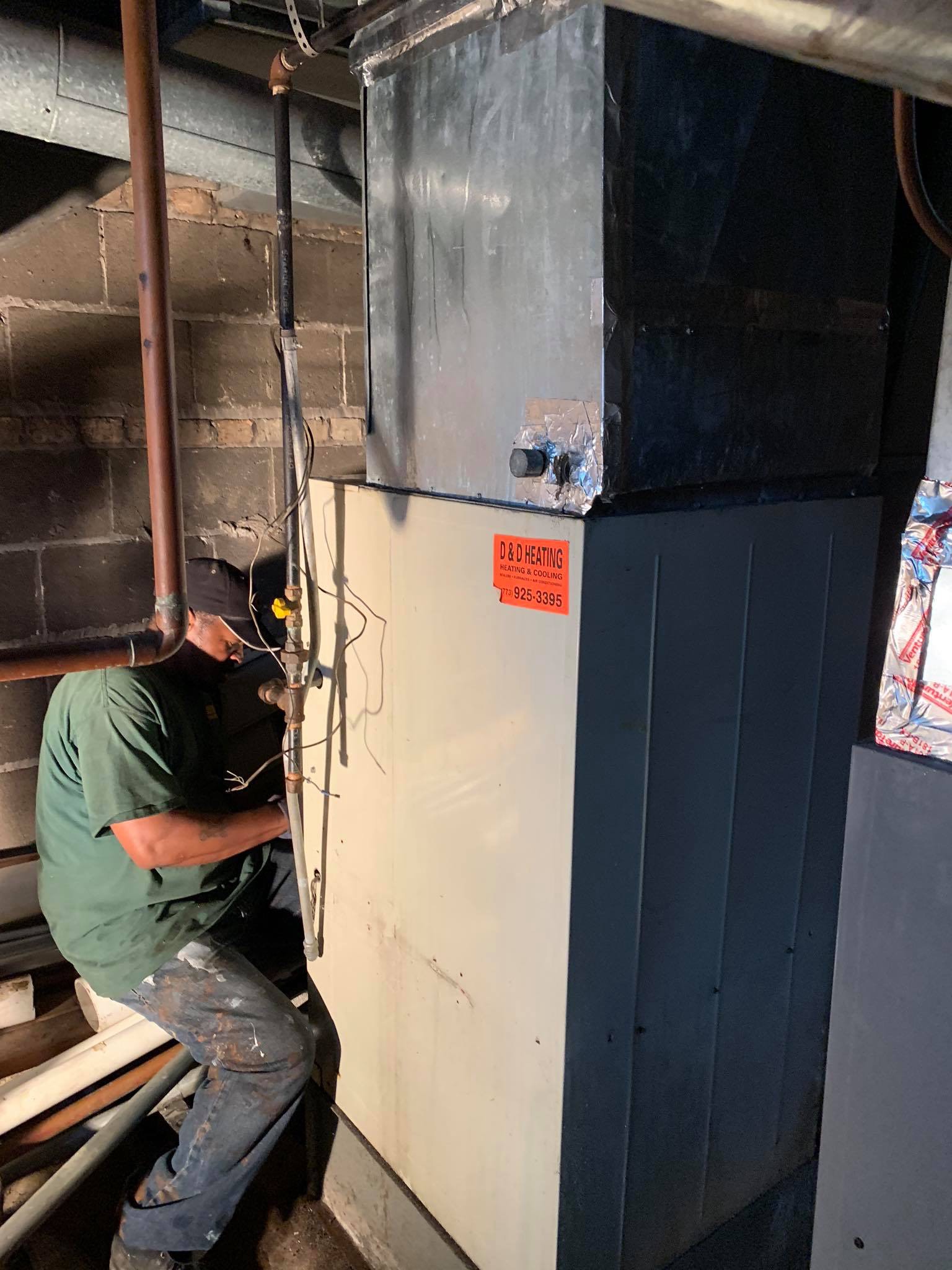
Chicago isn't a "typical" HVAC market. Several local factors push costs higher than what you'll see in national averages.
First, Chicago's climate demands serious heating capacity. Winters regularly drop below zero, which means your furnace isn't optional equipment. It's a survival system. Most homes need a furnace rated at 80,000 to 100,000+ BTUs, which costs more than the 60,000 BTU units common in milder regions.
Second, labor rates in the Chicago metro area run higher than the national average. Licensed HVAC technicians in Cook County typically charge more per hour than contractors in smaller Midwest markets, and the city's permitting process adds both time and cost.
Third, many Chicago homes are older. Bungalows, two-flats, and greystones built before 1960 often have outdated ductwork, undersized electrical panels, or limited mechanical room space. These factors increase installation complexity and cost.
Key Factors That Drive HVAC System Pricing
Understanding what goes into your quote helps you spot where the real value is and where you might be overpaying.
System Type and Size Requirements
The right HVAC system for your home depends on square footage, insulation quality, window count, ceiling height, and layout. An HVAC contractor should perform a Manual J load calculation to determine the exact heating and cooling capacity your home needs.
Oversizing is a common and expensive mistake. A system that's too large will short-cycle, meaning it turns on and off too frequently. That wastes energy, wears out components faster, and leaves you with uneven temperatures. Undersizing is equally problematic. The system runs constantly, struggles to keep up on the coldest days, and burns through energy.
For a typical 2,000-square-foot Chicago home, you'll generally need a 3- to 4-ton air conditioner and a furnace in the 80,000 to 100,000 BTU range. But "typical" varies. A well-insulated newer construction home may need less capacity than a drafty 1920s bungalow of the same size.
Energy Efficiency Ratings (SEER, AFUE, HSPF)
Efficiency ratings directly affect both the purchase price and your long-term operating costs. Higher-efficiency equipment costs more upfront but uses less energy every month.
SEER2 (Seasonal Energy Efficiency Ratio): Measures air conditioner and heat pump cooling efficiency. The current federal minimum is 14.3 SEER2 for northern regions including Chicago. High-efficiency units reach 20+ SEER2. Jumping from a 14 SEER to a 18 SEER unit can reduce cooling costs by roughly 20% to 30% annually.
AFUE (Annual Fuel Utilization Efficiency): Measures furnace heating efficiency as a percentage. A 96% AFUE furnace converts 96 cents of every dollar spent on gas into heat. Standard efficiency furnaces sit around 80% AFUE. In Chicago, where heating bills can top $150 to $250 per month in winter, the difference between 80% and 96% AFUE adds up fast.
HSPF2 (Heating Seasonal Performance Factor): Measures heat pump heating efficiency. Look for 8.8 HSPF2 or higher if you're considering a heat pump for Chicago use.
The deal calculation here is straightforward. A high-efficiency system might cost $1,500 to $3,000 more upfront, but if it saves you $400 to $800 per year in energy costs, it pays for itself within three to five years.
Labor and Installation Complexity
Labor typically accounts for 30% to 50% of your total HVAC installation cost. In Chicago, expect to pay between $2,000 and $5,000+ in labor depending on the scope.
A straightforward swap, where the new system matches the old one in type, size, and location, is the least expensive installation. Costs climb when the project involves:
- Converting from one system type to another (e.g., adding central air to a boiler-heated home)
- Relocating equipment to a different area of the house
- Installing in tight or hard-to-access spaces common in Chicago bungalows and two-flats
- Multi-story homes requiring extended refrigerant line runs
The contractor's experience with your specific home style matters. A crew that regularly works on Chicago's older housing stock will be faster and more efficient than one unfamiliar with the quirks of local architecture.
Ductwork, Permits, and Hidden Costs
The number on your HVAC quote isn't always the final number. Several additional costs can catch homeowners off guard.
Ductwork: If your existing ducts are damaged, undersized, or poorly sealed, you may need modifications or a full replacement. Duct sealing runs $500 to $1,500. Full ductwork replacement can add $3,000 to $7,000+ depending on home size and accessibility.
Permits: The City of Chicago requires permits for HVAC installations. Permit fees typically range from $250 to $500, and your contractor should handle the application. If a contractor suggests skipping the permit, that's a red flag.
Electrical upgrades: High-efficiency systems, heat pumps, and some air conditioners may require a dedicated circuit or panel upgrade, adding $500 to $2,000.
Removal and disposal: Hauling away your old system usually costs $100 to $300. Some contractors include this in their quote. Others don't. Ask.
Thermostat: If your current thermostat isn't compatible with the new system, budget $150 to $400 for a smart thermostat upgrade.
Always ask for an itemized quote that separates equipment, labor, permits, and any additional work. That's how you compare bids accurately.
Best Time of Year to Buy a New HVAC System in Chicago
Timing your purchase is one of the simplest ways to save money on a new HVAC system. Demand, contractor availability, and manufacturer promotions all shift with the seasons.
Off-Season Pricing Advantages
HVAC contractors in Chicago are busiest during two periods: the first heat wave of summer (June through August) and the first deep freeze of winter (November through January). During these peak seasons, contractors are booked solid, and there's little incentive to offer discounts.
The sweet spots for deals are early spring (March through May) and early fall (September through October). During these shoulder seasons:
- Contractors have lighter schedules and are more willing to negotiate
- You're not making an emergency purchase under pressure
- Installation crews can take their time and do thorough work
- You have the luxury of getting multiple quotes without rushing
Buying in the off-season can save you 5% to 15% on the total project cost. On a $10,000 installation, that's $500 to $1,500 back in your pocket.
Manufacturer and Dealer Promotions to Watch For
HVAC manufacturers like Carrier, Lennox, Trane, Rheem, and Goodman run seasonal promotions throughout the year. These typically include:
- Rebates of $200 to $1,500 on qualifying equipment
- Extended warranty offers (10-year parts and labor instead of standard 5-year)
- 0% financing for 12 to 72 months through manufacturer-backed programs
The heaviest promotion periods tend to fall in spring (March through May) and early fall (September through November), aligning perfectly with the off-season installation window.
Ask your contractor which brands they carry and whether any current promotions apply to your project. A good contractor will proactively tell you about available rebates. If they don't mention them, ask directly.
How to Compare HVAC Quotes the Right Way
Getting multiple quotes is standard advice. But knowing how to read and compare those quotes is what actually saves you money.
What a Trustworthy HVAC Estimate Should Include
A professional HVAC quote should be detailed, transparent, and in writing. At minimum, it should list:
- Equipment brand, model number, and specifications (not just "3-ton AC")
- Efficiency ratings (SEER2, AFUE, HSPF2)
- Warranty details for both parts and labor
- Itemized labor costs
- Ductwork modifications (if any)
- Permit fees
- Removal and disposal of old equipment
- Thermostat and accessories
- Timeline for completion
- Payment terms and financing options
If a quote is vague, handwritten on a scrap of paper, or missing key details, that tells you something about how the contractor runs their business.
Red Flags in HVAC Bids
Not every low bid is a good deal. Watch for these warning signs:
Significantly lower than other quotes. If one bid comes in 30% to 40% below the others, the contractor may be cutting corners on equipment quality, skipping permits, using unlicensed labor, or planning to hit you with change orders later.
High-pressure sales tactics. "This price is only good today" or "I can't guarantee this rate if you wait" are pressure tactics, not professional business practices. A reputable contractor gives you time to decide.
No load calculation. If a contractor quotes you a system size without measuring your home, checking insulation, or performing any calculations, they're guessing. That guess could cost you thousands in wasted energy and premature equipment failure.
No written warranty. Verbal promises mean nothing when your compressor fails in year three. Get everything in writing.
Requesting full payment upfront. A reasonable deposit (10% to 30%) is normal. Paying 100% before work begins is not.
Comparing Value, Not Just Price
The cheapest quote rarely delivers the best deal. When comparing bids, weigh these factors:
Equipment quality. A mid-tier Carrier or Trane unit will likely outperform and outlast a bottom-tier brand, even if the upfront cost is slightly higher. Ask about the expected lifespan and reliability track record of the specific model being quoted.
Warranty coverage. A 10-year parts and labor warranty is significantly more valuable than a 5-year parts-only warranty. One compressor replacement can cost $2,000 to $3,500. That warranty difference could save you real money.
Contractor reputation. Check Google reviews, BBB ratings, and ask for references from recent Chicago installations. A contractor with hundreds of positive reviews and a decade of local experience is worth a modest premium over an unknown operator.
Post-installation support. Does the contractor offer maintenance plans? Will they be available for service calls after the sale? The relationship doesn't end at installation.
Rebates, Tax Credits, and Financing Options for Chicago Homeowners
One of the most overlooked ways to get a better deal on your HVAC system is taking advantage of every available incentive. Between federal tax credits, state programs, and utility rebates, Chicago homeowners can potentially recoup thousands.
Federal Energy Efficiency Tax Credits (2025)
The Inflation Reduction Act continues to offer significant tax credits for energy-efficient home improvements through 2032. For HVAC equipment installed in 2025:
- Heat pumps (air source): Up to $2,000 tax credit for qualifying models meeting CEE highest efficiency tier
- Central air conditioners: Up to $600 tax credit for units meeting Energy Star Most Efficient criteria
- Gas furnaces: Up to $600 tax credit for units with 97% AFUE or higher
- Boilers: Up to $600 tax credit for qualifying high-efficiency models
The annual cap for HVAC-related credits is $3,200 (combining the $2,000 heat pump credit with up to $1,200 for other qualifying improvements). These are tax credits, not deductions, meaning they reduce your tax bill dollar for dollar.
To qualify, equipment must be installed in your primary residence and meet specific efficiency thresholds. Your HVAC contractor should be able to confirm whether the equipment they're quoting qualifies.
Illinois and ComEd Utility Rebates
Beyond federal incentives, Illinois residents have access to additional savings:
ComEd and Nicor Gas rebates through the Illinois Energy Efficiency Program offer rebates on qualifying high-efficiency heating and cooling equipment. Rebate amounts vary by equipment type and efficiency level but typically range from $100 to $1,000+.
Smart thermostat rebates of $25 to $100 are often available through ComEd for qualifying Wi-Fi enabled thermostats.
Check the Illinois Energy Efficiency website and your utility provider's current rebate listings before finalizing your purchase. Rebate programs change annually, and some have limited funding that runs out before the year ends.
Stack your savings. Federal tax credits and utility rebates can be combined. On a high-efficiency heat pump installation, you could potentially save $2,500 to $3,500+ through combined incentives, dramatically reducing your effective cost.
HVAC Financing Plans That Save You Money
If paying the full cost upfront isn't feasible, financing can make a new system accessible without draining your savings. But not all financing is equal.
0% APR manufacturer financing is the gold standard. Brands like Carrier, Lennox, and Trane periodically offer 0% interest for 12 to 72 months through authorized dealers. You pay the same total amount whether you finance or pay cash. There's no downside if you make payments on time.
Low-interest contractor financing through third-party lenders (GreenSky, Synchrony, Wells Fargo) typically offers rates between 4.99% and 12.99% APR depending on your credit score and term length. Run the numbers. On a $10,000 system at 7.99% over 10 years, you'd pay roughly $4,500 in interest. A shorter term saves significantly.
Home equity loans or HELOCs may offer lower rates than contractor financing, especially if you have substantial equity. Interest may also be tax-deductible if the funds are used for home improvement.
Avoid: Rent-to-own or lease programs for HVAC equipment. These typically cost far more than purchasing and often include unfavorable terms.
The best financing deal is the one with the lowest total cost over the life of the loan. Always calculate the total amount you'll pay, not just the monthly payment.
Choosing the Right HVAC Contractor in Chicago
Your contractor choice affects everything: installation quality, system performance, warranty validity, and your long-term satisfaction. This is not the place to cut corners.
Licenses, Insurance, and Certifications to Verify
In Chicago, HVAC contractors must hold specific licenses to legally perform installation work. Before hiring anyone, verify:
City of Chicago contractor license. The city requires HVAC contractors to be licensed. You can verify license status through the City of Chicago's Department of Buildings.
State of Illinois HVAC license. Illinois requires HVAC contractors to hold a state license for work involving refrigerants and certain system types.
General liability insurance and workers' compensation. If an uninsured worker is injured on your property, you could be liable. Ask for a certificate of insurance and verify it's current.
EPA Section 608 certification. Required for any technician handling refrigerants. This is federal law, not optional.
NATE certification (North American Technician Excellence) is an industry credential that indicates advanced technical training. It's not legally required, but it signals a higher standard of competence.
Questions to Ask Before Signing a Contract
Go beyond "how much does it cost?" These questions reveal whether a contractor is worth your investment:
- Will you perform a Manual J load calculation before recommending a system size?
- What brands do you carry, and why do you recommend this specific model for my home?
- What does your warranty cover, and for how long? Is labor included?
- Who will perform the actual installation? Your employees or subcontractors?
- Will you pull the required City of Chicago permits?
- What's your timeline, and what happens if there are delays?
- Do you offer a maintenance plan after installation?
- Can you provide references from recent installations in my neighborhood?
- What financing options do you offer?
- What happens if something goes wrong in the first year?
The answers to these questions tell you more about a contractor's quality than the number at the bottom of their quote.
Why Local Experience Matters for Chicago Homes
Chicago's housing stock is unique. Victorian-era homes in Lincoln Park have different HVAC challenges than mid-century ranches in Edison Park or high-rise condos in the Loop.
A contractor with deep Chicago experience understands:
- How to work with the tight mechanical spaces in Chicago bungalows and two-flats
- The ductwork configurations common in different neighborhood housing styles
- City of Chicago permitting requirements and inspection processes
- How Chicago's extreme temperature range (from -20°F to 100°F+) affects system sizing and equipment selection
- Which equipment performs best in Lake Michigan's humidity and lake-effect weather patterns
Local experience translates to fewer surprises, faster installations, and systems that actually perform well in Chicago's demanding climate.
Energy-Efficient HVAC Systems That Pay for Themselves
Spending more upfront on efficiency can be the best deal of all, if you choose the right equipment for your situation.
High-Efficiency Furnaces and Air Conditioners
For most Chicago homes, the furnace is the bigger energy consumer. Upgrading from an old 80% AFUE furnace to a new 96% to 98% AFUE model can cut your heating gas bill by roughly 15% to 20%. On a typical Chicago winter gas bill of $200 per month over five heating months, that's $150 to $200 in annual savings.
On the cooling side, upgrading from an aging 10 SEER unit to a new 16 to 18 SEER2 air conditioner can reduce summer electricity costs by 30% to 40%. Chicago summers are getting hotter, and cooling costs are rising. A more efficient AC pays dividends every July and August.
The sweet spot for most Chicago homeowners is a 96% AFUE furnace paired with a 16 to 18 SEER2 air conditioner. This combination balances upfront cost with meaningful energy savings without pushing into ultra-premium pricing territory.
Heat Pumps and Dual-Fuel Systems for Chicago Winters
Heat pumps have improved dramatically in recent years. Modern cold-climate heat pumps can operate efficiently down to -15°F to -20°F, making them viable for Chicago for the first time.
However, Chicago's coldest nights can still push below a heat pump's effective range. That's where dual-fuel systems shine. A dual-fuel setup pairs an electric heat pump with a gas furnace. The heat pump handles heating and cooling during moderate temperatures (roughly 70% of the year), and the furnace kicks in only during the coldest stretches.
This combination can reduce annual heating costs by 30% to 50% compared to a furnace-only setup, because the heat pump is significantly more efficient than gas combustion during mild-to-moderate cold weather.
Dual-fuel systems also qualify for the $2,000 federal heat pump tax credit, making the effective cost difference between a dual-fuel system and a standard furnace-plus-AC setup much smaller than the sticker price suggests.
Smart Thermostats and Zoning for Long-Term Savings
A new HVAC system paired with an outdated thermostat is like buying a sports car and never leaving second gear.
Smart thermostats from brands like Ecobee, Google Nest, and Honeywell Home learn your schedule, adjust temperatures automatically, and provide energy usage reports. Energy Star estimates that a certified smart thermostat saves roughly 8% on heating and cooling costs annually. On a combined annual HVAC energy bill of $2,000 to $3,000, that's $160 to $240 per year for a device that costs $150 to $300.
Zoning systems divide your home into independent temperature zones, each controlled by its own thermostat and dampers. Instead of heating or cooling your entire home to the same temperature, you direct comfort where you need it. Zoning is especially valuable in multi-story Chicago homes where the second floor is always hotter in summer and the basement stays cold year-round.
A basic two-zone system adds $1,500 to $3,500 to your installation cost but can reduce energy waste by 20% to 30% in homes with significant temperature variation between floors.
Repair vs. Replace: When a New System Is the Better Deal
Sometimes the best deal isn't buying new at all. And sometimes, pouring money into repairs is the worst financial decision you can make. Here's how to tell the difference.
The 50% Rule and System Age Guidelines
The 50% rule is a practical guideline: if a repair costs more than 50% of the price of a new system, replacement is usually the smarter investment.
Age matters too. The average lifespan of HVAC equipment in Chicago:
Equipment
Average Lifespan
Replace If Older Than
Gas Furnace
15 – 20 years
15 years (with major repair needed)
Central Air Conditioner
12 – 17 years
12 years (with major repair needed)
Heat Pump
12 – 15 years
10 years (with major repair needed)
Boiler
20 – 30 years
20 years (with declining efficiency)
If your system is within a few years of these thresholds and needs a repair costing $1,500 or more, replacement almost always makes more financial sense.
Cost of Ongoing Repairs vs. New System Investment
Repair costs compound. A $500 repair this year, a $900 repair next year, and a $1,200 repair the year after that adds up to $2,600 spent on a system that's still old, still inefficient, and still likely to break again.
Meanwhile, a new system comes with:
- A full manufacturer warranty (typically 5 to 10 years on parts)
- Dramatically lower energy bills (often 20% to 40% less than a 15-year-old system)
- Reliable performance through Chicago's extreme seasons
- Modern features like variable-speed motors, smart thermostat compatibility, and quieter operation
- Increased home value (buyers notice and value new HVAC systems)
Run the math over a five-year window. If projected repair costs plus the energy penalty of running old equipment exceed 60% to 70% of a new system's cost, replacement is the better deal.
Conclusion
Getting the best deal on a new HVAC system in Chicago comes down to preparation. Know what systems cost, understand what drives the price, time your purchase for the off-season, and take full advantage of every rebate and tax credit available.
The lowest quote isn't always the best value. A properly sized, energy-efficient system installed by a licensed, experienced Chicago contractor will cost less to operate, last longer, and keep your home comfortable through every brutal winter and humid summer this city throws at you.
We help Chicago homeowners and business owners navigate every step of this process. At Chicago Comfort HVAC, we provide transparent pricing, honest load calculations, and expert installation backed by real warranties. Contact us today for a free, no-pressure estimate on your new HVAC system.
Frequently Asked Questions
How much does a new HVAC system cost in Chicago in 2025?
Most Chicago homeowners spend between $6,500 and $15,000 for a full HVAC system replacement, including equipment and installation. The exact cost depends on system type, efficiency rating, home size, and installation complexity. High-efficiency or dual-fuel systems fall at the upper end of that range.
What is the cheapest time of year to install HVAC in Chicago?
Early spring (March through May) and early fall (September through October) are the most affordable windows. Contractors have lighter schedules during these shoulder seasons and are more likely to offer competitive pricing. You can save 5% to 15% compared to peak summer or winter pricing.
Are there tax credits for installing a new HVAC system?
Yes. The federal Inflation Reduction Act offers tax credits up to $2,000 for heat pumps and up to $600 for qualifying furnaces and air conditioners installed in 2025. Illinois utility rebates through ComEd and Nicor Gas can add additional savings. These incentives can be combined.
How long does a typical HVAC installation take?
A standard replacement where the new system matches the old configuration typically takes one to two days. More complex projects involving ductwork modifications, system type conversions, or multi-zone installations may take two to four days. Your contractor should provide a clear timeline before work begins.
Should I repair or replace my HVAC system?
Use the 50% rule: if the repair costs more than half the price of a new system, replace it. Also consider age. Furnaces over 15 years and air conditioners over 12 years with major repair needs are generally better replaced. Factor in energy savings from a new, efficient system when making your decision.
What SEER rating should I look for in a new air conditioner?
The federal minimum for Chicago's northern climate zone is 14.3 SEER2. For the best balance of upfront cost and energy savings, look for 16 to 18 SEER2. Units above 20 SEER2 offer diminishing returns for most homeowners unless you have very high cooling demands or plan to stay in your home long-term.
How do I know if an HVAC quote is fair?
Get at least three written quotes from licensed Chicago contractors. Each quote should itemize equipment (with brand and model number), labor, permits, ductwork, and any additional costs. Compare the total value, including warranty coverage and efficiency ratings, not just the bottom-line price. If one quote is dramatically lower than the others, investigate why before committing.
Follow a maintenance program
Ante gravida id aenean quis egestas risus nam amet nullam leo diam diam aliquam eu eu malesuada arcu rhoncus suspendisse nulla mattis ut amet sagittis in justo egestas.

search for a trusted mechanic
Lorem ipsum dolor sit amet, consectetur adipiscing elit lobortis arcu enim urna adipiscing praesent velit viverra sit semper lorem eu cursus vel hendrerit elementum morbi curabitur etiam nibh justo, lorem aliquet donec sed sit mi dignissim at ante massa mattis.
- Neque sodales ut etiam sit amet nisl purus non tellus orci ac auctor
- Adipiscing elit ut aliquam purus sit amet viverra suspendisse potent
- Mauris commodo quis imperdiet massa tincidunt nunc pulvinar
- Excepteur sint occaecat cupidatat non proident sunt in culpa qui officia
Check the air pressure in your tires
Vitae congue eu consequat ac felis placerat vestibulum lectus mauris ultrices cursus sit amet dictum sit amet justo donec enim diam porttitor lacus luctus accumsan tortor posuere praesent tristique magna sit amet purus gravida quis blandit turpis.
Review your suspension frequently
At risus viverra adipiscing at in tellus integer feugiat nisl pretium fusce id velit ut tortor sagittis orci a scelerisque purus semper eget at lectus urna duis convallis. porta nibh venenatis cras sed felis eget neque laoreet suspendisse interdum consectetur libero id faucibus nisl donec pretium vulputate sapien nec sagittis aliquam nunc lobortis mattis aliquam faucibus purus in.
- Neque sodales ut etiam sit amet nisl purus non tellus orci ac auctor
- Adipiscing elit ut aliquam purus sit amet viverra suspendisse potent
- Mauris commodo quis imperdiet massa tincidunt nunc pulvinar
- Excepteur sint occaecat cupidatat non proident sunt in culpa qui officia
Service your vehicle as regularly as posible
At risus viverra adipiscing at in tellus integer feugiat nisl pretium fusce id velit ut tortor sagittis orci a scelerisque purus semper eget at lectus urna duis convallis. porta nibh venenatis cras sed felis eget neque laoreet suspendisse interdum consectetur libero id faucibus nisl donec pretium vulputate sapien nec sagittis aliquam nunc lobortis mattis aliquam faucibus purus in.
“Nisi quis eleifend quam adipiscing vitae aliquet bibendum enim facilisis gravida neque velit euismod in pellentesque”
Conclusion
Eget lorem dolor sed viverra ipsum nunc aliquet bibendum felis donec et odio pellentesque diam volutpat commodo sed egestas aliquam sem fringilla ut morbi tincidunt augue interdum velit euismod eu tincidunt tortor aliquam nulla facilisi aenean sed adipiscing diam donec adipiscing ut lectus arcu bibendum at varius vel pharetra nibh venenatis cras sed felis eget.
