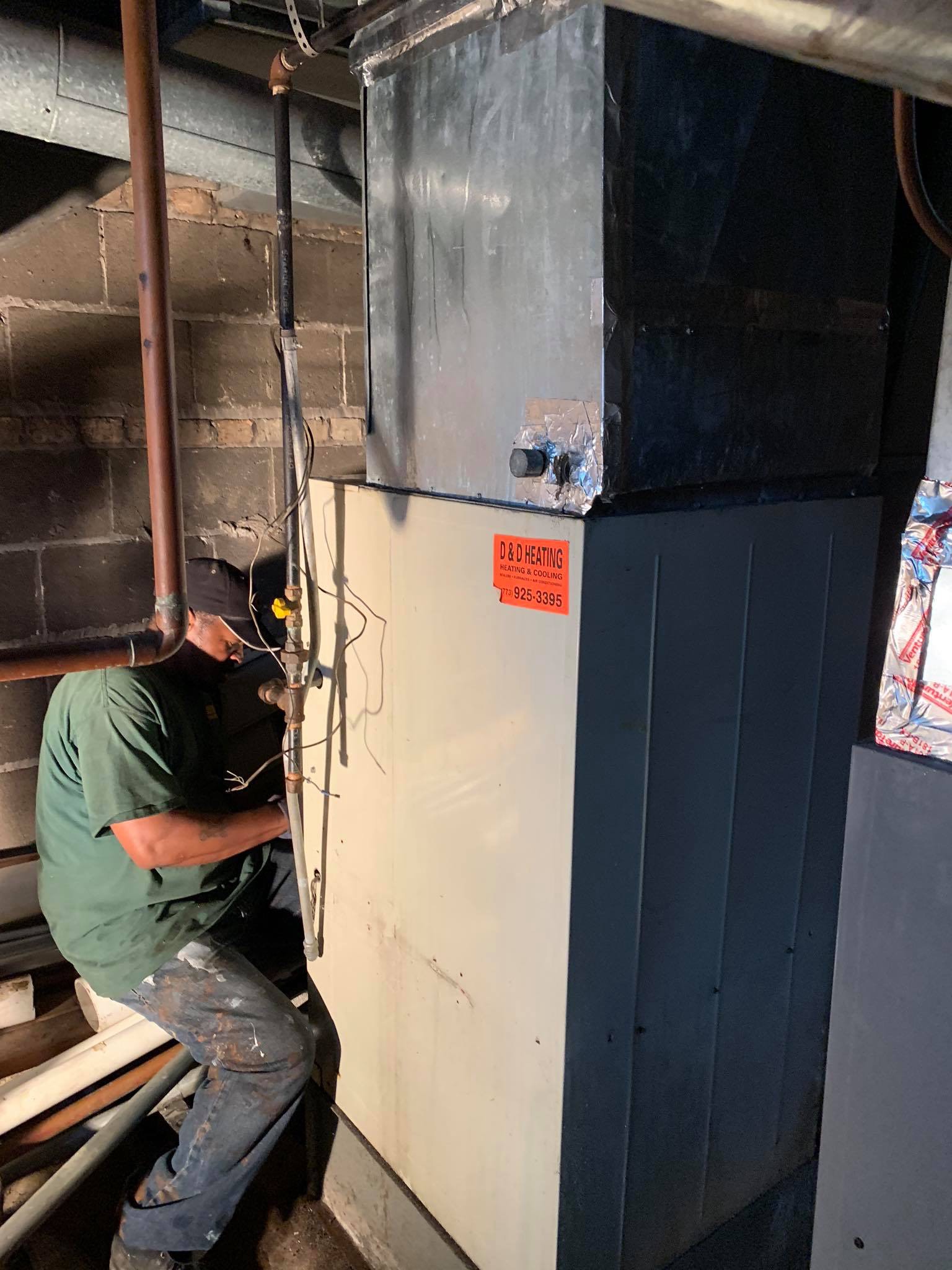
HVAC Service vs Maintenance: What's the Difference?
Learn the real difference between HVAC service and maintenance in Chicago. Compare costs, timing, and what each includes to protect your system year-round.

HVAC service fixes problems after they appear. HVAC maintenance prevents those problems from happening in the first place. That single distinction affects what you pay, when you call, and how long your heating and cooling system lasts in a city that pushes equipment to its limits.
Chicago homeowners and business owners deal with brutal temperature swings that stress furnaces, air conditioners, and heat pumps year-round. Understanding when you need maintenance versus when you need service helps you budget smarter and avoid emergency repair bills.
This guide breaks down exactly what each term means, what's included, how costs compare, and why Chicago's climate makes both non-negotiable for protecting your investment.
What Is HVAC Maintenance?
HVAC maintenance is scheduled, preventive care designed to keep your heating and cooling system running efficiently before anything breaks. Think of it like an oil change for your car. You're not fixing a problem. You're stopping one from developing.
A qualified technician inspects, cleans, and tunes your equipment on a set schedule, typically once or twice per year. The goal is to catch small issues like a dirty filter, a worn belt, or a low refrigerant charge before they escalate into expensive failures.
Maintenance is proactive. You schedule it when your system is working fine, not when something goes wrong.
What's Included in a Standard HVAC Maintenance Visit
A standard maintenance visit covers a checklist of inspections, cleaning tasks, and minor adjustments. While the exact scope varies by contractor, most comprehensive tune-ups include:
Heating system maintenance (fall):
- Inspecting and cleaning the burner assembly
- Testing ignition and safety controls
- Checking the heat exchanger for cracks or corrosion
- Replacing or cleaning the air filter
- Lubricating moving parts
- Verifying thermostat calibration
- Inspecting flue and venting systems
Cooling system maintenance (spring):
- Cleaning the condenser and evaporator coils
- Checking refrigerant levels and testing for leaks
- Inspecting and cleaning the condensate drain
- Testing capacitors and electrical connections
- Verifying airflow across the system
- Calibrating the thermostat for cooling mode
Most maintenance visits take between one and two hours. The technician should provide a written summary of findings, flag anything that needs attention, and give you a clear picture of your system's condition.
How Often Should You Schedule HVAC Maintenance in Chicago
Chicago's climate demands at least two maintenance visits per year: one in early fall before heating season and one in early spring before cooling season.
This twice-a-year schedule matters more here than in milder climates. Chicago furnaces run hard from November through March, often logging thousands of operating hours in a single winter. Air conditioners face intense demand during July and August heat waves, sometimes running continuously for days.
Skipping even one seasonal tune-up increases the risk of a mid-season breakdown, exactly when every HVAC contractor in the city is booked solid and emergency rates apply.
If you have a heat pump system, you may benefit from quarterly filter checks in addition to the two full tune-ups, since heat pumps operate year-round.
What Is HVAC Service?
HVAC service is reactive work performed when something goes wrong with your heating or cooling system. It covers diagnostics, troubleshooting, repairs, and component replacements needed to restore your equipment to working condition.
Service calls happen because of a specific problem. Your furnace stopped producing heat. Your air conditioner is blowing warm air. You hear a grinding noise from the blower motor. Something broke, and you need a technician to identify the cause and fix it.
Unlike maintenance, which follows a predictable schedule, service calls are unpredictable. They happen when your system fails, often at the worst possible time.
Common HVAC Service Calls for Chicago Homes
Certain HVAC problems show up repeatedly in Chicago due to the local climate, housing stock, and system age. The most frequent service calls include:
Heating-related service calls:
- Furnace ignition failures (common after long idle periods)
- Cracked heat exchangers (accelerated by extreme cold cycling)
- Blower motor failures
- Thermostat malfunctions
- Gas valve issues
- Carbon monoxide detector triggers related to furnace exhaust
Cooling-related service calls:
- Refrigerant leaks
- Frozen evaporator coils
- Compressor failures
- Capacitor burnout (often caused by power surges during summer storms)
- Condensate drain clogs leading to water damage
Year-round issues:
- Ductwork leaks reducing efficiency
- Electrical connection failures
- Zone control malfunctions in multi-story homes
- Thermostat wiring problems
Many of these service calls are preventable with regular maintenance. A technician who catches a worn capacitor during a spring tune-up saves you from a compressor failure during a July heat wave.
Emergency HVAC Service vs Scheduled Repairs
Not every service call is an emergency. Understanding the difference helps you avoid paying premium rates for issues that can wait.
Emergency service means your system has failed completely, creating a safety hazard or making your home uninhabitable. In Chicago, a furnace failure during a polar vortex event qualifies as an emergency. So does a gas leak or a carbon monoxide alarm triggered by your heating system. Emergency service typically costs significantly more due to after-hours labor rates and priority scheduling.
Scheduled repairs address problems that need fixing but don't pose an immediate safety risk. Your air conditioner is making an unusual noise but still cooling. Your furnace cycles on and off more frequently than normal. These issues need attention, but you can book a regular appointment and avoid emergency pricing.
The smartest approach: call your contractor as soon as you notice something off. Early diagnosis often means a scheduled repair instead of an emergency service call two weeks later.
HVAC Service vs Maintenance: Key Differences Explained
The terms "service" and "maintenance" get used interchangeably in everyday conversation, but they describe fundamentally different types of HVAC work. Here's how they compare across the factors that matter most to your budget and your system's health.
Purpose and Scope
Maintenance is preventive. Its purpose is to keep a working system working. The scope is standardized: a technician follows a checklist of inspections, cleaning tasks, and adjustments designed to optimize performance and catch early warning signs.
Service is corrective. Its purpose is to diagnose and fix a specific problem. The scope varies entirely based on what's wrong. A service call might involve replacing a single capacitor in 20 minutes or diagnosing a complex electrical fault over several hours.
Maintenance keeps your system healthy. Service treats it when it's sick.
Cost Comparison
Maintenance costs are predictable. Most Chicago HVAC contractors charge a flat fee for seasonal tune-ups, and many offer annual maintenance plans that bundle both visits at a discount. Typical maintenance costs in the Chicago area range from roughly $80 to $200 per visit depending on system type and contractor.
Service costs are variable and harder to predict. A basic diagnostic fee usually runs between $75 and $150 in the Chicago market, but the total bill depends on what's wrong. A simple repair like replacing a thermostat might cost a few hundred dollars. A major repair like replacing a compressor or heat exchanger can run into the thousands.
The financial math is straightforward: spending a few hundred dollars per year on maintenance is significantly cheaper than paying for emergency service calls and major component replacements.
Timing and Frequency
Maintenance follows a set schedule. You book it in advance, typically during the shoulder seasons (spring and fall) when demand is lower and contractors have more availability.
Service happens on demand. You call when something breaks. In Chicago, service call volume spikes during the first major cold snap in November and the first heat wave in June or July, exactly when scheduling is tightest and wait times are longest.
Factor
Maintenance
Service
Purpose
Prevent problems
Fix problems
Timing
Scheduled in advance
On-demand when issues arise
Frequency
1-2 times per year
As needed
Cost predictability
Fixed/flat rate
Variable based on diagnosis
Typical cost range
$80-$200 per visit
$150-$3,000+ depending on repair
System state
Working normally
Malfunctioning or failed
Urgency
Low (planned)
Medium to high (reactive)
Why Chicago's Climate Makes Both Service and Maintenance Essential
Chicago's weather doesn't give HVAC systems a break. The city regularly experiences temperature swings of 100+ degrees between winter lows and summer highs, and that range puts extraordinary stress on heating and cooling equipment.
Systems that might last 20 years in a moderate climate often wear out faster here. Both maintenance and service play critical roles in managing that reality.
Harsh Winters and Heating System Demands
Chicago winters routinely push temperatures below zero. During polar vortex events, wind chills can drop to -40°F or colder, forcing furnaces to run nearly continuously for days.
That kind of sustained operation accelerates wear on every mechanical component: burners, heat exchangers, blower motors, ignition systems, and gas valves. A furnace that hasn't been maintained is far more likely to fail under this kind of stress.
Winter furnace failures in Chicago aren't just inconvenient. They're dangerous. Pipes can freeze and burst within hours when indoor temperatures drop. Emergency heating service during a cold snap often means long wait times because every contractor in the metro area is handling similar calls.
Fall maintenance is your best defense. A technician who inspects your heat exchanger, tests your ignition system, and verifies your gas connections in October gives you confidence that your furnace will perform when January hits.
Hot Summers and Cooling System Stress
Chicago summers bring their own challenges. Extended heat waves with temperatures above 90°F and high humidity push air conditioning systems hard, especially in older homes with less insulation or outdated ductwork.
Compressors, capacitors, and fan motors all degrade faster under sustained high-temperature operation. Refrigerant leaks that were minor in spring become system-crippling failures when the compressor is running 12 hours a day.
Summer storms also create power surge risks that can damage electrical components in your outdoor condenser unit.
Spring maintenance addresses these risks directly. Cleaning coils, checking refrigerant levels, and testing electrical connections before the heat arrives means your system is ready for peak demand.
How Regular Maintenance Reduces the Need for Costly Service Calls
The relationship between maintenance and service is direct: the more consistently you maintain your system, the fewer service calls you'll need.
Preventing Breakdowns Before They Happen
Most HVAC failures don't happen without warning. Components degrade gradually. A capacitor weakens over months before it fails. A refrigerant leak starts small and worsens over time. A dirty coil reduces efficiency incrementally until the system can't keep up.
Maintenance catches these issues early. A technician who measures your capacitor's output during a spring tune-up can flag a weak component and replace it for a fraction of what an emergency compressor replacement would cost.
According to the U.S. Department of Energy, neglecting necessary maintenance ensures a steady decline in air conditioning performance while energy use increases. Regularly maintained systems hold closer to their original efficiency rating throughout their lifespan.
Preventive maintenance also preserves most manufacturer warranties. Many equipment warranties require proof of annual professional maintenance. Skipping it can void your coverage right when you need it most.
Extending Equipment Lifespan and Protecting Your Investment
A new HVAC system in Chicago represents a significant investment, often ranging from several thousand dollars for a basic furnace to tens of thousands for a complete heating and cooling system with high-efficiency equipment.
Regular maintenance extends the useful life of that investment. Well-maintained furnaces and air conditioners consistently outlast neglected ones by several years. Over a system's lifetime, that translates to thousands of dollars in deferred replacement costs.
Maintenance also protects your energy efficiency. A system that's clean, properly charged, and well-tuned uses less energy to heat and cool your home. In a city where you're running either heat or AC for roughly 8 to 9 months of the year, even a small efficiency improvement adds up on your utility bills.
When to Repair, Service, or Replace Your HVAC System
At some point, every HVAC system crosses a line where continued repairs stop making financial sense. Knowing where that line is helps you make smarter decisions about your money.
Signs Your System Needs Professional Service
Call for service if you notice any of these warning signs:
- Unusual noises: Grinding, banging, squealing, or clicking sounds that are new or getting louder
- Inconsistent temperatures: Some rooms are comfortable while others are too hot or too cold
- Frequent cycling: The system turns on and off repeatedly without reaching the set temperature
- Rising energy bills: A sudden increase in gas or electric costs with no change in usage patterns
- Weak airflow: Reduced air coming from vents, even with a clean filter
- Strange odors: Burning smells, musty odors, or the smell of gas near your furnace
- Visible issues: Ice on refrigerant lines, water pooling around the indoor unit, or rust on the furnace
Don't wait for a complete failure. Early service calls are almost always cheaper and less disruptive than emergency repairs.
When Replacement Makes More Financial Sense Than Repair
Consider replacement over repair when:
The system is approaching or past its expected lifespan. Most furnaces last 15 to 20 years. Central air conditioners typically last 15 to 20 years as well. If your system is in that range and facing a major repair, replacement often makes more sense.
Repair costs exceed 50% of replacement cost. This is a widely used rule of thumb in the HVAC industry. If a repair quote is more than half the cost of a new system, the money is better spent on new equipment.
Your system uses R-22 refrigerant. R-22 (Freon) was phased out of production in the United States. If your air conditioner still uses R-22, refrigerant costs for any service call will be extremely high, and replacement with a modern R-410A or R-454B system is the better long-term investment.
Energy bills keep climbing despite maintenance. Older systems lose efficiency over time even with proper care. Modern high-efficiency furnaces and air conditioners can reduce energy consumption significantly compared to equipment from 15 or 20 years ago.
What to Look for in a Chicago HVAC Contractor
Whether you need maintenance, service, or a full system replacement, the contractor you choose matters as much as the work itself.
Licensing, Insurance, and Chicago-Specific Requirements
Chicago has specific licensing requirements for HVAC contractors. Any company performing heating and cooling work in the city should hold the appropriate licenses and carry both general liability insurance and workers' compensation coverage.
Ask for proof of licensing before any work begins. A legitimate contractor will provide this without hesitation.
Beyond licensing, look for technicians with EPA Section 608 certification for refrigerant handling and relevant manufacturer certifications for the equipment brands they install and service.
Chicago's building code also has specific requirements for furnace installations, ductwork modifications, and equipment placement. Your contractor should be familiar with local permit requirements and pull permits when required.
Transparent Pricing and Written Estimates
The best HVAC contractors provide clear, written estimates before starting any work. This applies to both maintenance agreements and service repairs.
For maintenance, look for contractors who offer annual plans with a defined scope of work. You should know exactly what's included in each visit and what the total annual cost will be.
For service calls, expect a diagnostic fee upfront, followed by a written estimate for any recommended repairs. The estimate should itemize parts and labor separately so you can evaluate the cost.
Red flags to watch for:
- Refusing to provide a written estimate
- Pressuring you to approve repairs immediately
- Quoting a single lump sum without breaking down parts and labor
- Recommending full system replacement without explaining why repairs aren't viable
- Not offering a warranty on their repair work
A trustworthy contractor explains your options, answers your questions, and gives you time to make a decision.
Conclusion
HVAC maintenance and service serve different but equally important roles in keeping your Chicago home or business comfortable year-round. Maintenance prevents problems through scheduled, preventive care. Service solves problems through diagnosis and repair. Understanding when you need each one helps you spend less, avoid emergencies, and get more years out of your equipment.
Chicago's extreme temperatures make both maintenance and service non-negotiable. A system that's well-maintained before each season is far less likely to fail when you need it most, and knowing a reliable contractor before an emergency strikes gives you peace of mind that's hard to put a price on.
We're Chicago Comfort HVAC, and we provide honest assessments, transparent pricing, and expert workmanship for every maintenance visit, service call, and system installation. Call us today to schedule your seasonal tune-up or get a straight answer on any HVAC concern.
Frequently Asked Questions
Is HVAC maintenance the same as HVAC service?
No. Maintenance is scheduled, preventive care performed on a working system to keep it running efficiently. Service is reactive work done to diagnose and fix a specific problem. Maintenance prevents issues. Service resolves them.
How much does HVAC maintenance cost in Chicago?
A single maintenance visit in the Chicago area typically costs between $80 and $200 depending on the contractor and system type. Many companies offer annual maintenance plans that bundle two seasonal visits at a discounted rate.
What happens if I skip annual HVAC maintenance?
Skipping maintenance leads to gradual efficiency loss, higher energy bills, and increased risk of unexpected breakdowns. It can also void your manufacturer's warranty, leaving you responsible for the full cost of any covered repairs.
Does HVAC maintenance include repairs?
Standard maintenance does not include repairs. If a technician finds a problem during a maintenance visit, they'll flag it and provide a separate estimate for the repair work. Some maintenance plans include minor repairs or offer discounts on parts and labor.
How do I know if I need HVAC service or just maintenance?
If your system is running normally and it's been more than six months since your last tune-up, you need maintenance. If your system is making unusual noises, not heating or cooling properly, cycling frequently, or showing any sign of malfunction, you need service.
Can regular maintenance lower my energy bills in Chicago?
Yes. A clean, properly tuned HVAC system uses less energy than a neglected one. Dirty filters, clogged coils, and low refrigerant levels all force your system to work harder. Maintenance restores efficiency and can produce noticeable savings on monthly utility bills.
Should I get maintenance before summer or winter in Chicago?
Both. Schedule cooling system maintenance in early spring before temperatures rise and heating system maintenance in early fall before the first cold snap. This timing ensures your system is ready for peak demand and gives you the best chance of getting a convenient appointment before the seasonal rush.
Follow a maintenance program
Ante gravida id aenean quis egestas risus nam amet nullam leo diam diam aliquam eu eu malesuada arcu rhoncus suspendisse nulla mattis ut amet sagittis in justo egestas.

search for a trusted mechanic
Lorem ipsum dolor sit amet, consectetur adipiscing elit lobortis arcu enim urna adipiscing praesent velit viverra sit semper lorem eu cursus vel hendrerit elementum morbi curabitur etiam nibh justo, lorem aliquet donec sed sit mi dignissim at ante massa mattis.
- Neque sodales ut etiam sit amet nisl purus non tellus orci ac auctor
- Adipiscing elit ut aliquam purus sit amet viverra suspendisse potent
- Mauris commodo quis imperdiet massa tincidunt nunc pulvinar
- Excepteur sint occaecat cupidatat non proident sunt in culpa qui officia
Check the air pressure in your tires
Vitae congue eu consequat ac felis placerat vestibulum lectus mauris ultrices cursus sit amet dictum sit amet justo donec enim diam porttitor lacus luctus accumsan tortor posuere praesent tristique magna sit amet purus gravida quis blandit turpis.
Review your suspension frequently
At risus viverra adipiscing at in tellus integer feugiat nisl pretium fusce id velit ut tortor sagittis orci a scelerisque purus semper eget at lectus urna duis convallis. porta nibh venenatis cras sed felis eget neque laoreet suspendisse interdum consectetur libero id faucibus nisl donec pretium vulputate sapien nec sagittis aliquam nunc lobortis mattis aliquam faucibus purus in.
- Neque sodales ut etiam sit amet nisl purus non tellus orci ac auctor
- Adipiscing elit ut aliquam purus sit amet viverra suspendisse potent
- Mauris commodo quis imperdiet massa tincidunt nunc pulvinar
- Excepteur sint occaecat cupidatat non proident sunt in culpa qui officia
Service your vehicle as regularly as posible
At risus viverra adipiscing at in tellus integer feugiat nisl pretium fusce id velit ut tortor sagittis orci a scelerisque purus semper eget at lectus urna duis convallis. porta nibh venenatis cras sed felis eget neque laoreet suspendisse interdum consectetur libero id faucibus nisl donec pretium vulputate sapien nec sagittis aliquam nunc lobortis mattis aliquam faucibus purus in.
“Nisi quis eleifend quam adipiscing vitae aliquet bibendum enim facilisis gravida neque velit euismod in pellentesque”
Conclusion
Eget lorem dolor sed viverra ipsum nunc aliquet bibendum felis donec et odio pellentesque diam volutpat commodo sed egestas aliquam sem fringilla ut morbi tincidunt augue interdum velit euismod eu tincidunt tortor aliquam nulla facilisi aenean sed adipiscing diam donec adipiscing ut lectus arcu bibendum at varius vel pharetra nibh venenatis cras sed felis eget.