
Warning Signs Your HVAC Needs Maintenance
Spot the top warning signs your HVAC needs maintenance before costly breakdowns. Chicago-specific tips on noises, airflow, energy bills, and when to call a pro.
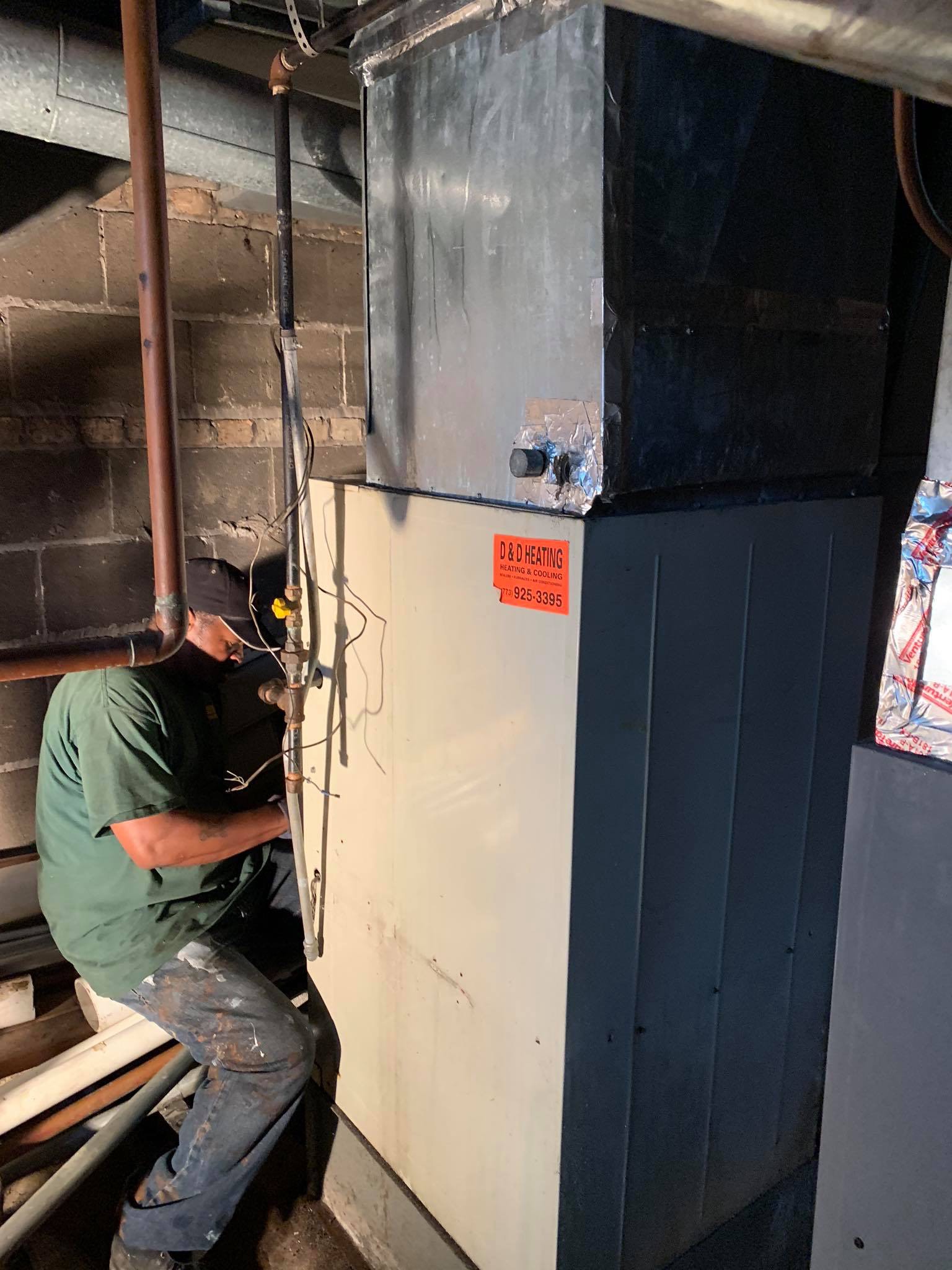
Your HVAC system rarely fails without warning. Strange noises, rising utility bills, uneven temperatures, and musty odors are all signals that your heating and cooling equipment is struggling and needs professional attention before a minor issue becomes a major repair.
For Chicago homeowners and business owners, these warning signs carry extra urgency. Our extreme temperature swings, from subzero January nights to sweltering August afternoons, push HVAC systems harder than in most U.S. cities. Catching problems early protects your comfort, your budget, and the lifespan of your equipment.
This guide walks through the most common and most costly warning signs that your HVAC system needs maintenance, explains what each symptom means, and shows you exactly what to do when you spot one.
Why HVAC Maintenance Matters in Chicago
Skipping routine HVAC maintenance is one of the most expensive shortcuts a property owner can take. A system that runs without annual service loses efficiency steadily, works harder to maintain set temperatures, and wears out critical components faster. In a city like Chicago, where your furnace and air conditioner both log heavy hours every year, that wear compounds quickly.
How Chicago's Climate Puts Extra Stress on Your HVAC System
Chicago's climate is uniquely demanding on heating and cooling equipment. Winter temperatures regularly drop below zero, forcing furnaces and heat pumps to run near-continuously for weeks at a time. Summer heat and humidity push air conditioners to their limits, especially in older homes with limited insulation.
This dual-season intensity means Chicago HVAC systems accumulate more operating hours annually than systems in milder climates. More run time means more friction on blower motors, more stress on compressors, and faster degradation of refrigerant lines, electrical connections, and heat exchangers. Lake-effect moisture also accelerates corrosion on outdoor condensing units, particularly in neighborhoods closer to Lake Michigan.
The result is simple. A furnace or AC unit in Chicago ages faster than the same unit in a moderate climate. Without regular maintenance, that accelerated aging leads to breakdowns at the worst possible times, during a polar vortex in January or a heat wave in July.
The Cost of Ignoring Routine HVAC Maintenance
The financial impact of skipping maintenance goes beyond repair bills. According to the U.S. Department of Energy, neglected air conditioners lose roughly 5% of their operating efficiency each year they go without service. Over five years, that is a 25% efficiency loss, which translates directly into higher monthly energy costs.
Emergency HVAC repairs in Chicago typically cost two to three times more than the same repair scheduled during a routine maintenance visit. A failed blower motor discovered during a tune-up might cost $300 to $500 to replace. That same motor failing on a Friday night in February, requiring an emergency call, can easily exceed $1,000 with after-hours labor rates.
Then there is the replacement question. Systems that receive annual maintenance consistently last longer. A well-maintained furnace can reach 20 years of service. A neglected one may need full replacement at 12 to 14 years. Given that furnace replacement in Chicago ranges from $3,000 to $8,000+ depending on system type and efficiency rating, the math strongly favors preventive care.
Unusual Noises Coming from Your HVAC System
A healthy HVAC system operates with a consistent, low hum. When you start hearing new sounds, louder sounds, or intermittent noises that were not there before, your system is telling you something is wrong. Different sounds point to different problems, and knowing what to listen for helps you communicate clearly with your technician.
Banging, Clanking, and Rattling Sounds
Banging or clanking from your furnace or air handler usually indicates a loose or broken component inside the blower assembly. A detached fan blade, a cracked connecting rod, or a loose motor mount can all produce sharp metallic sounds during operation.
Rattling is often less severe but still worth investigating. Loose screws on access panels, a shifting duct connection, or debris caught in the blower housing can all rattle during system cycles. In older Chicago homes with aging ductwork, expansion and contraction of metal ducts during heating cycles can also create intermittent rattling.
The key distinction is pattern. If the noise happens every time the system starts, it is likely mechanical. If it is intermittent, it may be related to thermal expansion or loose external components. Either way, continued operation with banging or clanking sounds risks further damage to internal parts.
Squealing, Hissing, and Buzzing Noises
A high-pitched squeal from your furnace or air handler typically points to a worn belt or a failing blower motor bearing. Belt-driven systems, common in older Chicago furnaces, produce this sound when the belt stretches, cracks, or slips. Replacing a belt is inexpensive. Ignoring it until the belt snaps leaves you without heat.
Hissing sounds can indicate a refrigerant leak in your air conditioning system or a crack in your furnace heat exchanger. Both are serious. Refrigerant leaks reduce cooling capacity and can damage the compressor. A cracked heat exchanger can leak carbon monoxide into your home, making this a safety issue that requires immediate professional inspection.
Buzzing from the outdoor condenser unit often signals an electrical issue, such as a failing contactor, a loose wiring connection, or a compressor beginning to fail. Electrical problems in HVAC systems should never be ignored or investigated without professional help.
Weak or Uneven Airflow Throughout Your Home
When your HVAC system cannot deliver consistent airflow to every room, the problem usually sits in one of three places: the blower, the ductwork, or the filter. Weak airflow forces your system to run longer cycles to reach thermostat settings, increasing energy consumption and accelerating wear.
Rooms That Won't Heat or Cool Properly
If certain rooms in your home are consistently too hot or too cold while others are comfortable, the issue is often ductwork-related. Leaky ducts, disconnected duct runs, or improperly sized ducts can starve specific rooms of conditioned air. In Chicago's older housing stock, particularly bungalows, two-flats, and greystones, original ductwork may have deteriorated over decades or been modified improperly during past renovations.
Blocked or closed registers are the simplest cause and the easiest to fix. But if registers are open and airflow is still weak to certain rooms, a professional duct inspection is warranted. Duct leaks alone can waste 20% to 30% of conditioned air before it reaches your living spaces, according to ENERGY STAR.
Low Air Pressure from Vents
If airflow feels weak from all vents throughout your home, the problem is more likely at the system level. The most common culprit is a clogged air filter. A filter that has not been changed in three or more months restricts airflow significantly, forcing the blower to work harder while delivering less air.
Beyond the filter, a failing blower motor, a frozen evaporator coil, or a blocked condensate drain can all reduce system-wide air pressure. If changing the filter does not restore normal airflow within 24 hours, schedule a professional inspection. Continued operation with restricted airflow can overheat the system and cause compressor failure, one of the most expensive HVAC repairs.
Unusual Odors When Your System Runs
Your HVAC system should not produce noticeable smells during normal operation. When it does, the type of odor tells you a lot about the source and severity of the problem.
Musty or Moldy Smells
A musty smell when your air conditioner or furnace kicks on usually means mold or mildew has developed somewhere in the system. The most common locations are the evaporator coil, the drip pan, and the interior surfaces of ductwork. Chicago's humid summers create ideal conditions for mold growth inside cooling systems, especially when condensate does not drain properly.
Mold in your HVAC system is both a maintenance issue and a health concern. Every time the blower runs, it pushes air across contaminated surfaces and distributes mold spores throughout your home. For occupants with asthma, allergies, or respiratory sensitivities, this can trigger symptoms or worsen existing conditions.
Professional cleaning of the evaporator coil, drip pan, and ductwork resolves the odor and the health risk. Preventive maintenance that includes coil cleaning and drain line clearing keeps mold from returning.
Burning or Electrical Odors
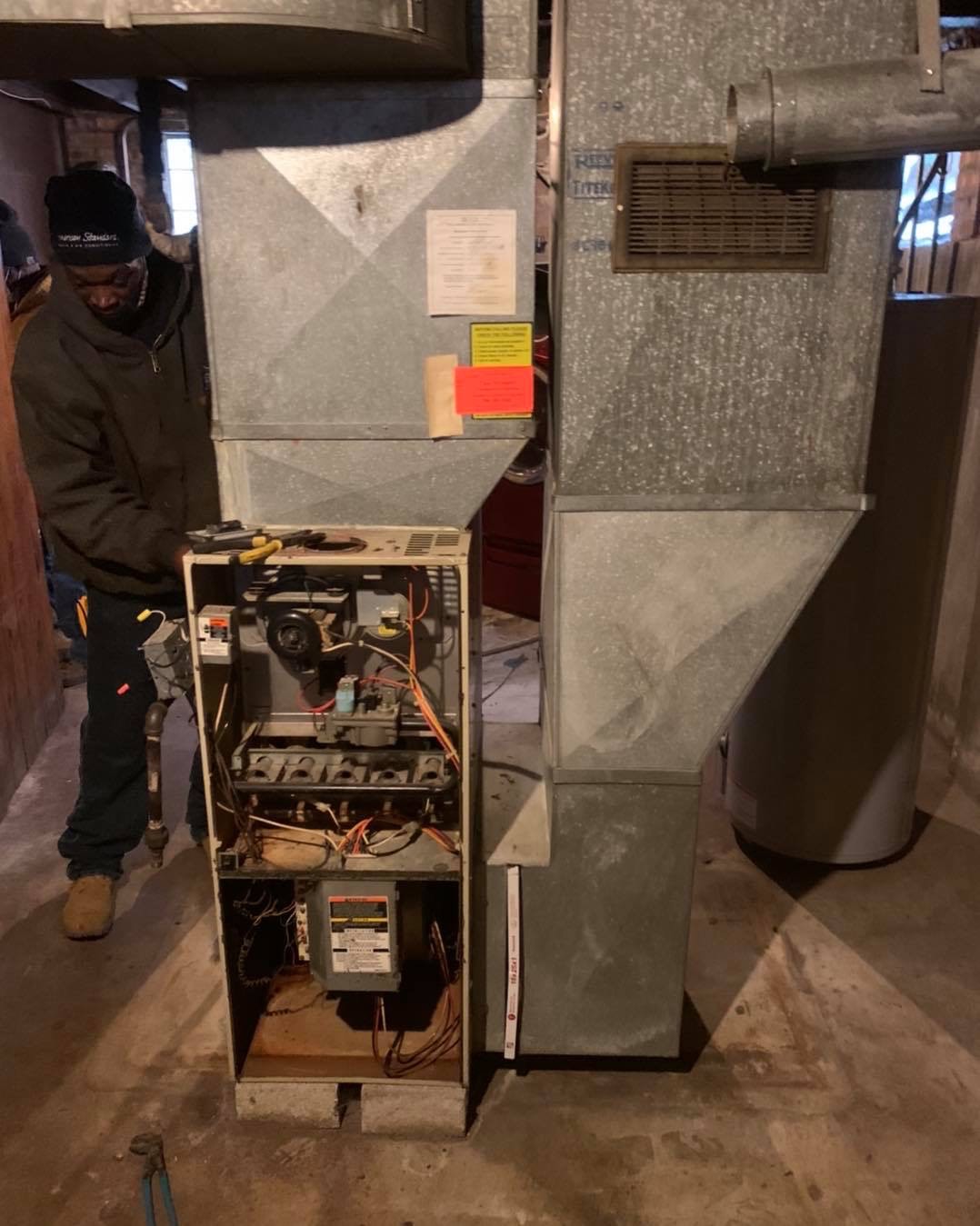
A brief burning smell when you first turn on your furnace in fall is normal. Dust that accumulated on the heat exchanger during the off-season burns off during the first few heating cycles. This should dissipate within an hour or two.
A persistent burning smell, or one that appears mid-season, is a different situation entirely. It can indicate overheating electrical components, a failing blower motor, or a cracked heat exchanger. If you smell burning plastic or rubber, shut the system off immediately and call a technician. These odors often precede electrical fires or component failures.
Any smell resembling rotten eggs near a gas furnace requires immediate action. Natural gas is odorless, but utility companies add mercaptan (the rotten egg smell) as a safety warning. If you detect this odor, leave the building, do not operate any switches or electronics, and call your gas utility's emergency line and 911.
Rising Energy Bills Without Increased Usage
One of the most reliable early indicators of HVAC trouble is a steady increase in your energy bills without a corresponding change in usage patterns or utility rates. If your ComEd or Peoples Gas bill has climbed 15% to 25% compared to the same month last year, and your habits have not changed, your HVAC system is likely losing efficiency.
How to Spot Efficiency Loss in Your Utility Costs
The best way to identify HVAC-related efficiency loss is to compare your bills month-over-month and year-over-year. Most Chicago utility providers offer online usage history that makes this comparison straightforward.
Look for these patterns. A gradual upward trend over several months suggests progressive efficiency loss from dirty coils, clogged filters, or worn components. A sudden spike often points to a specific failure, such as a stuck valve, a refrigerant leak, or a malfunctioning thermostat that is running the system continuously.
Seasonal context matters too. If your July electric bill jumped significantly but the summer was not notably hotter than the previous year, your air conditioner is working harder to produce the same result. That is a maintenance signal.
What Declining SEER Performance Looks Like
SEER (Seasonal Energy Efficiency Ratio) measures how efficiently your air conditioner converts electricity into cooling. A new system rated at 16 SEER should deliver that performance when properly maintained. Without maintenance, actual operating efficiency drops below the rated SEER every year.
A 16 SEER system that has not been serviced in three years may be operating at the equivalent of 12 or 13 SEER. You are paying for a high-efficiency system but getting mid-efficiency performance. The same principle applies to furnace AFUE (Annual Fuel Utilization Efficiency) ratings. A 96% AFUE furnace with a dirty burner and clogged filter may operate closer to 85% AFUE.
Regular maintenance, including coil cleaning, refrigerant level checks, and burner inspection, keeps your system operating at or near its rated efficiency. That is not just a comfort issue. It is a direct financial return on your maintenance investment.
Frequent Cycling or System Short-Cycling
Normal HVAC operation involves relatively long, steady cycles. Your furnace or air conditioner should run for 10 to 15 minutes or more per cycle, reach the thermostat set point, shut off, and stay off for a reasonable period before the next cycle begins. When the system turns on and off every few minutes, it is short-cycling, and it is both a symptom and a cause of further problems.
What Causes Your HVAC to Turn On and Off Repeatedly
Several issues can trigger short-cycling. An oversized system is one of the most common causes. A furnace or air conditioner that is too large for the space heats or cools too quickly, reaches the thermostat set point before completing a full cycle, shuts off, and then restarts when the temperature drifts. This is a sizing issue that maintenance alone cannot fix, but a technician can confirm the diagnosis.
Other common causes include a dirty air filter restricting airflow, a malfunctioning thermostat sending incorrect signals, a refrigerant leak causing the system to overheat and trigger safety shutoffs, or a failing compressor. A clogged condensate drain can also trigger a safety switch that shuts the system down prematurely.
When Short-Cycling Signals a Bigger Problem
Short-cycling is never just an annoyance. Every start cycle puts significant electrical and mechanical stress on the compressor and blower motor. Frequent starts and stops dramatically shorten the lifespan of these components, which are among the most expensive to replace.
If your system has recently started short-cycling and it was not doing so before, something has changed. A dirty filter is the easiest fix. If a fresh filter does not resolve the issue within a day, the problem is deeper and requires professional diagnosis. Do not let short-cycling continue for weeks. The compressor damage that accumulates during that time can turn a $200 repair into a $2,000+ replacement.
Excess Humidity or Moisture Problems Indoors
Your HVAC system does more than heat and cool. It also regulates indoor humidity. When it is not functioning properly, humidity levels drift outside the comfortable range, creating both comfort and property damage issues.
High Humidity in Summer
If your home feels clammy or sticky even when the air conditioner is running, the system is not removing enough moisture from the air. This can happen when the evaporator coil is dirty, the refrigerant charge is low, or the system is oversized and short-cycling (shutting off before completing a full dehumidification cycle).
Chicago summers bring sustained humidity levels that challenge even well-maintained systems. Indoor relative humidity should stay between 30% and 50%. If yours consistently reads above 55% to 60% with the AC running, the system needs service. Excess indoor humidity promotes mold growth, damages wood floors and furniture, and makes your home feel warmer than the thermostat reading suggests, leading you to lower the set point and increase energy costs.
Dry Air and Static in Winter
The opposite problem occurs in winter. Chicago's cold, dry winter air combined with continuous furnace operation can drop indoor humidity well below 30%. You will notice dry skin, static shocks, cracking wood trim, and increased susceptibility to respiratory infections.
While a standalone humidifier can help, your HVAC system's performance plays a role. A furnace that is running excessively due to poor maintenance (dirty filters, failing ignitor, leaky ductwork) circulates more dry heated air than necessary. Addressing the maintenance issues reduces over-cycling and helps stabilize indoor humidity. For many Chicago homes, a whole-house humidifier integrated with the HVAC system is the most effective long-term solution.
Your HVAC System Is More Than 10 Years Old
Age alone does not mean your system needs replacement. But age combined with increasing repair frequency, declining efficiency, and any of the warning signs in this guide creates a clear picture. Older systems require more vigilant maintenance and more honest cost-benefit analysis.
Average Lifespan of Furnaces, Air Conditioners, and Heat Pumps
Equipment Type
Average Lifespan
With Regular Maintenance
Without Maintenance
Gas Furnace
15 to 20 years
Up to 25 years
10 to 14 years
Central Air Conditioner
15 to 20 years
Up to 20 years
10 to 12 years
Heat Pump
10 to 15 years
Up to 18 years
8 to 10 years
Boiler
15 to 30 years
Up to 30+ years
12 to 18 years
Ductless Mini-Split
12 to 20 years
Up to 20 years
8 to 12 years
These ranges assume typical residential use. Chicago's climate intensity tends to push systems toward the lower end of these ranges unless maintenance is consistent.
When Repair Costs Outweigh Replacement Investment
A useful rule of thumb is the 50% rule. If a single repair costs more than 50% of the price of a new system, replacement is usually the better financial decision. Another guideline is the age-plus-repair calculation. If the system's age multiplied by the repair cost exceeds the cost of a new system, replacement makes more sense.
For example, a 14-year-old furnace needing a $1,200 repair: 14 x $1,200 = $16,800. If a new high-efficiency furnace costs $5,000 to $7,000 installed, the math favors replacement. You get a new warranty, higher efficiency, lower monthly operating costs, and years of reliable service.
A qualified HVAC contractor can help you run these numbers with actual quotes specific to your home and system. This is where transparent pricing matters. You need real numbers, not vague estimates, to make a sound decision.
Visible Leaks, Rust, or Physical Damage
Some warning signs are visible without any technical knowledge. If you can see water pooling, refrigerant stains, rust, or physical deterioration on your HVAC equipment, the system needs attention.
Refrigerant and Water Leaks
Water pooling around your indoor air handler or furnace typically indicates a clogged condensate drain line or a cracked drain pan. During cooling season, your air conditioner generates significant condensation as it removes humidity from indoor air. That moisture is supposed to drain away through a dedicated line. When the line clogs with algae, dust, or debris, water backs up and overflows.
Refrigerant leaks are harder to spot visually but sometimes leave oily residue near connection points on the refrigerant lines. You may also notice ice forming on the evaporator coil or refrigerant lines, which is a strong indicator of low refrigerant charge. Refrigerant leaks reduce cooling capacity, increase energy consumption, and can damage the compressor if the system continues to operate with a low charge.
Both types of leaks require professional repair. Refrigerant handling is regulated by the EPA, and only certified technicians should diagnose and repair refrigerant issues.
Corrosion on the Heat Exchanger or Outdoor Unit
Surface rust on an outdoor condenser unit is common in Chicago, especially in neighborhoods near Lake Michigan where salt air accelerates corrosion. Minor surface rust on the cabinet is cosmetic. Corrosion on the coil fins, refrigerant lines, or electrical connections is functional and needs attention.
Inside the furnace, corrosion on the heat exchanger is a serious safety concern. The heat exchanger separates combustion gases (including carbon monoxide) from the air circulating through your home. A corroded or cracked heat exchanger can leak carbon monoxide into your living space. This is one of the most critical reasons to maintain annual furnace inspections. A technician can visually inspect the heat exchanger and test for cracks that are not visible to the naked eye.
If your furnace is over 15 years old and shows signs of heat exchanger corrosion, replacement of the furnace is typically recommended over heat exchanger replacement alone, as the cost of the part and labor often approaches the cost of a new unit.
Thermostat Issues and Inconsistent Temperatures
Your thermostat is the control center of your HVAC system. When it malfunctions or loses calibration, the entire system responds incorrectly, leading to comfort problems that may seem like equipment failure.
Your Thermostat Reading Doesn't Match How Your Home Feels
If your thermostat displays 72°F but your home feels noticeably warmer or cooler, the thermostat may be miscalibrated, poorly located, or failing. Thermostats placed in direct sunlight, near exterior doors, above heat-generating appliances, or on exterior walls can read temperatures that do not represent the actual conditions in your living spaces.
Older mercury or mechanical thermostats lose accuracy over time. Digital and smart thermostats are more reliable but can still malfunction due to wiring issues, dead batteries, or software glitches. A simple test: place an accurate standalone thermometer next to your thermostat. If the readings differ by more than 2 to 3 degrees, the thermostat needs recalibration or replacement.
When the Problem Is the Thermostat vs. the HVAC System
Distinguishing between a thermostat problem and an HVAC system problem saves you time and money. If your system responds to thermostat commands (turns on when called, shuts off when set point is reached) but the temperature feels wrong, the thermostat is likely the issue. If the system does not respond to commands, runs continuously regardless of settings, or fails to start, the problem is more likely in the HVAC equipment itself.
Upgrading to a programmable or smart thermostat is often a cost-effective improvement. Modern thermostats like the Ecobee or Google Nest provide more accurate temperature sensing, learning algorithms, and remote control. For Chicago homes, programmable setback schedules that lower temperatures during work hours and overnight can reduce heating costs by 10% to 15% annually, according to the U.S. Department of Energy.
Poor Indoor Air Quality and Increased Dust
Your HVAC system circulates all the air in your home multiple times per day. When the system is not properly maintained, it becomes a distribution network for dust, allergens, and contaminants rather than a filtration system.
Dust Buildup Around Vents and Registers
If you notice dust accumulating quickly on furniture, dark streaks around supply registers, or visible dust on vent grilles shortly after cleaning, your HVAC system is part of the problem. Dirty filters, leaky ductwork that pulls in attic or crawlspace dust, and contaminated blower components all contribute to excessive dust circulation.
In Chicago homes with forced-air systems, ductwork that runs through unconditioned spaces (attics, crawlspaces, between floors) can develop leaks that draw in insulation fibers, construction debris, and outdoor particulates. Duct sealing and cleaning, combined with regular filter changes, dramatically reduces dust circulation.
Allergy Symptoms and Airborne Contaminants
If household members experience increased allergy symptoms, respiratory irritation, or headaches primarily when indoors and when the HVAC system is running, indoor air quality should be investigated. Pollen, pet dander, dust mites, mold spores, and volatile organic compounds (VOCs) can all accumulate in a poorly maintained HVAC system.
High-quality air filters (MERV 11 to MERV 13 for residential systems) capture a significantly higher percentage of airborne particles than standard fiberglass filters. However, higher-MERV filters also restrict airflow more, so your system must be compatible. A technician can recommend the highest-rated filter your system can handle without reducing performance.
For homes with persistent air quality concerns, UV germicidal lights installed in the air handler and whole-house air purification systems provide additional protection. These are particularly valuable in Chicago homes with occupants who have asthma or compromised immune systems.
What to Do When You Notice These Warning Signs
Recognizing a warning sign is the first step. Knowing what to do next determines whether you catch a small problem early or let it become an expensive emergency.
DIY Checks You Can Perform Before Calling a Technician
Before scheduling a service call, run through these basic checks. They are free, take minutes, and resolve the most common issues.
Check your air filter. A clogged filter causes weak airflow, short-cycling, frozen coils, and increased energy bills. If the filter is visibly dirty or has not been changed in 90 days, replace it. Use the size printed on the existing filter's frame.
Check your thermostat settings. Confirm it is set to the correct mode (heat or cool), the set point is where you want it, and the fan is set to AUTO rather than ON. Replace batteries if applicable.
Check your vents and registers. Walk through every room and confirm all supply and return registers are open and unobstructed by furniture, rugs, or curtains.
Check your outdoor unit. Clear any debris, leaves, grass clippings, or snow accumulation from around the condenser. Maintain at least two feet of clearance on all sides.
Check your circuit breakers. If the system is not responding at all, check the electrical panel for tripped breakers. Reset once. If it trips again, do not reset a second time. Call a technician.
If these checks do not resolve the issue, you have eliminated the simple causes and can provide useful information to your technician when you call.
How to Choose a Reliable HVAC Contractor in Chicago
Choosing the right HVAC contractor in Chicago matters as much as identifying the problem. The wrong contractor can misdiagnose issues, recommend unnecessary replacements, or perform substandard repairs that fail within months.
Look for these qualifications. The contractor should be licensed by the State of Illinois and the City of Chicago. They should carry liability insurance and workers' compensation coverage. Ask for proof of both before any work begins.
Check for EPA Section 608 certification for any work involving refrigerants. Read recent reviews on Google, Yelp, and the Better Business Bureau. Pay attention to how the company responds to negative reviews, as that reveals their customer service approach.
Get written estimates before authorizing work. A trustworthy contractor provides transparent pricing that breaks down parts, labor, and any additional fees. They explain what is wrong, what the repair involves, and what alternatives exist. They do not pressure you into immediate decisions on major replacements.
Ask about maintenance agreements. Many reputable Chicago HVAC companies offer annual service plans that include seasonal tune-ups, priority scheduling, and discounts on repairs. These plans typically pay for themselves through improved efficiency and avoided emergency calls.
How Regular Maintenance Prevents Costly HVAC Repairs
Every warning sign discussed in this guide is either preventable or detectable through routine professional maintenance. A system that receives annual service runs more efficiently, breaks down less often, and lasts years longer than a neglected one.
What a Professional HVAC Tune-Up Includes
A comprehensive HVAC tune-up is not a quick visual inspection. A thorough service visit covers these critical checkpoints.
Heating season tune-up (fall): Inspect and clean burners. Test ignition system. Check heat exchanger for cracks or corrosion. Measure flue draft and combustion gases. Test safety controls and limit switches. Lubricate moving parts. Check blower motor amp draw. Inspect and replace air filter. Test thermostat calibration. Check gas connections for leaks.
Cooling season tune-up (spring): Clean evaporator and condenser coils. Check refrigerant levels and test for leaks. Inspect and clear condensate drain line. Test compressor amp draw and capacitors. Check electrical connections and tighten as needed. Lubricate fan motor bearings. Inspect ductwork connections. Test thermostat operation. Measure supply and return air temperatures.
Each of these steps catches developing problems before they cause failures. A technician who finds a weak capacitor during a spring tune-up replaces it for $150 to $250. That same capacitor failing mid-summer can take out the compressor, turning a minor part replacement into a $1,500 to $3,000 repair.
Seasonal Maintenance Schedules for Chicago Homes
Chicago's four-season climate requires a twice-yearly professional maintenance schedule, plus regular homeowner tasks.
Task
Frequency
Season
Who
Replace air filter
Every 1 to 3 months
Year-round
Homeowner
Clear debris from outdoor unit
Monthly during use
Spring through fall
Homeowner
Professional heating tune-up
Annually
September to October
HVAC technician
Professional cooling tune-up
Annually
March to April
HVAC technician
Duct inspection
Every 3 to 5 years
Any season
HVAC technician
Duct cleaning
Every 5 to 7 years
Any season
Duct cleaning specialist
Carbon monoxide detector test
Monthly
Year-round
Homeowner
Thermostat battery replacement
Annually
Fall
Homeowner
Scheduling your heating tune-up in September and your cooling tune-up in March or April avoids peak-season demand. You get better appointment availability, and many contractors offer off-peak pricing during these shoulder seasons.
Conclusion
Every warning sign covered in this guide, from strange noises and weak airflow to rising energy bills and visible damage, points to the same core truth. HVAC problems caught early cost a fraction of what they cost when ignored. Regular maintenance is not an optional expense. It is the most reliable way to protect your comfort, your equipment, and your budget in Chicago's demanding climate.
Understanding these warning signs puts you in control. You can distinguish between a simple filter change and a situation that requires professional diagnosis. You can make informed decisions about repair versus replacement based on real cost data rather than guesswork. And you can hold your HVAC contractor to a clear standard of transparency and thoroughness.
We are Chicago Comfort HVAC, and we help Chicago homeowners and businesses keep their heating and cooling systems running at peak performance with honest assessments, transparent pricing, and expert workmanship. If you have noticed any of the warning signs in this guide, contact us today for a professional inspection and get the straightforward answers you deserve.
Frequently Asked Questions
How often should you schedule HVAC maintenance in Chicago?
Schedule professional maintenance twice per year. Have your furnace inspected in early fall before heating season and your air conditioner serviced in early spring before cooling season. Between professional visits, replace your air filter every one to three months depending on filter type and household conditions.
What is the most common sign your HVAC needs repair?
Unusual noises are the most frequently reported early warning sign. Banging, squealing, hissing, or buzzing sounds indicate mechanical, electrical, or refrigerant issues that worsen over time. Rising energy bills without increased usage is the second most common indicator and often the first sign homeowners notice.
Can a dirty filter cause my HVAC system to break down?
Yes. A clogged air filter restricts airflow, which forces the blower motor to work harder, can cause the evaporator coil to freeze, and may trigger short-cycling. Over time, the added strain on components like the blower motor and compressor can lead to premature failure and expensive repairs.
How much does HVAC maintenance cost in Chicago?
A single professional tune-up in Chicago typically costs between $80 and $150. Annual maintenance plans covering both heating and cooling visits usually range from $150 to $300 per year. These costs are modest compared to the average emergency repair bill of $500 to $1,500 or more.
Is it worth repairing an HVAC system over 15 years old?
It depends on the repair cost and the system's overall condition. Use the 50% rule: if the repair exceeds 50% of the cost of a new system, replacement is usually the better investment. A 15-year-old system with a history of increasing repairs and declining efficiency is generally a stronger candidate for replacement than repair.
What happens if you skip annual HVAC maintenance?
Skipping maintenance leads to progressive efficiency loss, higher energy bills, accelerated component wear, and increased risk of unexpected breakdowns. Neglected systems also pose safety risks, particularly gas furnaces with uninspected heat exchangers that can develop cracks and leak carbon monoxide.
Should I call an HVAC technician for strange noises or wait?
Call sooner rather than later. Strange noises almost always indicate a mechanical or electrical issue that worsens with continued operation. A squealing belt or rattling panel is inexpensive to fix today. The same issue left for weeks can damage connected components and multiply the repair cost significantly.
Follow a maintenance program
Ante gravida id aenean quis egestas risus nam amet nullam leo diam diam aliquam eu eu malesuada arcu rhoncus suspendisse nulla mattis ut amet sagittis in justo egestas.

search for a trusted mechanic
Lorem ipsum dolor sit amet, consectetur adipiscing elit lobortis arcu enim urna adipiscing praesent velit viverra sit semper lorem eu cursus vel hendrerit elementum morbi curabitur etiam nibh justo, lorem aliquet donec sed sit mi dignissim at ante massa mattis.
- Neque sodales ut etiam sit amet nisl purus non tellus orci ac auctor
- Adipiscing elit ut aliquam purus sit amet viverra suspendisse potent
- Mauris commodo quis imperdiet massa tincidunt nunc pulvinar
- Excepteur sint occaecat cupidatat non proident sunt in culpa qui officia
Check the air pressure in your tires
Vitae congue eu consequat ac felis placerat vestibulum lectus mauris ultrices cursus sit amet dictum sit amet justo donec enim diam porttitor lacus luctus accumsan tortor posuere praesent tristique magna sit amet purus gravida quis blandit turpis.
Review your suspension frequently
At risus viverra adipiscing at in tellus integer feugiat nisl pretium fusce id velit ut tortor sagittis orci a scelerisque purus semper eget at lectus urna duis convallis. porta nibh venenatis cras sed felis eget neque laoreet suspendisse interdum consectetur libero id faucibus nisl donec pretium vulputate sapien nec sagittis aliquam nunc lobortis mattis aliquam faucibus purus in.
- Neque sodales ut etiam sit amet nisl purus non tellus orci ac auctor
- Adipiscing elit ut aliquam purus sit amet viverra suspendisse potent
- Mauris commodo quis imperdiet massa tincidunt nunc pulvinar
- Excepteur sint occaecat cupidatat non proident sunt in culpa qui officia
Service your vehicle as regularly as posible
At risus viverra adipiscing at in tellus integer feugiat nisl pretium fusce id velit ut tortor sagittis orci a scelerisque purus semper eget at lectus urna duis convallis. porta nibh venenatis cras sed felis eget neque laoreet suspendisse interdum consectetur libero id faucibus nisl donec pretium vulputate sapien nec sagittis aliquam nunc lobortis mattis aliquam faucibus purus in.
“Nisi quis eleifend quam adipiscing vitae aliquet bibendum enim facilisis gravida neque velit euismod in pellentesque”
Conclusion
Eget lorem dolor sed viverra ipsum nunc aliquet bibendum felis donec et odio pellentesque diam volutpat commodo sed egestas aliquam sem fringilla ut morbi tincidunt augue interdum velit euismod eu tincidunt tortor aliquam nulla facilisi aenean sed adipiscing diam donec adipiscing ut lectus arcu bibendum at varius vel pharetra nibh venenatis cras sed felis eget.
